Michelangelo Merisi, known as Caravaggio (Italian, 1571–1610). Boy bitten by a lizard, circa 1597, oil on canvas. Florence, Fondazione di Studi di Storia dell’Arte Roberto Longhi.
Dark Matters: Caravaggio’s Light Still Burns
By Michael Solender
In fall 2022, while The Mint Museum president and CEO Todd Herman, PhD, was leading the members of the Mint’s Crown Society on a tour of the Venice Biennale and northern Italy’s artistic treasures, an unexpected opportunity arose.
It was during a rare free morning on the trip when Herman met with representatives of the Fondazione Roberto Longhi about staging an exhibition showcasing more than three dozen 16th and 17th century Baroque masterworks from their collection at the Mint.
Longhi, the late Italian art historian, scholar and curator was instrumental in shaping the contemporary understanding of early Renaissance and Baroque painting. His analysis and commentary are credited with elevating the works of Baroque masters, especially Caravaggio.Longhi’s impressive art collection, built over his lifetime, form the core holdings of the Fondazione Roberto Longhi in Florence.
The centerpiece of the show at the Mint would be a widely acclaimed Caravaggio, Boy bitten by a lizard (circa 1597), a striking and controversial portrait embodying the signature hallmarks of the artist’s transformational style.
Such an undertaking was met with careful pause and reflection. Museum attendance across the globe was down significantly due to the Covid pandemic. A Caravaggio featured exhibit would require considerable resources, yet, Herman was intrigued, and undeterred, because he saw a powerful through-line and sway from Caravaggio’s revolutionary style to artists across centuries, from Rembrandt and Matthias Stom to contemporary filmmakers Martin Scorsese, Isaac Julien and music videos from R.E.M. to Johnny Cash.
Caravaggio’s dramatic chiaroscuro and tight compositions of raw, street-worn models all feel strikingly modern and speak directly to today’s audiences. Layered atop this visual urgency is the extraordinary drama of Caravaggio’s own life—his volatile temper, notorious street fights, fluid sexuality, and even a murder charge. For Herman, the combination of groundbreaking artistic influence and
a life story that still crackles with relevance made the opportunity to bring the exhibition to the Mint simply too compelling to ignore.
“I thought with Caravaggio we’d have very contemporary, thought-provoking connections surrounding this work. We’d show how there is so much beyond what people think of when they think of Caravaggio,” says Herman.
Herman noted LGBTQ+ underpinnings in Caravaggio’s work and personal life, thoughts surrounding his intense realism, his interpretation of mythic and biblical themes, and controversial use of his street people (such as beggars and prostitutes) as models, were areas ripe for exploration. Even his legendary bad behavior all contributed to a discussion of how his work and influence have extended for centuries.
These elements are what make the exhibition fascinating, and what Herman hopes will resonate with audiences. “Does time, history, and context give us the ability to give grace where we wouldn’t necessarily today? These are questions and discussions museums should encourage,” he says.
Matthias Stom or Stomer (Dutch, possibly Flemish, 1600–50). Annunciation of Samson’s birth, circa 1630–32, oil on canvas. Florence, Fondazione di Studi di Storia dell’Arte Roberto Longhi.
Cinematic immediacy
Caravaggio, born Michelangelo Merisi in 1571 near Milan, trained in Lombardy before moving to Rome in his early 20s, painting still lifes and portrait heads. As he matured, his style evolved into a cinematic immediacy and intense realism with scenes often framed like a live tableau that pulled viewers straight into the action. His use of bold contrasts of light and shadow, frequently spotlighted figures with a single raking light to heighten drama.
Patronized by Cardinal Francesco Maria del Monte for nearly five years, Caravaggio produced key works including The Musicians (circa 1595–96), Bacchus (circa 1596), and the Head of Medusa (1597), a striking ceremonial shield likely for the Medici.
His realistic and raw interpretations of biblical and mythical allegory choosing everyday street people—unwashed ruffians and even himself—as models led to consternation and controversy. The critiques only seemed to embolden Caravaggio and add to his legacy.
Caravaggio’s turbulent life—fights, arrests, and exile across Naples, Malta, and Sicily—didn’t stop him from creating gripping paintings exploring spiritual tension and raw human emotion. He died at 38, his artistic stature, cultural impact and influence only growing over time.
Caravaggisti
Nearly 35 works are on view in the exhibition, all hailing from the Roberto Longhi Foundation collection, including many by the Caravaggisti—artists who followed Caravaggio and echoed key elements of his style.
One striking example is The Annunciation of Samson’s Birth (circa 1630–32) by Dutch master Matthias Stom. A second-generation Utrecht Caravaggisti, Stom was taken with the style of Dutch painters who traveled to Rome in the early 1600s and absorbed Caravaggio’s bold, dramatic approach. This painting shows an angel appearing to Samson’s parents, illuminated by a single candle that heightens the contrast of light and shadow.
Even with Caravaggio’s brief life and lack of a workshop, his influence spread widely. Yet the classical tradition didn’t fade—artists working in a Raphael-inspired, polished style remained active well into the 17th century. As the church moved away from the ascetic teachings of Carlo Borromeo and Philipo Neri (both canonized), so the taste for Caravaggio’s reverence of the nobility of the poor in his paintings diminished.
“It is important people don’t leave thinking Caravaggio single-handedly redirected every Dutch, Italian, or French painter,” Herman says. “His impact was huge, but it existed alongside a strong and enduring classical current.”
Anchoring the exhibit is Caravaggio’s masterpiece, Boy bitten by a lizard. One of two nearly identical paintings, (the other is held by the National Gallery in London), the piece embodies essential Caravaggio elements and has led to controversial and contrasting analysis for centuries.
The beauty of the young bare shouldered boy, flower in his ear, for many displays homoerotic undertones. The lizard, barely seen at the bottom of the frame hiding amongst succulent fruit, is biting the boy’s middle finger. An allegory about the evil and pain of life’s excess such as illicit sex and overindulgence or a study in emotion and intensity? The painting lets the viewer decide.
Valentin de Boulogne, known as Le Valentin (French, 1591–1632). Denial of St. Peter, 1615–17, oil on canvas. Florence, Fondazione di Studi di Storia dell’Arte Roberto Longhi.
Igniting a revolutionary spark
The exhibition’s subtitle, Revolution, is no accident. It opens the door to everything visitors are about to encounter.
“Revolution is not just the revolution of Caravaggio style,” explains Herman. “And not just the revolution of Roberto Longhi opening the doors to Italian Baroque art. But also, the revolution of Caravaggio’s creation of what some call modern day cinematography. To inspire videographers and photographers and filmmakers, is yet one more revolution that happens that Caravaggio helps to instigate.”
Museum goers visiting Caravaggio | Revolution will find clips, photos, and insights from artists like Scorsese, Julien, LaChapelle, and Hunter, plus music-videos from R.E.M. and Johnny Cash, juxtaposed against work by Baroque masters that lay bare how he still drives the way visual stories are told today.
“It’s not just the lighting, it’s the atmosphere,” Herman says. “There’s this sort of mystery that’s going on around the action. You can see the action, the action is highlighted, but there’s just this kind of pervasive mystery.”
For Herman, the exhibition is one that challenges the viewer on many levels. “The whole aspect of how we look at artist biography and context shape our perspective,” he says. “This exhibition nudges us to pause and ask: How should we interpret this now and why did people see it differently then?”
Caravaggio | Revolution: Baroque Masterpieces from the Roberto Longhi Foundation is generously presented by M.A. Rogers and Bank of America with additional support from the Samuel H. Kress Foundation. Individual sponsorship support for this exhibition is kindly provided by Betsy and Alfred Brand; Jane and Hugh McColl, Pat Rodgers, and Leigh-ann and Martin Sprock; Beverly and Jim Hance, Anna McKeithen Webersen, Laura McKeithen, Susan and Loy McKeithen, Marshelette and Milton Prime, and Rocky and Curtis Trenkelbach; Sarah and Tim Belk, Mary and Charles Bowman, and Jo Ann and Joddy Peer; Marty and Weston Andress, Mary Lou and Jim Babb, and Robin and Bill Branstrom. The Mint Museum is supported, in part, by the City of Charlotte and the North Carolina Arts Council.
Caravaggio | Revolution is organized by the Fondazione di Studi di Storia dell’Arte Roberto Longhi and Civita Mostre e Musei, in collaboration with The Mint Museum and the Museum of Fine Arts, St. Petersburg.
Michael J. Solender is a features writer who lives and works in his adopted home-town of Charlotte, North Carolina.
The Mint Museum is pleased to present the return of its Contemporary Architecture + Design (CAD) Series. First launched in 2012, the CAD Series series brings together an innovative group of globally recognized designers who push the boundaries of contemporary practice across disciplines, location, and cultural landscapes.
The 2026 CAD Series, presented by Wells Fargo, features conversations with UNC Charlotte professor Kyle Spence, Parsons School of Design professor Kim Mupangilaï, internationally renowned industrial designer Ini Archibong, and founders of the creative studio dach&zephir Florian Dach and Dimitri Zephir.
Hailing from Switzerland, Paris, New York, and North Carolina, the featured speakers are recognized as leaders at the forefront of contemporary architecture and design. Through engaging talks and conversations, they will share the ideas, processes, and practices behind their most compelling work.
The series begins March 19 at Mint Museum Randolph with talk by Kyle Spence. Each program is followed by a post-program reception, and the opportunity to tour the exhibition Designing Dynamism: Kuba Textiles from the DR Congo, The Wesley Mancini Collection. All talks are free and will take place at Mint Museum Randolph, 2730 Randolph Road, Charlotte.
2026 CAD Series Speaker Schedule
Kyle Spence
March 19, 6 PM
Mint Museum Randolph
Kyle Spence is an architect, educator, and researcher dedicated to integrating cultural sustainability and resilient design principles into his work. He is the founding principal of The BAKLab, a concept-driven architectural design practice based in New York City. An assistant professor of architecture at UNC Charlotte and a 2025 Gambrell Faculty Fellow, Spence’s interdisciplinary practice explores the “Place-Moment” connection, bridging jazz, improvisation, archaeoastronomy, and participatory community design to create socially responsive architecture. His recent work includes the prize-winning Mitchelville Heritage Trail proposal, the EarthArcs series, and the EcoDome urban farming prototypes.
Kim Mupangilaï
April 9, 6 PM
Mint Museum Randolph
Kim Mupangilaï is an interior architect, sculptural furniture designer, and educator based in New York, where she teaches at Parsons School of Design. The Belgian-Congolese designer’s practice examines cross-cultural identity, heritage, and the sociopolitical conditions embedded in art history and design through material-driven research and form. Her work has been exhibited internationally and acquired by institutions including the Vitra Design Museum, Cooper Hewitt Smithsonian Design Museum, the Brooklyn Museum, and the Denver Art Museum.
Ini Archibong
May 7, 6 PM
Mint Museum Randolph
Industrial designer Ini Archibong, based in Switzerland, works with a myriad materials. From luminous glass and stone to finely crafted wood, his pieces move fluidly between sculptural expression and functional design. Archibong bridges tradition and futurism, drawing inspiration from architecture, philosophy, product design, religion, and mathematics. The result is a body of work that is refined, conceptually rigorous, and internationally resonant. He has received numerous top design industry awards, incuding his design for a Pavilion of the African Diaspora (PoAD) that won the Best Design Medal at the London Design Biennale in 2021. His work has been exhibited at the Victoria and Albert Museum (V&A) in London; the Metropolitan Museum of Art; Galerie Triode in Paris; the Museo Bagatti Valsecchi in Milan; the Dallas Museum of Art; the High Museum in Atlanta; LACMA; and the Vitra Museum.
dach&zephir
July 9, 6 PM
Mint Museum Randolph
Graduates of the National School of Decorative Arts in Paris, Florian Dach and Dimitri Zephir are the founders of the creative studio dach&zephir based between Paris and Guadeloupe. Conceived as an open and experimental platform, the design studio draws on the founders’ shared experiences and investigates questions of history, culture, and identity through design. Their practice weaves together research and material exploration, creating work that reflects layered narratives and cross-cultural dialogue. The upcoming CAD Series presentation will be dach&zephir’s first lecture in the United States!
FOR IMMEDIATE RELEASE
From New York to Paris, The Mint Museum’s Contemporary Architecture + Design Series brings international leaders in design to Charlotte
Charlotte, North Carolina (February 26, 2026) – The Mint Museum is pleased to announce the return of its Contemporary Architecture + Design (CAD) Series. First launched in 2012, the CAD Series series brings together an innovative group of globally recognized designers who push the boundaries of contemporary practice across disciplines, location, and cultural landscapes.
The 2026 CAD Series, presented by Wells Fargo, features conversations with UNC Charlotte professor Kyle Spence, Parsons School of Design professor Kim Mupangilaï, internationally renowned industrial designer Ini Archibong, and founders of the creative studio dach&zephir Florian Dach and Dimitri Zephir.
Hailing from Switzerland, Paris, New York, and North Carolina, the featured speakers are recognized as leaders at the forefront of contemporary architecture and design. Through engaging talks and conversations, they will share the ideas, processes, and practices behind their most compelling work.
The series begins March 19 at Mint Museum Randolph with talk by Kyle Spence. Each program is followed by a post-program reception, and the opportunity to tour the exhibition Designing Dynamism: Kuba Textiles from the DR Congo, The Wesley Mancini Collection. All talks are free and will take place at Mint Museum Randolph, 2730 Randolph Road, Charlotte.
2026 CAD Series Speaker Schedule
Kyle Spence
March 19, 6 PM
Mint Museum Randolph
Kyle Spence is an architect, educator, and researcher dedicated to integrating cultural sustainability and resilient design principles into his work. He is the founding principal of The BAKLab, a concept-driven architectural design practice based in New York City. An assistant professor of architecture at UNC Charlotte and a 2025 Gambrell Faculty Fellow, Spence’s interdisciplinary practice explores the “Place-Moment” connection, bridging jazz, improvisation, archaeoastronomy, and participatory community design to create socially responsive architecture. His recent work includes the prize-winning Mitchelville Heritage Trail proposal, the EarthArcs series, and the EcoDome urban farming prototypes.
Kim Mupangilaï
April 9, 6 PM
Mint Museum Randolph
Kim Mupangilaï is an interior architect, sculptural furniture designer, and educator based in New York, where she teaches at Parsons School of Design. The Belgian-Congolese designer’s practice examines cross-cultural identity, heritage, and the sociopolitical conditions embedded in art history and design through material-driven research and form. Her work has been exhibited internationally and acquired by institutions including the Vitra Design Museum, Cooper Hewitt Smithsonian Design Museum, the Brooklyn Museum, and the Denver Art Museum.
Ini Archibong
May 7, 6 PM
Mint Museum Randolph
Industrial designer Ini Archibong, based in Switzerland, works with a myriad materials. From luminous glass and stone to finely crafted wood, his pieces move fluidly between sculptural expression and functional design. Archibong bridges tradition and futurism, drawing inspiration from architecture, philosophy, product design, religion, and mathematics. The result is a body of work that is refined, conceptually rigorous, and internationally resonant. He has received numerous top design industry awards, incuding his design for a Pavilion of the African Diaspora (PoAD) that won the Best Design Medal at the London Design Biennale in 2021. His work has been exhibited at the Victoria and Albert Museum (V&A) in London; the Metropolitan Museum of Art; Galerie Triode in Paris; the Museo Bagatti Valsecchi in Milan; the Dallas Museum of Art; the High Museum in Atlanta; LACMA; and the Vitra Museum.
dach&zephir
July 9, 6 PM
Mint Museum Randolph
Graduates of the National School of Decorative Arts in Paris, Florian Dach and Dimitri Zephir are the founders of the creative studio dach&zephir based between Paris and Guadeloupe. Conceived as an open and experimental platform, the design studio draws on the founders’ shared experiences and investigates questions of history, culture, and identity through design. Their practice weaves together research and material exploration, creating work that reflects layered narratives and cross-cultural dialogue. The upcoming CAD Series presentation will be dach&zephir’s first lecture in the United States!
Established in 1936 as North Carolina’s first art museum, The Mint Museum is a leading, innovative cultural institution dedicated to international art and design. With two locations—Mint Museum Randolph in the heart of Eastover and Mint Museum Uptown at Levine Center for the Arts—the Mint houses one of the largest collections in the Southeast and is committed to engaging and inspiring members of the global community. mintmuseum.org.
Designing Dynamism celebrates the intricate visual language and extraordinary craftsmanship of the Kuba people from the Kasai region of the Democratic Republic of Congo. Through labor-intensive techniques, Kuba artists transform natural materials, such as palm fibers and tree bark, into complex textile designs.
Kuba design, known for its distinctive asymmetrical patterns, has inspired generations of modern and contemporary artists. The exhibition highlights outstanding examples of Kuba artistry, examining both the influence of these motifs on global design trends and the enduring creativity of contemporary artists working in the Congo today.
The exhibition space is designed by Stephen Burks Man Made, recognized for elevating handmade traditions through global and industrial collaborations. The exhibition space is designed as an immersive journey organized into three interconnected sections—Past, Present, and Future.
Included in the Future section is a craft-driven short film, “In Search of Kuba, created by Stephen Burks and Malika Leiper, co-founders of Stephen Burks Man Made. The film follows a collective of contemporary Kuba artisans carrying forward the traditions of their ancestors and highlights the vital role the Kilubukila workshop plays in preserving and sustaining traditional Kuba textile practices.
All works in the exhibition are recent gifts to The Mint Museum from Wesley Mancini, a Charlotte-based textile designer who has assembled one of the region’s most significant collections of Kuba textiles.
“This exhibition honors a powerful artistic tradition that continues to influence contemporary design worldwide,” says Annie Carlano, senior curator of Craft, Design, and Fashion at The Mint Museum and curator of the exhibition. “We are thrilled to share the richness of Kuba creativity with our community, and we are grateful to Wesley Mancini for gifting his collection to the Mint.”
A central focus of the exhibition is a remarkable selection of prestige cloths—square or rectangular embroidered weavings made from raffia vinifera, a palm-leaf fiber native to the DR Congo. These cloths feature imaginative geometric patterns created through flat and cut-pile embroidery, the latter producing a plush, velvety surface.
Traditionally created for the Kuba king, dignitaries, or funerary rites, prestige textiles are distinguished by their complex graphic design, asymmetry, and discontinuous patterns. During the 17th and 18th centuries, wealth from the ivory trade enabled the Kuba to commission opulent regalia and ceremonial textiles. By the mid to late 1880s, Belgian colonial encroachment threatened their sovereignty and access to resources. As a result, Kuba textiles increasingly entered European markets, where they captivated modernist artists such as Henri Matisse, Suzanne Valadon, and Sonia Delaunay.
In addition to prestige cloths, the exhibition presents intricately decorated women’s overskirts, beaded belts, and a film by Stephen Burks Man Made that reflects the continuing vitality of Kuba aesthetics—demonstrating the cultural significance, ceremonial depth, and artistic innovation of Kuba textile traditions.
A scholarly, richly illustrated catalogue published by D. Giles Ltd. accompanies the exhibition. Edited by Annie Carlano, it features a major essay by independent scholar Vanessa Drake Moraga and contributions by Malika Leiper and Stephen Burks.
Designing Dynamism: Kuba Textiles from the DR Congo, The Wesley Mancini Collection is generously presented by Wells Fargo. Individual sponsorship is provided by Hillary and Fairfax Cooper and Lauren Harkey. The Mint Museum is supported, in part, by the City of Charlotte and the North Carolina Arts Council.
“Wells Fargo is honored to provide underwriting for this this exhibition that not only focuses on the design and history of these incredible textiles but also has compelling community engagement programs incorporated into the visitor experience,” says Jay Everette, head of community relations at Wells Fargo public affairs.
OPENING EXHIBITION EVENTS
Curator Conversation with Designers Stephen Burks and Malika Leiper
February 19, 7:30–8:30 PM | Mint Museum Randolph | FREE
Senior Curator of Craft, Design, and Fashion Annie Carlano welcomes Stephen Burks and Malika Leiper, design partners in the studio Stephen Burks Man Made, to discuss Kuba textiles and their design of Designing Dynamism. Burks and Leiper are known for their globally collaborative work uniting industrial design with craft, community, and social engagement with artisans worldwide. Burks is an acclaimed industrial designer, while Leiper is a researcher, urban strategist, and cultural director for the studio.
Patterns of Influence: A Talk with Vanessa Drake Moraga
February 21, 2–3 PM | Mint Museum Randolph | FREE
Vanessa Drake Moraga, author of “Weaving Abstraction: Kuba Textiles and the Woven Art of Central Africa,” presents a talk that traces the history of the western adaptation, appropriation, and appreciation of Kuba surface design and textile artistry from the turn of the 20th century. Moraga is a curator and scholar known for her study of African textiles.
CONTEMPORARY ARCHITECTURE + DESIGNER SERIES
Accompanying the exhibition is a design lecture series featuring renowned designers representing international innovations across a wide range of design disciplines. Scheduled speakers include Kyle Spence, Kim Mupangilai, Ini Archibong, and the duo Dimitri Zephyr and Florian Dach. The series kicks off in early spring 2026. Check mintmuseum.org/events for details to come.
###
ABOUT THE MINT MUSEUM
Established in 1936 as North Carolina’s first art museum, The Mint Museum is a leading, innovative cultural institution dedicated to international art and design. With two locations—Mint Museum Randolph in the heart of Eastover and Mint Museum Uptown at Levine Center for the Arts—the Mint houses one of the largest collections in the Southeast and is committed to engaging and inspiring members of the global community.
ABOUT STEPHEN BURKS MAN MADE
As partners in the award-winning studio Stephen Burks Man Made, Malika Leiper and Stephen Burks have forged a unique approach to design at the intersection of craft, community, and industry. Their nomadic workshop-based practice embraces the challenge to advocate for hand production as a strategy for innovation, which has brought them to over 20 countries on six continents. Spanning the disciplines of art, architecture, and industrial design, they have distinguished themselves through socially engaged partnerships that contribute to a more inclusive and pluralistic vision of design.
ABOUT WELLS FARGO
Wells Fargo & Company (NYSE: WFC) is a leading financial services company that has approximately $2.1 trillion in assets. We provide a diversified set of banking, investment and mortgage products and services, as well as consumer and commercial finance, through our four reportable operating segments: Consumer Banking and Lending, Commercial Banking, Corporate and Investment Banking, and Wealth & Investment Management. Wells Fargo ranked No. 33 on Fortune’s 2025 rankings of America’s largest corporations. News, insights, and perspectives from Wells Fargo are also available at Wells Fargo Stories
For more information, contact:
Michele Huggins, associate director of marketing and communications
michele.huggins@mintmuseum.org | 704.564.0826
Clayton Sealey, senior director of marketing and communications
clayton.sealey@mintmuseum.org | 704.534.0186
Michelangelo Merisi, known as Caravaggio (Italian, 1571–1610). Boy bitten by a lizard, circa 1597, oil on canvas. Florence, Fondazione di Studi di Storia dell’Arte Roberto Longhi.
Michelangelo Merisi da Caravaggio, better known as Caravaggio, was an Italian painter who helped shape the Baroque style and left a lasting impact on European artists for generations. Caravaggio’s masterful painting Boy bitten by a lizard stands at the heart of the exhibition — a rare treasure among the fewer than 80 works attributed to the artist, who died at age 38.
Surrounding this centerpiece are more than 30 paintings by leading Baroque masters and Caravaggisti from across Europe, artists who absorbed and reinterpreted Caravaggio’s revolutionary style. Together, these works illuminate the extraordinary impact of his use of shadow and light, realism, and dramatic intensity on an entire generation of painters.
The works in the exhibition are on loan from the collection of Roberto Longhi, the Italian art historian who began his study of Caravaggio and his followers in the beginning of the 20th century and re-introduced Caravaggio’s influential work to the world.
From canvas to the silver screen
As part of the exhibition, visitors also can explore film and music video clips that depict how Caravaggio’s radical realism transformed not only painting but the language of modern film and photography using shadow and light, known as chiaroscuro.
“Caravaggio, in today’s world, would be considered an ‘influencer.’ The style that he developed in Rome at the beginning of the 17th century was revolutionary and influenced artists across Europe,” says Todd Herman, president and CEO of The Mint Museum. “His works are dramatic, raw, and emotional — and became a reference point for filmmakers like Martin Scorcese.”
Caravaggio | Revolution connects that 400-year-old creative spark to the imagery that defines our time. Through film clips, photographs, and commentary from modern masters, including Martin Scorsese, Isaac Julien, David LaChapelle, and Tom Hunter, as well as iconic music videos like R.E.M.’s “Losing My Religion” and Johnny Cash’s “Hurt,” the exhibition reveals how Caravaggio’s vision continues to shape the visual language of storytelling today.
Caravaggio | Revolution: Baroque Masterpieces from the Roberto Longhi Foundation is generously presented by Bank of America and Mary Anne (M.A.) Rogers, with additional support from Pat Rodgers, and Jo Ann and Joddy Peer. Individual support is kindly provided by Marty and Weston Andress, Kelle and Len Botkin, Laura and Mike Grace, Lucy and Hooper Hardison, Stephanie S. Lynch, Posey and Mark Mealy, Milton and Marshelette Prime, Patsy M. Reames and Ron Vick, and Leigh-ann and Martin Sprock. The Mint Museum is supported in part by the City of Charlotte and North Carolina Arts Council.
EXHIBITION DETAILS
Caravaggio | Revolution: Baroque Masterpieces from the Roberto Longhi Foundation
Dates: April 25–October 25, 2026
Venue: Mint Museum Uptown at Levine Center for the Arts, 500 S. Tryon St., Charlotte, North Carolina
Admission: Special exhibition admission is $10 plus regular museum pricing. Mint members enjoy the exhibition for $10.
ABOUT THE LONGHI FOUNDATION
Founded in 1971 by the will of art historian Roberto Longhi (1890-1970), the Fondazione di Studi di Storia dell’Arte Roberto Longhi is dedicated to fostering art historical research based on his cultural legacy and critical method. Located in his villa “Il Tasso” in Florence, where he lived with his wife Lucia Lopresti (the writer Anna Banti) until his death, it maintains Longhi’s vast library, photo library, and art collection “for the benefit of younger generations” supporting scholars through grants, courses, and seminars.
ABOUT THE MINT MUSEUM
Established in 1936 as north Carolina’s first art museum, The Mint Museum is a leading, innovative cultural institution and museum of international art and design. With two locations — Mint Museum Randolph in the heart of Eastover and Mint Museum Uptown at Levine Center for the Arts — the Mint boasts one of the largest collections in the Southeast and is committed to engaging and inspiring members of the global community.
For more information, contact:
Michele Huggins, associate director of marketing and communications
michele.huggins@mintmuseum.org | 704.564.0826
Clayton Sealey, senior director of marketing and communications
clayton.sealey@mintmuseum.org | 704.534.0186
Mint Museum Uptown
Media Alert
FOR IMMEDIATE RELEASE
WHAT:
In response to the recent disruptions in SNAP benefits that are impacting many in the Charlotte community and beyond, The Mint Museum is stepping up to help. Throughout the month of November, all museum admissions revenue will be donated to Nourish Up and The Bulb, two nonprofit organizations dedicated to fighting food insecurity in our community.
WHEN:
Through November 30.
WHERE: Both museum locations:
Mint Museum Uptown at Levine Center for the Arts, 500 S. Tryon Street, Charlotte
Mint Museum Randolph, 2730 Randolph Road, Charlotte
WHY:
With so many in our community facing increased hardship, The Mint Museum is committed to supporting community organizations providing essential food resources and relief.
Charlotte, North Carolina (October 29, 2025) — The Mint Museum is proud to present Weaving Joy, Woven Resistance, a new installation by Charlotte-based artist Katrina Sánchez on view at Mint Museum Randolph. Weaving Joy, Woven Resistance is the latest installation in the Mint Museum’s ongoing Interventions series, which places contemporary works in dialogue with the museum’s permanent collection.
In a celebration of her Panamanian American heritage, Sánchez has created works that layer memory and identity into visually striking works of contemporary textile art. Using materials, including yarn, ribbons, beads, and fish scales in vibrant colors, she pays homage to the brilliant colors and textures she remembers from her childhood.
A series of wall weavings is also included in the installation. New to her practice, the weavings are created using a flatbed knitting machine—a tabletop device that merges knitting and weaving with more than 200 barbed needles guided by punch card patterns. Sánchez adapts this tool to reimagine grassroots political posters and workers’ rights flyers as woven fiber works. These weavings honor Panama’s long history of protest, shaped by ongoing negotiations of colonial and postcolonial power in a country deeply intertwined with the United States.
“Katrina’s work transforms traditional materials into vibrant expressions of identity and belonging,” says Jen Sudul Edwards, PhD, chief curator and curator of Contemporary Art at The Mint Museum. “By weaving together elements of craft, memory, and resistance, she invites us to reflect on the threads that bind communities across generations.”
ABOUT THE ARTIST
Craft was a constant in Sánchez’s family life. Her great-grandmother was known for her prolific crocheting, which adorned every surface of her home. Annual visits to Panama reinforced these traditions, while the objects she brought back to North Carolina became cherished reminders of place, culture, and belonging.
In her current practice, Sánchez works with fiber to create soft sculpture and murals. By combining knit and woven patterns, she introduces vibrant color and rich textures into three-dimensional works while playing with scale to build a sensory effect of playful confrontation and power in her work.
A graduate of the University of North Carolina at Charlotte with a Bachelor of Fine Arts in fiber, Sánchez is a member of the Goodyear Arts collective. Her work has been exhibited nationally and internationally, including at the VOLTA Art Fair in Basel, Switzerland, and in String Theory at Hodges Taylor x Jamila Brown in Charlotte. She has created commissioned works for Lowe’s, Credit Karma, Truist, and Ally Bank. In addition to her exhibition at The Mint Museum, she is preparing for a solo show at Abigail Ogilvy Gallery in Los Angeles.
ABOUT INTERVENTIONS
Designed to spark conversation between past and present, the Interventions series invites visitors to reconsider familiar objects through new cultural and personal perspectives—broadening the stories represented within the museum’s galleries.
###
ABOUT THE MINT MUSEUM
Established in 1936 as north Carolina’s first art museum, The Mint Museum is a leading, innovative cultural institution and museum of international art and design. With two locations — Mint Museum Randolph in the heart of Eastover and Mint Museum Uptown at Levine Center for the Arts — the Mint boasts one of the largest collections in the Southeast and is committed to engaging and inspiring members of the global community.
Interactive response stations were part of the Southern/Modern exhibition that received an Honorable Mention in the over $100,000 budget category in the Exhibitions Competition.
(CHARLOTTE, NORTH CAROLINA, October 14, 2025) — The Mint Museum is pleased to announce it is a recipient of multiple awards in the 2025 Southeastern Museums Conference Publication Design, Technology, and Exhibition competitions.
The 2025 SEMC Competition received a record-breaking number of applications from a wide variety of museums across the Southeast.
Publication Design Competition
Museum publications play a vital role in an institution’s educational mission, documenting exhibitions and collections through high-quality design and production and showcasing the depth of scholarship.
The SEMC Publication Design Competition recognizes and rewards excellence in graphic design in Southeastern museum publications. Recipients of the awards were judged by an appointed jury of museum professionals across the region who specialize in graphic design.
The competition encourages communication, effective design, creativity and pride in work, and recognition of institutional image and identity.
In the Publication Design Competition, the Mint was awarded:
First Place in the Mailers and Calendars of Events category for the School and Tour Programs mailer.
Second Place in the Invitations category for the Coveted Couture Gala invitation.
Technology award designations reflect an institution’s innovation, effective design, accessibility, creativity, and recognition of institutional identity.
In the technology category, the Mint was awarded:
Silver in the Digital Marketing in the project budget over $10,000 for the Mint Museum Store website.
Bronze in the Virtual Media category for Southern/Modern Exhibition Social Media Campaign.
Exhibition Competition
The SEMC Exhibition Competition showcases the best in the museum profession and provides benchmarks for regional exhibition efforts in Southeastern museums.
Museums are recognized for overall excellence or for stretching the limits of content and design through innovation, well-designed exhibitions of merit with educational value and demonstrated respectful treatment of objects.
Recipients of the awards were judged by an appointed jury of museum professionals who specialize in curatorial studies and exhibition design.
In the Exhibition Competition, the Mint was awarded:
Honorable Mention in the over $100,000 budget category for Southern/Modern: Rediscovering Southern Art from the First Half of the Twentieth Century.
Award winners will be celebrated at the 2025 Annual Meeting Awards Luncheon on October 22, 2025, in Montgomery, Alabama as well as in the Winter 2025 Edition of INSIDE SEMC, a digital publication of the Southeastern Museums Conference.
###
ABOUT THE MINT MUSEUM
Established in 1936 as north Carolina’s first art museum, The Mint Museum is a leading, innovative cultural institution and museum of international art and design. With two locations — Mint Museum Randolph in the heart of Eastover and Mint Museum Uptown at Levine Center for the Arts — the Mint boasts one of the largest collections in the Southeast and is committed to engaging and inspiring members of the global community.
About the Southeastern Museums Conference
The Southeastern Museums Conference (SEMC), a nonprofit membership organization, is an association of museums, museum staff, independent professionals, and corporate partners. We focus on the Southeastern United State including: Alabama, Arkansas, Florida, Georgia, Kentucky, Louisiana, Mississippi, North Carolina, South Carolina, Tennessee, Virginia, West Virginia, Puerto Rico, and US Virgin Islands.
Provide educational and professional development opportunities.
Improve the interchange of ideas and information.
Encourage respect and collegiality.
The Southeastern Museums Conference (SEMC) is dedicated to providing a safe, inclusive, and welcoming conference experience for everyone. We do not tolerate discrimination or harassment in any form.
For more information about the Southeastern Museums Conference, visit semcdirect.net.
For more information, contact:
Michele Huggins, associate director of marketing and communications michele.huggins@mintmuseum.org | 704.564.0826
(from left): Designer Aki Cooren, Annie Carlano, and design historians Alexa Armstrong and Cassandra Hernandez from Carpenters Workshop Gallery.
Noteworthy: Awards, accolades, and notable mentions – Fall 2025 Inspired Magazine
Mint staff leading in the North Carolina Museum Council.
Alex Olivares, the Mint’s audience research and evaluation specialist, has been elected board president of the North Carolina Museum Council — an important leadership role that reflects her expertise and ongoing commitment to foster innovation and engagement within cultural institutions.
Also serving in a key leadership position is Margaret Mauldin, assistant head of school and gallery programs. Mauldin is the council’s vice chair for professional development. Her role highlights her passion for museum education and advancing professional growth in the field.
The North Carolina Museum Council is a nonprofit organization devoted to supporting and elevating museums and museum professionals throughout the state.
100 Internship applications
The number of summer internship applications received, underscoring the interest of university and college students to museum professions. Five interns were selected from the impressive pool of applicants and placed in five departments throughout the museum.
Exceptional guest service
Kudos to guest services employees Mila Simmons and Bridget Sullivan for going above and beyond in providing exceptional service as sighted guides to a visitor during the NC 12th District Congressional Art Competition Reception on May 18. The visitor expressed heartfelt appreciation, sharing that Simmons and Sullivan made her feel truly welcome in the museum. They took the time to explain the layout, read signage aloud, and personally escorted her to a seat for the reception. During the event, Sullivan continued to support the visitor by kindly asking student artists to elaborate on their works and describe them in more visual detail, helping the guest better understand and appreciate the art on display.
Our curators inspire at the biannual Design Summit
Senior Curator of Craft, Design, and Fashion Annie Carlano served on the planning committee for the biannual Design Summit held in Santa Fe, New Mexico, and hosted by the Advisory Board of Human Dignity Projects. The Summit 2025 theme was Dignify by Design. Participants included architects, designers, philosophers, social entrepreneurs, and economists who promote justice, dignity, and community, into their practice. Carlano moderated the panel “Culture Can Influence Change: Moving Cultural Traditions Forward Responsibly” and selected artists/designers Virgil Ortiz, Fernando Laposse, and Japanese/French designers Aki and Arnaud Cooren for the program.
Diego Romero (1964–). Guzano Rojo Tequila Series Bowl, 1998, earthenware, paint over red slip. 3.5” x 8”. Museum purchase: Funds provided by Sheri Brown. 1999.84.
Curator’s Pick: Guzano Rojo Tequila Series Bowl
Diego Romero explores the complexities of contemporary Native American life through a bold graphic style that bridges ancient tradition and modern storytelling. Working in both print and ceramic, he channels the visual languages of the ancient world — Greek, Anasazi, Mimbres — alongside pop culture, crafting powerful narratives that comingle the past and present.
Romero was raised in Berkeley, California, by his Cochiti Pueblo father and non-Native mother. Summers spent at Cochiti introduced him to his ancestral artistic roots. A recurring theme in Romero’s work is the destructive legacy of colonialism, particularly the impact of alcoholism on native communities. His Guzano Rojo Tequila Series Bowl is a striking example. Inside the bowl, a comic book style illustration features a bright red maguey worm among agave plants, referencing the creatures sometimes found in bottles of mezcal. It’s a cautionary tale, told with Romero’s signature wit and gravity. Framed in a European gilding technique, embedded with Mimbres symbols, a simple coiled bowl becomes a container of potent commentary.
Romero studied at the Institute of American Indian Arts, earned a bachelor’s degree in fine art from Otis College of Art and Design, and completed his master’s degree in fine art at UCLA in 1993. Since then, his work has been widely exhibited and is included in the permanent collections of major institutions such as The Metropolitan Museum of Art, The British Museum, the National Museum of Scotland, and Fondation Cartier in Paris. In 2015, he was awarded a United States Artists fellowship.
–Annie Carlano is senior curator of Craft, Design, and Fashion at The Mint Museum.
Henri-Michel-Antoine Chapu (French, 1833–91). A Bust of Alexandre Dumas, pere, after 1876, terracotta. The Smith-Naifeh Collection.
Take a European sojourn with Renaissance, Romanticism, and Rebellion
Renaissance, Romanticism, and Rebellion: European Art from the Smith-Naifeh Collection brings together more than 70 paintings, sculptures, and works on paper, offering a sweeping look at the vibrant and transformative world of 19th-century European art. Drawn entirely from the renowned Smith-Naifeh Collection, carefully assembled over decades by South Carolina-based collectors and scholars Gregory Smith and Stephen Naifeh, the exhibition captures a century defined by dramatic cultural, social, and artistic shifts. Many of the works on view were created by pioneers of their time, influencing or working alongside legendary figures such as Vincent van Gogh (about whom Smith and Naifeh wrote a critically acclaimed biography). The exhibition also marks a rare chance to experience a major portion of this outstanding private collection. It is the most comprehensive public presentation of the Smith-Naifeh Collection to date. Organized into three thematic sections, the show invites visitors on a journey through the evolving styles and ideas that defined a century.
• Renaissance features artists whose work reflected classical ideals, embracing harmony, nature, and rigorous academic training, that met the high standards of Europe’s elite salons.
• Romanticism delves into the emotional heart of the era, showcasing dramatic stories and powerful landscapes that invite awe, empathy, and deep reflection.
• Rebellion highlights the rule-breakers — artists who defied tradition with daring subjects and bold techniques, setting the stage for the rise of modernism.
–Jonathan Stuhlman, PhD, is senior curator of American Art at The Mint Museum
Image courtesy of The Mint Museum
Skateboarding has always been more than a sport. Each deck tells a story of creativity, rebellion, and connection.
With over 9 million skateboarders in the United States, the sport is now ranked as the sixth fastest growing in the country by the Sports and Fitness Industry Association, and skateboarding continues to shape and reflect American culture in dynamic ways.
Central Impact: Skateboarding’s Art and Influence, on view September 19, 2025 through January 4, 2026 at Mint Museum Randolph takes a closer look at one of skateboarding’s most powerful forms of expression: the board itself. The exhibition brings together rare and iconic decks, original artwork, and archival media spanning from the 1970s to today. It highlights how skate graphics have evolved alongside cultural shifts and technological advancements, offering a visual timeline of the movement’s growth.
Featured in the show are works by influential artists, including Sean Cliver, Marc McKee, and Andy Jenkins. Their graphics helped define the look and attitude of skateboarding through decades of change. These pieces are displayed alongside selections from private collections, including contributions from Tim Anderson, Josh Frazier, Andrew Thomas, Patrick Lowery, and others who have dedicated themselves to preserving this rich visual history.
While the exhibition spans global and national narratives, it places special focus on the Southeast and North Carolina’s skateboarding community. From pro skaters to local pioneers, these individuals shaped the region’s skate culture through passion, grit, and imagination. Charlotte has built a scene known for its independent spirit. With spots like Central Avenue, Eastland, and Kilborne Park serving as cultural landmarks, the city’s skaters have long organized their own events, supported local artists, and built places to ride when none existed. Central Impact recognizes the moments and people that helped put Charlotte on the skateboarding map. It documents the local scene’s role in a much broader story, showing how a homemade ramp or a spray-painted deck can carry meaning far beyond the street it was built on.
The exhibition pairs seamlessly with Future Now: Virtual Sneakers to Cutting-Edge Kicks, also on view this fall at Mint Museum Randolph. Together, the two exhibitions explore how design, identity, and street culture continue to push boundaries—whether through footwear or four wheels. The exhibition is presented in partnership with Deckaid, a volunteer-led nonprofit that collaborates with artists, collectors, and skateboarders to showcase and create awareness of skateboard art history with an emphasis on supporting marginalized youth. Central Impact also serves a greater purpose. Proceeds from the exhibition will support the Charlotte Skate Foundation, which works to expand access and resources for young skaters across the region. This is more than a celebration of skateboarding graphics. It is a look into the culture, people, and places that continue to shape one of the most creative and inclusive communities in the world. Central Impact invites visitors to see skateboarding not just as a sport, but as a powerful form of self-expression with stories worth telling.
–Clayton Sealey is senior director of marketing and communications at The Mint Museum.
Jeff Staple x RTFKT Meta-Pigeon K-Minus, 2021 Collection of the Bata Shoe Museum, gift of RTFKT Image courtesy of RTFKT
The oldest works of art at Mint Museum Randolph may stretch back thousands of years — but this fall, the spotlight is on what’s next.
Future Now: Virtual Sneakers to Cutting-Edge Kicks explores the evolution of shoes — from 19th-century industrial breakthroughs to today’s boundary-pushing designs built for both the real world and the metaverse. Curated by Elizabeth Semmelhack, director and senior curator of the Bata Shoe Museum in Toronto, Future Now features approximately 60 revolutionary pairs of footwear, drawing from the Bata collection and private loans. Expect creations from icons like Salehe Bembury, RTFKT, Zaha Hadid, Mr. Bailey, Nike ISPA, SCRY, and more.
From factory floor to fashion frontier
During the 19th century, the traditional craft of shoemaking in the West was transformed by industrialization and the development of new synthetic materials. Early innovations gave rise to affordable, durable footwear — but they also limited consumer options for sizes and styles and led to the exploitation of workers and environmental waste. The designers represented in Future Now grapple with this complex history, prioritizing sustainability and style in equal measure. Although Future Now includes many kinds of footwear, the emphasis is on sneakers, highlighting the ways designers have met the performance and aesthetic needs of athletes and sneakerheads alike. The exhibition, organized into five sections, begins with an overview of new technologies and materials from the 19th and 20th centuries and includes some of the earliest sneakers, made in the 1890s, and evening shoes with celluloid heels from the 1920s.
Innovation unleashed
The “Innovation” section features 21st-century avant-garde styles like the NOVA platform shoe by the late Iraqi British architect Zaha Hadid. The cantilevered fiberglass platforms share the curvaceous lines and futuristic look of her building designs. The shoe is the first to use rotational molding to create its vinyl uppers and also includes vacuum-cast fiberglass platforms and heel wedges. It is made by United Nude, a company founded by Rem D. Koolhaas, who also studied architecture and believes that “shoes that don’t look like shoes can be the most exciting shoes.”
Projecting into the future
The shoe industry churns out over 20 billion pairs of shoes each year, contributing an estimated 2% of global carbon emissions. But visionary designers are combatting these problems through waste-free production methods and materials. In the “Sustainable” section of the exhibition, Designer Zixiong Wei and his company SCRY (the verb “scry” means to look into the future) created his otherworldly Undercurrent shoe in a fully digital process, from design to 3D printing, avoiding the material waste of offcuts in manufacturing. Footwear design today is more diverse — and more digital — than ever. In the “Transformative” section, view designs by creative disruptors like Daniel Bailey, aka Mr. Bailey. Bailey, founder of Conceptkicks, is a champion for the next generation, sharing the design process with emerging creators around the world through digital platforms. Mr. Bailey’s Octopus Shoe reinterprets the high-top sneaker through the lens of Japanese pop artist Takashi Murakami. Inspired by Murakami’s Dobtopus sculptures, a variation of his recurring animated character Mr. Dob, Mr. Bailey’s design thoroughly reimagines the form of a high-top sneaker with sucker-laden tentacles reaching up from around the sole and tongues featuring Mr. Dob’s Mickey Mouse-like, round ears and toothy open mouth.
Into the virtual realm
In a world where our identities live both online and off, the final section — “Virtual” — dives into the fascinating realm of digital fashion. Enter RTFKT (pronounced “artifact”). The trailblazing company founded by Benoit Pagotto, who previously worked in e-sports marketing; Chris Le, a game designer; and Steven Vasilev, a customizer of sneakers, fuses gaming, crypto, and culture, producing NFT sneakers with a real-world counterpart. Much like works of art or custom-made products, NFTs are unique digital assets. RTFKT created a new model where consumers who purchase sneaker NFTs are also entitled to a matching pair of physical sneakers made on demand. The consumer can then wear them as an avatar, a physical version in real life, or sell them for profit. New York streetwear legend Jeff Staple joined forces with RTFKT. Staple rose to fame in 2005 when he was commissioned by Nike to design a shoe that represented his home city. Staple took inspiration from the pigeon, a creature he sees as a “hustler” and a “warrior” that follows its own rules. He created the limited-edition Nike Dunk Low Pro SB Pigeon—aka the cult-classic Pigeon Dunk. With only 30 pairs made to sell, the drop caused a frenzy in lower Manhattan on release day February 22, 2005. When Staple saw RTFKT’s NFT sneakers, he sensed a similar cultural inflection point and approached them about collaborating. The result: a futuristic digital-physical hybrid known as the MetaPigeon and another instant sneaker icon.
–Rebecca Elliot is associate curator of craft, design, and fashion at The Mint Museum.
October 7, 2025
Zach Smith, second from right, at Mint Museum Uptown.
The Mint Museum is deeply saddened by the loss of longtime friend and champion Zach Smith, whose dedication to the arts and The Mint Museum leaves an enduring impact.
Smith’s relationship with the Mint began in 1981 when he first joined the Board of Trustees. Over the years he served three terms on the Board (1981 to 1988, 1991 to 1997, and 2001 to 2008) and remained a steadfast leader and advocate through his service on the Collections Councils continuously since 2008. He also lent his wisdom and support as a member of the Advisory Board from 2019 until earlier in 2025.
Smith’s leadership extended beyond governance. He played an integral role in the 1985 expansion of Mint Museum Randolph and the opening of the original Mint Museum of Craft + Design, and chaired Mint Museum Uptown’s Building Committee. His vision and passion helped shape the growth of the museum and strengthen its commitment to the community.
He and his wife, Emily Smith, generously donated 20 works of art to the collection, including seven by Romare Bearden, and provided funds for the purchase of Lisa Norton’s Product with the Influence of Custom metalwork. Their philanthropy through the Emily and Zach Smith Donor Advised Fund, along with their many years of sponsorship of the Mint Museum Auxiliary Antiques Show, exemplifies their deep commitment to the arts in Charlotte.
Smith was also a proud member of the Dwelle-McBryde Society and Romare Bearden Society, and a charter member of the Crown Society and the Founders’ Circle.
“Zach was a stellar individual and a great friend to the museum and the arts,” says Todd A. Herman, PhD, president and CEO of The Mint Museum. “His involvement at the Mint was both deep and profound. Always in good humor, Zach was a welcome presence in any setting. We extend our heartfelt sympathy to Emily and their family.”
Smith’s generosity, leadership, and zeal for the arts will be remembered and cherished by all who had the privilege of knowing him. His legacy will live on through The Mint Museum’s collection.
Charles Ethan Porter (American, 1847–1923). Untitled (Mountain Laurel) (detail), circa 1888, oil on canvas. Museum purchase: The Katherine McKay Belk Charitable Fund. 2025.31.2;
By Jonathan Stuhlman
With every object in a museum there is a story, not just of the artist who created it, but also of how it became part of the museum’s collection. At the Mint, many of our most treasured works enter the collection through the generosity of donors who believe in the power of art to connect, inspire, and endure. Two recent bequests have continued that legacy, enabling the museum to acquire remarkable works that broaden our understanding of American art.
Katherine “Kat” Belk-Cook
The first of these generous bequests came from Katherine Belk-Cook, known to many simply as Kat. A longtime advocate for diversifying the museum’s holdings, Kat played a pivotal role in expanding our collection to better reflect the richness and diversity of American art. Her support helped bring in key works by artists such as Stanton Macdonald-Wright (Trumpet Flowers), Kay Sage (Ring of Iron, Ring of Wool), Beauford Delaney (an untitled abstraction), and, more recently, Kehinde Wiley (Philip the Fair).
In 2024, the museum used funds from Kat’s bequest to acquire two early paintings by pioneering abstract artist Ida Kohlmeyer. Then, in spring 2025, additional funds were used to acquire four more significant works: two works on paper and two important paintings.
The works on paper are by Charlotte native Charles Alston, a cousin by marriage to Romare Bearden. While the museum holds over 60 works by Bearden, these are the first by Alston to enter the collection. Both highlight a central theme of Alston’s work: family. One is a delicate line drawing of a family of five from the 1950s; the other, a striking pastel from the World War II era that depicts Alston in uniform beside his soon-to-be wife in a turbulent landscape.
One of the newly acquired paintings is also by Alston — a nocturnal cityscape of Harlem that illustrates his shift toward abstraction in the late 1940s. The second painting is a luminous still life of mountain laurels by Charles Ethan Porter, an accomplished painter and one of the first Black artists to attend the National Academy of Design. These acquisitions mark the first works by both artists to enter the Mint’s collection. Notably, the Porter piece is now the earliest painting by a Black artist in our holdings.
Constance “Connie” Bellios
The second transformative bequest came from Constance “Connie” Bellios, a quiet yet devoted supporter of the museum and a longtime Contributor Member. Upon her passing, she left her entire estate to the Mint. To honor her significant gift, the guest services desk at Mint Museum Randolph will be named in her memory.
In addition, the museum acquired two works to celebrate her generosity and that of her brother, John G. Bellios II, PhD, a professor of American history at UNC Chapel Hill who specialized in the Beat Generation.
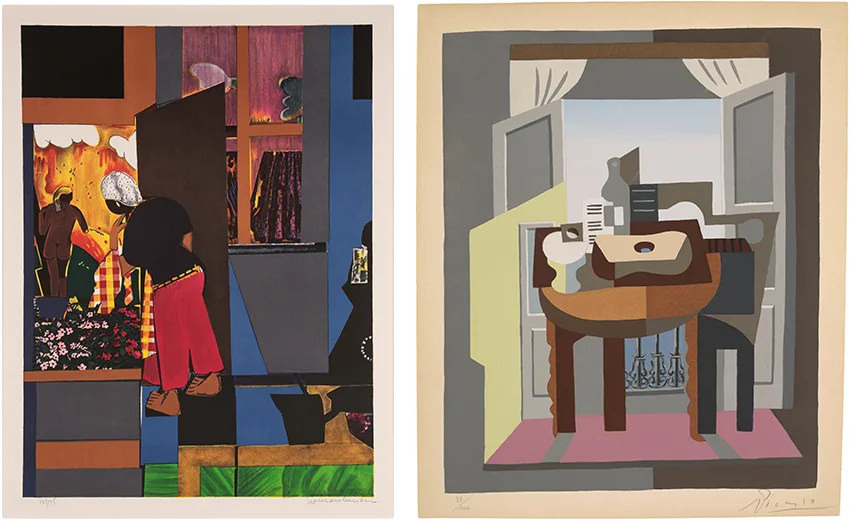
The first, Parts of the Body, Hair and Eye (1963) by Larry Rivers, reflects the intellectual and artistic spirit of the Beat era. Rivers, a major figure in postwar American art, used the visual language of Pop Art to deconstruct the human form, mirroring the themes explored by Beat writers and poets.
To honor the Bellios family’s Greek heritage, the museum also acquired The Mirror at Midnight II (1942) by William Baziotes, whose parents, like Connie’s, were Greek immigrants. Baziotes, a key figure among the abstract expressionists, created this work early in his career as he was exploring the influence of Surrealism and the beginnings of his signature abstract style. The painting was exhibited in two landmark shows at Peggy Guggenheim’s short-lived, but influential, New York gallery Art of This Century.
All of these new acquisitions, along with several exciting longterm loans, including one of Georgia O’Keeffe’s earliest flower paintings, recently acquired by the Thomas H. and Diane DeMell Jacobsen, Ph.D., Foundation — are currently on view in the American and Modern and Contemporary galleries at Mint Museum Uptown.
Jonathan Stuhlman, PhD, is senior curator of American Art at The Mint Museum.
Want to support the Mint?
The Dwelle-McBryde Society is The Mint Museum’s planned giving program named in honor of the contributions of Mary Myers Dwelle and Neill McBryde. Planned gifts are an effective, thoughtful way to support the museum while also ensuring its bright future. Planned gifts include bequests, charitable trusts (remainder and lead), gifts of retirement plan assets, gifts of art, and more. All individuals who document a planned gift will be welcomed as members of the Dwelle-McBryde Society.
If you are interested in learning more about the Dwelle-McBryde Society, please contact Kitty Hall at kitty.hall@mintmuseum.org or 704.337.2034.
Santos de palo on view in the gallery at Mint Museum Randolph.
By Dorie Reents-Budet, PhD
Carvings of santos de palo, “wooden household saints,” are a uniquely Puerto Rican artistic heritage. These sculptures intricately intermingle the nation’s Hispanic Catholic framework with indigenous Taíno/Carib and African elements into a singular folk artform. Spanning 400-plus years, santos de palo have come to symbolize Puerto Rican national identity, embodying multicultural traditions steeped in spiritual faith, personal strength, and a resourceful response to hardships.
The tradition of carving sacred Catholic images began in the 16th Century among Puerto Rico’s first Spanish immigrants. In the 1500s, Franciscan friars came to Puerto Rico to convert the indigenous Taíno people to Catholicism. The friars needed images of the saints for their evangelical efforts, but few were available. Taking advantage of the ancient Taíno tradition of wood carving and carpentry, the friars turned to untrained immigrants and native Taíno artisans to carve the Catholic images.
These early carvers copied the Spanish Baroque style. By the early 1600s, santeros (translated as “carvers of wooden saints”) also made small, less opulent carvings that came to be known as santos de palo, “saints of wooden branches.” This literal translation conveys the precious objects’ origin as tree branches, roots, and cast-off lumber.
The two port towns of San Juan and Ponce held most of the population, and the island’s rough interior was sparsely populated by peasant farmers. Few priests ventured into the countryside, and local chapels were nearly absent. The isolation stimulated the development of a folk version of Catholicism, and the faithful worshipped at humble home altars to express their faith and seek divine protection from daily hardships, sickness, and catastrophic weather events. Lacking money and access to religious sculptures, peasants carved their own holy figures by copying images from prayer cards distributed by the infrequently visiting priests.
By the 1750s, santeros had invented a distinctive, austere format better suited to local materials. Santos were made from whatever local wood was available, but carvers preferred Spanish cedar because it was abundant, soft, and resistant to rot. Paints were either homemade or were remnants of commercial pigments. Santeros also introduced iconographic innovations in response to the beliefs and practices of their folk Catholicism and perhaps also from Taíno and African traditions.
The santos de palo repertoire features many different saints and aspects of the Virgin Mary. Among the most popular are the Three Kings, Our Lady of Montserrat, and the Miracle of Hormigueros.
Jesús Antonio Crespo (Puerto Rican, circa 1847–circa 1920]. Los Tres Santos Reyes (The Three Kings), circa 1870, painted wood, mixed media. Toste-Mediavilla collection, B13
The Three Kings carvings best exemplify the transformation of the once humble santos de palo figures into a prime expression of Puerto Rican pride and identity. Puerto Rico is unmatched in the Catholic world for its expansive celebrations of the Christmas season beginning with the twelve days of Christmas, spanning December 25, the birth of the Christ Child, to Epiphany on January 6th, the day of the Three Kings’ visit to the Messiah. Beginning in the late 1950s, carvings of the Three Kings often incorporate Puerto Rican national symbols and references to the key activities of the Vigil of the Three Kings on the night before Epiphany and the Day of Epiphany celebrations.
Our Lady of Montserrat (or the Virgin of Montserrat) is one of the most popular saints in Puerto Rico, rivaled only by Our Lady of Mount Carmel. The two Virgins’ devotional importance is signified by being adorned with small silver milagros depicting animals and human body parts. These tiny adornments were offerings of thanks for the saint’s divine answer to prayers to heal an illness or resolve other life crises.
The first families of santos de palo carvers
The early santeros, all self-taught, did not make money from their craft but instead were drawn to create sacred statues as an expression of their faith and to give thanks for a saint’s divine answer to prayers. By the early 1800s, the first families of carvers emerged, including the Espada family of San Germán in southwestern Puerto Rico, the Cabán and Acre families of Camuy and Arecibo on the northwest coast, and the Riveras of the Orocovis area south of San Juan in the mountains.
The patriarch Felipe Espada initiated the ubiquitous Puerto Rican style of frontal, stiff poses, and simplified, almost abstract, body shapes and proportions. The Rivera family of carvers spans five generations from the 19th century to today, and their artistic style has influenced santeros for more than 150 years. The Rivera style features rounded faces and figural forms with large heads and small bodies which intimately draw together worshipper and saint. Similarly, the Arce family focuses on transmitting a message with each santo de palo by emphasizing the saints’ faces and body positions, their large, wide-open eyes and gestures directly engaging the devotee in spiritual interaction. In nearby Camuy, the three generations of the Cabán family established the ubiquitous Puerto Rican style, first outlined by the Espada family, and fully developed by Florencio Cabán.
From independence to decline and revitalization
Beginning in the late 19th century, independent carvers added their own styles to the santos de palo tradition, yet the tradition was slowly declining. In the 1930s, a few individuals realized the need to rescue the santos de palos tradition from decline. Foremost among them was Ricardo Alegría, PhD, a Harvard-educated anthropologist and the father of Puerto Rican archaeology. He understood not only the importance of saving the old santos de palo as cultural patrimony, but also the need to support living santeros so that they could train new carvers to revitalize the tradition. His preservation efforts were advanced by the Ateneo Puertorriqueño (Atheneum of Puerto Rico) that sponsored carvers’ competitions during the 1950s and hired the best graphic artists to create posters advertising the competitions and public exhibitions. The Ponce Museum of Art joined these efforts which continues today.
Inside the galleries at Mint Museum Randolph.
Dr. Alegría also pressured the government to establish the Institute of Puerto Rican Culture (Instituto de Cultura Puertorriqueña). Created in 1955 and headed by Alegría, the Institute sponsors carvers’ competitions, folk art festivals, museum exhibits, classes taught by the best carvers, and building and displaying the national collection of santos de palo.
These efforts revitalized the market for santos de palo and encouraged carvers with a new sense of competition and experimentation. Today, makers of wooden sculptures in the santos de palo tradition are called talladores (“carvers”) to reflect the broader subject matter, and many have professional training in studio art, art history, or related fields of technical and academic study. The mid-20th century’s revitalization efforts changed the public’s view of santos de palo from naïve carvings to museum-quality fine art with high monetary value which, in turn, has broadened the market in Puerto Rico and abroad.
The Toste-Mediavilla Collection
Nitza Mediavilla Piñero and Francisco (“Paco”) Toste Santana began collecting santos sculptures in the early 1970s. They were among the first wave of collectors who valued this unique carving tradition as fine art, assembling a diverse collection spanning the 18th-21st centuries. The Tostes conducted extensive research on their pieces, the carvers, and the history of the santos tradition. They became friends with many santeros who shared insights into their and others’ artworks. Nitza, an accomplished santera (female carver of saints) with a university fine arts degree and studio training by carver Roberto Ríos, has authored four excellent books on the topic. Paco lectures widely, most recently presenting a nine-part, university-level santos de palo course sponsored by the Centro de Estudios Avanzados de Puerto Rico y El Caribe. Of special importance is the Tostes’ archive of santos articles, brochures, recordings, photographs, and the superb serigraph posters from the 1950s-1990s announcing santeros competitions and exhibitions. Many were created by Puerto Rico’s best graphic artists. Now living in Charlotte, Paco and Nitza are pleased to share their collection of santos de palo with The Mint Museum in the exhibition Art of Devotion.
“We encountered the santos de palo tradition in the 1970s and soon acquired our first figure. From the moment we learned about the santos sculptures, we became obsessed with bringing their artistry to light,” says Francisco “Paco” Toste. “Our family has long wanted to share the cultural legacy of the santos de palo with our wider community. As Charlotte residents, we are delighted that The Mint Museum has selected this presentation of devotional art from our collection.”
Dorie Reents-Budet, PhD, specializes in art of the ancient Americas. She is a research associate at the National Museum of Natural History, Smithsonian Institution, has been an independent museum curator for 25 years, and is the curator of Art of Devotion.
Alex Gutierrez Mendez, membership services manager
By Michele Huggins
Alex Gutierrez Mendez, the Mint’s membership services manager, has a love for photography, community, and good food. Originally from Veracruz, Mexico, and raised in North Carolina, Gutierrez Mendez came to Charlotte to grow his career and found a place where he can help to connect others to the art he loves.
What is something about your job that may surprise people?
I think a lot of people don’t realize how much goes on behind the scenes in the role of membership manager. It is easy to assume the job is just about signing people up for museum memberships, but it is so much more than that. Membership is deeply connected to the museum’s programming and exhibitions. We help support exhibitions not only through funding, but also by participating in committees that give input on what is coming to the Mint. When a new exhibition opens, I am just as excited as our members because I have been part of the journey from the early stages.
What drew you to work in an art museum?
In college, I worked at a museum that wasn’t focused on art, but the experience sparked my interest in the museum world. What draws me most to art museums is the creativity and freedom of expression they offer. It’s a space where I can be myself and take pride in the work I do.Photography is where my passion for art truly lies. I am a self-taught photographer for 12 years now. I would love to have my own studio space to create and grow.
What are your interests outside of the museum?
As a creative person, I am always exploring new interests and projects. Right now, I’m into tennis and photography, which keeps me both active and inspired. I also love Charlotte’s food scene — there is always something new to try, and I am always up for the adventure.
What is your favorite work currently on display at Mint and why?
Capoeira Dancers by Keith Harring. I have always admired his art and social work in the art world, especially for the LGBTQ+ community. His works show that art does more than just inspire but also educates the public on social issues.
What are three must-do things for someone who has never visited The Mint Museum?
Check out the permanent collection. A lot of visitors are always excited for our special exhibitions, but they may not realize we also rotate and refresh our permanent collection with exciting works of art.
Check out The Mint Museum Store. I don’t know how many times I have gone there and tried NOT to spend money. The store manager always has a great selection of items for sale.
Sign up for a membership! Even if art is something new to you, there is something for everyone here. Your support isn’t just for the art, but also the programming. In today’s climate, supporting nonprofits is crucial as we provide a space not just for you but for the younger generation, so they can have a solid foundation in arts and culture.
Michele Huggins is associate director of marketing and communications at The Mint Museum.
Kat Sanchez
By Page Leggett
Katrina Sánchez’s fiber art lures you in with its vibrant colors. Its highly tactile nature makes you want to touch it, hold it, handle it. It just looks playful.
But unless Sánchez has created a piece specifically labeled as “OK to touch” — as she often does for exhibitions since “the interactive piece is a core part of my work” — it’s better to hold it in your gaze instead of your hands.
“Fiber tends to show the amount of touch it receives,” she explains.
Sánchez makes each piece with a hand-operated knitting machine. “I like pointing that out,” she says, “because the average person might think it’s an easy, automated process — and it’s not. I’m feeding the yarn in and controlling the tension, the speed of the machine, the amount of knots happening in the yarn. It’s a dual process that includes made by hand and machine-made.”
The art world has taken notice. Her work has been exhibited nationally and internationally, including a recent showing at the VOLTA Art Fair in Basel, Switzerland. Corporate giants including Lowe’s, Credit Karma, and Truist have commissioned her, and she’s currently preparing for a solo exhibition at a Los Angeles gallery.
Sánchez’s soft sculptures will be on view at Mint Museum Randolph beginning in October as part of the Mint’s Interventions series. A limitless palate of color, Sánchez’s colors are rich, saturated, eye-popping and varied.
A maker since childhood
The Panama native, born to an American military father and a Panamanian mother, says that love for color is in her DNA. “When thinking about color, I always think back to my home country and how colorful it is.”
Images courtesy of Kat Sanchez
As a child, she would visit Panama every summer and be each visit she was struck by the contrast between the United States and Panama. “There’s a big cultural difference,” she says. “The houses there are neon yellow and pink and green. I’d come home and see gray and white houses and complain to my mom about how boring that was. I’ve always been extremely drawn to color and naturally incorporated it into my work.”
She loves all colors, but there’s one that pops up (and out!) often in her work. Although green dominates her wardrobe and home décor, she says, “There’s something about hot pink. You’ll almost always see it in my work. It can go well with everything, while also giving a pop. It’s almost like the way a lot of painters use red in their work as a focal point — something your eye gravitates toward.”
Sánchez, who goes by “The Fiberess” on social media, has always been a maker. But “artist” wasn’t her career ambition: “Growing up, I never knew anyone who was a working artist. It just didn’t seem within the realm of possibility.”
Sánchez comes from a long line of seamstresses, each of whom passed down needlework traditions to the next generation. Her mom, grandmother and great-grandmother all sewed. Her mom taught her to crochet when she was 10, and her first project was a blanket for the little brother her mom was expecting.
Art’s healing power
Professional recognition came early for Sánchez. While still in college at UNC Charlotte, she started exhibiting in local art shows. Soon after earning her bacherlor’s degree in fine art, she was selected for a residency at Goodyear Arts, which she says, “propelled me into being an active part of the Charlotte art scene. I got to be part of a community and meet professional artists, which gave me a foundation and a nudge to keep going once I no longer had the structure school provides.”
In the first couple of years after college, she had a series of creative roles — pastry chef, jewelry designer, seamstress — before devoting herself full-time to fiber art. Her studio is in the same place where her career began — at Goodyear Arts.
During that residency, she honed her unmistakable style. She’d developed what she calls the “knitted noodle” — oversized, plush linear forms that have become her signature. But she increased their scale and found new meaning in the work when, she “decided to look inward and create work about healing.”
She started by mending old clothing and creating tapestries in the process. She began pondering the reciprocal relationship between humans and the things, like clothing and our homes, that “shield and shelter us,” she says.
A message woven into her art
There’s almost always more to a work of art than meets the eye. Sánchez’s colorful, playful work belies the deeper meaning behind it. Even she didn’t immediately realize why she felt compelled to explore healing.
“I’ve always been empathetic and sensitive,” she says. “And I’ve always been prone to anxiety and stress. I think there’s been a need to self-soothe through the process of making.
That’s been my form of therapy. But if I think about what occurred right before my Goodyear residency, that’s when the shooting happened at UNCC.”
It was April 2019 when a former Charlotte student walked into a classroom and opened fire. Sánchez was on campus at the time. A professor led her and other students into the clay studio where they sheltered together “with no idea what was going on, no idea where the [shooter] could be,” she says.
The fear, the hiding, the uncertainty — it “was really traumatizing, of course, for everybody,” but she didn’t deal with it immediately. Delayed trauma response is common.
“I thought what I was feeling around that time was the stress of having to create a body of work for my residency,” says Sánchez. “I’m a perfectionist, and I put a lot of pressure on myself. It wasn’t until a year or so ago that I made the connection that it deeply affected me and my peers.”
Her soft, puffy, tactile work — often in the colors she recalls from childhood summers in Panama — looks almost child-like. There’s a playfulness to it, but also innocence. No adult can fully hold onto the sweet naivete of childhood, but we can work toward healing the wounds life deals all of us.
That is what Sánchez’s artmaking does for her. Her finished pieces bear no trace of pain, fear, or trauma. They simply exude joy.
Page Leggett is a Charlotte-based freelance writer. Her stories have appeared in The Charlotte Observer, The Biscuit, Charlotte magazine and many other regional publications.
Maja Godlewska, monotype, natural and synthetic dyes and ink on Fabriano, detail.
Maja Godlewska’s The Fluid Landscapes, a meditation on nature, memory, and human impact, debuts at Mint Museum Uptown
Charlotte, North Carolina (September 30, 2025) — Artist Maja Godlewska has spent the last two decades exploring the intricate, and often disruptive, ways humanity interacts with the natural world. Her newest body of work is an exploration of tourism’s impact on the environment and will take center stage as the next Constellation CLT installation at Mint Museum Uptown, on view from October 3, 2025 through March 1, 2026.
Informed by her global residencies and travel, Godlewska brings an international perspective to her work. Where conversations focus on climate change, Godlewska asks us to look closer at something more personal: our own desire to see the world and how our explorations effect the environment.
“This body of work is rooted in my memories and experiences of landscapes I have once visited. I often chose to follow tourists through spectacular environments, struck by how quickly we just capture a view and hurry to the next. Beneath this rush is the sense of inevitable loss—of natural habitats, of environments once considered eternal, from ice fields to rainforests. A global urgency to see them before they vanish only continues to grow. The works in this exhibition are my contemplations of nature: expressions of wonder and longing, invitations to pause, to look closely, and to revere,” Godlewska says.
Her large-scale, immersive installations—crafted with watercolor paper, ink, and sculptural forms—mimic the rhythms of the land while evoking memory, movement, and erosion. Each undulating surface invites viewers to slow down, to look rather than scroll, and to reflect on the paradox of wanting to preserve beauty even as we consume it.
With major accolades including a Fulbright Fellowship, North Carolina Arts Council Fellowships, and international grants from the European Union and Kosciuszko Foundation, Godlewska has long been recognized for her ability to merge aesthetic power with critical insight. This new installation at the Mint is no exception.
In its eighth year, Constellation CLT is an exhibition series designed to connect visitors to The Mint Museum with artists in our community. Godlewska’s installations can be seen in six places at Mint Museum Uptown: at the museum entryway; on the landings of the Mezzanine and Levels 3 and 4; in the Contemporary Galleries, and in Mint Museum Store Uptown.
ABOUT THE ARTIST
Maja Godlewska studied at the Academy of Fine and Design Arts in Wrocław, Poland. She currently serves as professor and area coordinator for painting in the department of art and art history at the University of North Carolina at Charlotte. Her work has been exhibited internationally and is held in numerous public and private collections.
###
ABOUT THE MINT MUSEUM
Established in 1936 as north Carolina’s first art museum, The Mint Museum is a leading, innovative cultural institution and museum of international art and design. With two locations — Mint Museum Randolph in the heart of Eastover and Mint Museum Uptown at Levine Center for the Arts — the Mint boasts one of the largest collections in the Southeast and is committed to engaging and inspiring members of the global community.
Emile Schuffenecker (French, 1851-1934). Falaise a Etretat (cliff at Etretat), 1912, oil on canvas. The Smith-Naifeh Collection.
The Mint Museum presents major exhibition of 19th-century European masterworks
Renaissance, Romanticism, and Rebellion: European Art from the Smith-Naifeh Collection
On view October 11, 2025–February 22, 2026 at Mint Museum Uptown
Charlotte, North Carolina (September 25, 2025) —The Mint Museum is proud to present a major exhibition exploring the artistic and cultural revolutions of 19th-century Europe. Renaissance, Romanticism, and Rebellion: European Art from the Smith-Naifeh Collection brings together more than 70 extraordinary paintings, sculptures, and works on paper—offering visitors a rare opportunity to view one of the most distinguished private collections of European art in the United States.
Curated entirely from the acclaimed Smith-Naifeh Collection—meticulously assembled over decades by South Carolina-based scholars and collectors Gregory White Smith and Steven Naifeh—the exhibition captures a century of dramatic artistic transformation. Many of the artists featured were pioneers in their time, influencing or working alongside revolutionary figures such as Vincent van Gogh, the subject of Smith and Naifeh’s bestselling and critically acclaimed biography “Van Gogh: The Life.”
The exhibition is organized into three thematic sections that trace the evolution of 19th-century European art:
Renaissance explores the classical ideals of beauty, harmony, and academic precision that dominated the elite salons of Europe.
Romanticism delves into the emotional and spiritual power of art, featuring evocative landscapes and dramatic narratives that speak to the human condition.
Rebellion highlights the daring innovators who broke from tradition, challenging academic norms and laying the groundwork for the birth of modernism.
“This exhibition is not only an extraordinary visual journey,” says Todd Herman, PhD, president and CEO of The Mint Museum, “but also atestament to the power of private collecting as a form of scholarship and preservation.”
EXHIBITION OPENING EVENT
An Evening with Steve Naifeh: A Life of Writing and Art
October 9 | 7:30–8:30 PM
Mint Museum Uptown | Free
All are invited to join Mint President and CEO Todd Herman, PhD, and author and collector Steven Naifeh for a special conversation celebrating the opening of Renaissance, Romanticism, and Rebellion: European Art from the Smith-Naifeh Collection. Naifeh will discuss the collection he builtwith his late partner Gregory White Smith and how their shared love of art intertwined with their celebrated careers as writers.
To learn more, visit mintmuseum.org.
ABOUT THE COLLECTORS
Steven Naifeh built the Smith-Naifeh Collection with his late partner, Gregory White Smith, during their celebrated careers as Pulitzer Prize–winning biographers and authors. Naifeh has published more than 15 books, including “The Mormon Murders,” “Final Justice,” “On a StreetCalled Easy,” “In a Cottage Called Joye,” and two landmark biographies: “Jackson Pollock: An American Saga” and “Van Gogh: The Life.” His work has garnered widespread acclaim, including multiple appearances on The New York Times Bestseller list.
ABOUT THE MINT MUSEUM
Established in 1936 as north Carolina’s first art museum, The Mint Museum is a leading, innovative cultural institution and museum ofinternational art and design. With two locations — Mint Museum Randolph in the heart of Eastover and Mint Museum Uptown at Levine Centerfor the Arts — the Mint boasts one of the largest collections in the Southeast and is committed to engaging and inspiring members of the globalcommunity.
For more information, please contact:
Michele Huggins, associate director of marketing and communicationsmichele.huggins@mintmuseum.org | 704.564.0826
Clayton Sealey, senior director of marketing and communicationsclayton.sealey@mintmuseum.org | 704.534.0186
Josh Frazier, TradeTryon-2005, by Richie McCorkle
Central Impact: Skateboarding’s Art and Influence celebrates local and national skateboard legends
On view September 20, 2025–January 4, 2026 at Mint Museum Randolph
Charlotte, NC (September 9, 2025) —Central Impact: Skateboarding’s Art and Influence, opening September 20 at Mint Museum Randolph, explores skateboarding through its most iconic canvas: the deck. But the exhibition is more than a look at skateboard graphics—it’s a deep dive into the cultural currents that have shaped skateboarding in the Southeast and beyond.
Spanning from the 1980s to today, Central Impact brings together rare boards, original artwork, and archival media that trace the evolution of skate culture. The exhibition features works by legendary artists including Sean Cliver, Marc McKee, and Andy Jenkins, alongside curated collections from leading archivists and contributors such as Tim Anderson, Josh Frazier, Andrew Thomas, and Patrick Lowery.
At its core, Central Impact is a tribute to Charlotte and Southeastern skate communities—celebrating the professionals, local legends, and unsung heroes, such as Kenny Hughes, Josh Frazier, Mike Sinclair, Bob Reynolds, and Ty Brown, who helped shape the region’s unique DIY skate ethos. From the early days on Central Avenue in Charlotte to grassroots-built spots like Eastland and Kilborne, Charlotte’s skaters have built more than ramps and rails—they’ve built culture, community, and a legacy of independence and creativity.
The exhibition is curated by Deckaid, a volunteer-run nonprofit, in collaboration with Black Sheep Skate Shop. Proceeds will benefit the Charlotte Skate Foundation, supporting youth engagement and skatepark development in the region. The exhibition is sponsored by Converse Cons.
###
About The Mint Museum
Established in 1936 as north Carolina’s first art museum, The Mint Museum is a leading, innovative cultural institution and museum of international art and design. With two locations — Mint Museum Randolph in the heart of Eastover and Mint Museum Uptown at Levine Center for the Arts — the Mint boasts one of the largest collections in the Southeast and is committed to engaging and inspiring members of the global community.
For media inquiries or more information, please contact:
CHARLOTTE, N.C. – Aug. 27, 2025 – The 19th Annual Potters Market at the Mint—North Carolina’s largest pottery sale featuring the state’s top ceramic talent—will take place Saturday, Sept. 27, from 9 a.m. to 4 p.m. on the lawn of Mint Museum Randolph, located at 2730 Randolph Road in Charlotte.
Hosted by The Mint Museum, this one-day event will highlight work from more than 50 acclaimed North Carolina potters selected through a competitive jury process. The event offers a rare opportunity to view and purchase high-quality ceramics directly from the artists, while also supporting arts education and programming at The Mint Museum through ticket sales. The Potters Market is the Mint’s second largest annual fundraiser after their Coveted Couture Gala held on the last Saturday of April.
Falling on the one-year anniversary of Hurricane Helene, which had a devastating impact on many potters in Western North Carolina, this year’s event has added meaning. In a show of solidarity and support, more than 30 artists from that region will be among the featured exhibitors.
In addition to shopping, guests can enjoy pottery demonstrations, live music, a beer garden, and local food vendors. Tickets start at $25 (taxes and fees included) per person. To learn more and purchase tickets, visit pottersmarketatthemint.com.
Through the generous support of Principal® Foundation, a global nonprofit organization committed to helping people and communities build financially secure futures and presenting sponsor of this year’s Potters Market for the second year in a row, booth fees and associated rental costs for participating potters are fully covered. The initiative comes in response to the devastating impact of Hurricane Helene on potters and the artistic community in Western North Carolina. Recognizing the financial strain caused by this natural disaster, Principal Foundation’s support helps ensure that all selected potters may display their work without incurring these costs.
“Supporting economic recovery in the aftermath of disasters is essential for small businesses and artists—the very fabric of local communities—to rebuild and thrive. At Principal Foundation, supporting programs that advance social and cultural connections and financial inclusion are core aspects of our grantmaking because they strengthen communities and foster resilience,” said Jo Christine Miles, director, Principal Foundation and Community Relations, Principal Financial Group®. “We’re excited to support the Potters Market, which not only helps artists recover but also sustains the arts as a vital force in rebuilding and reconnecting communities.”
New this year, the 2025 Potters Market is dedicated in memory of Peggy and Bob Culbertson, long-time supporters of The Mint Museum and passionate, astute collectors of craft. In their honor, “The Peggy and Bob Culbertson Award” will be presented to the Best New Exhibitor. The annual award celebrates the spirit of discovery, excellence, and dedication to craft that Peggy and Bob Culbertson championed throughout their lives.
“This event is a beloved tradition that not only celebrates North Carolina’s rich pottery heritage but also supports working artists and helps further The Mint Museum’s mission to make art accessible to all,” says Todd Herman, PhD, president and CEO of The Mint Museum. “We are incredibly grateful to Principal Foundation for their outstanding partnership and unwavering support of our participating potters. Their generosity helps make this year’s event more accessible and impactful for the artists involved.”
About The Mint Museum
Established in 1936 as North Carolina’s first art museum, The Mint Museum is a leading, innovative cultural institution and museum of international art and design. With two locations — Mint Museum Randolph in the heart of Eastover and Mint Museum Uptown at Levine Center for the Arts — the Mint boasts one of the largest collections in the Southeast and is committed to engaging and inspiring members of the global community. For more information, visit mintmuseum.org.
About Principal Foundation
Principal Financial Group Foundation, Inc. (“Principal Foundation”) is a duly recognized Section 501(c)(3) entity focused on providing philanthropic support to programs that build financial security in the communities where Principal Financial Group, Inc. (“Principal”) operates. While Principal Foundation receives funding from Principal, Principal Foundation is a distinct, independent, charitable entity. Principal Foundation does not practice any form of investment advisory services and is not authorized to do so. Established in 1987, Principal Foundation works with organizations that are helping to shape and support the journey to financial security by ensuring access to essential needs, fostering social and cultural connections, and promoting financial inclusion. Principal Foundation supports a diverse community of 85 charitable organizations across the globe. – 4562785-062025
Roger Fenton (British, 1819–69). Officers of the 42nd Highlanders, 1856, 1856 negative, albumen print.
FOR IMMEDIATE RELEASE
Charlotte, North Carolina (August 19, 2025) — As part of an initiative to diversify its collection and deepen community engagement, The Mint Museum is set to transform its photography holdings into one of the premier collections in the Southeastern United States. With a generous multiyear gift from Bank of America, The Mint Museum will receive more than 1,000 photographs over the next five years—doubling the Mint’s photography collection and laying the foundation for a gallery space dedicated to displaying the Mint’s photography collection.
The first group of photographs arrived at the museum in mid-August and features a compelling selection that reflects the breadth and depth of Bank of America’s collection with historic works from the 19th century included with 20th and 21st century. This initial group of images emphasizes the work of Southern photographers highlighting their voices and perspectives.
The creation of a dedicated photography gallery will ensure that photography installations are always on view at the Mint and serve as a resource for artists, educators, and students. It will expand access to world-class photography, support artist development, and inspire public programming that is both inclusive and innovative.
“Photography is one of the most accessible and dynamic mediums today,” says Todd A. Herman, PhD, president and CEO of The Mint Museum. “It reflects how we see the world—and how the world sees us. This transformative gift allows us to share powerful stories, cultivate new talent, and serve our community in new and meaningful ways.”
Among the artists featured in the donation are some of the most significant names in photography, including Richard Avedon, Chuck Close, Rineke Dijkstra, Lee Friedlander, Lyle Ashton Harris, Candida Höfer, Sally Mann, Robert Mapplethorpe, Richard Misrach, Catherine Opie, Irving Penn, Raghubir Singh, Paul Strand, William E. Williams, and Garry Winogrand.
“We are excited to support The Mint Museum as it transforms its photography collection into one of the premier exhibits in the Southeast,” says Kieth Cockrell, president of Bank of America Charlotte. “We believe investing in the arts has a positive impact on our lives and enriches the local communities we serve. The donation of these photographs is part of our continuing commitment to creating a brighter future for Charlotte.”
Bank of America believes that art helps support the local economy, promotes creativity and fosters greater cultural understanding. As the bank has grown over the past several decades, it acquired various art collections from legacy institutions like NCNB and LaSalle Bank which were purchased to decorate offices. Today, this “collection of collections” is composed of more than 20,000 works by a diverse array of artists, including many of the most important in the history of photography.
To further support the expansion of this collection, The Mint plans to:
Launch a “Friends of Photography” support group to help grow the collection and build community connections.
Host a major photography exhibition in 2027 celebrating the gift, organized by Chief Curator and Curator of Contemporary Art Jen Sudul Edwards, PhD. Allen Blevins, former Bank of America arts and culture executive, and Kelle Botkin, former assistant to the curator of the Hallmark Photography Collection, have been integral to the selection of this gift and will serve as advisors for this first exhibition.
###
About The Mint Museum
Established in 1936 as north Carolina’s first art museum, The Mint Museum is a leading, innovative cultural institution and museum of international art and design. With two locations — Mint Museum Randolph in the heart of Eastover and Mint Museum Uptown at Levine Center for the Arts — the Mint boasts one of the largest collections in the Southeast and is committed to engaging and inspiring members of the global community.
Jeff Staple x RTFKT, Meta-Pigeon K-Minus, 2021, Collection of the Bata Shoe Museum, gift of RTFKT. Image courtesy of RTFKT.
Future Now: Virtual Sneakers to Cutting-Edge Kicks
On view September 20, 2025–January 4, 2026 at Mint Museum Randolph
Charlotte, North Carolina (August 8, 2025) — Future Now: Virtual Sneakers to Cutting-Edge Kicks explores the evolution of shoes, from 19th-century industrial breakthroughs to today’s boundary-pushing designs built for both the real world and the metaverse.
Organized in collaboration with the American Federation of Arts and the Bata Shoe Museum, Future Now brings together approximately 60 cutting-edge footwear designs from the Bata Shoe Museum’s renowned collection—home to more than 13,000 pairs of shoes—as well as loans from institutions, private collectors, visionary designers, and inventors around the globe.
Featured designers include trailblazers such as Salehe Bembury, Steven Smith, RTFKT, Mr. Bailey, Zaha Hadid, Nike ISPA, Safa Şahin, EKTO VR, Saysh, Benoit Méléard, SCRY, and many more. Their work explores the intersection of technology, sustainability, fashion, and virtual innovation.
The exhibition, organized into five sections, begins with an overview of new technologies and materials from the 19th and 20th centuries and includes some of the earliest sneakers, made in the 1890s, and evening shoes with celluloid heels from the 1920s.
Mr. Bailey, Octopus Shoe, 2018. Collection of Mr. Bailey. Image courtesy of Mr. Bailey.
The historical context of the show traces the shift from artisan shoemaking in the 19th century to mass production—driven by industrialization and new synthetic materials—highlighting the resulting cultural, social, and environmental challenges. The contemporary designers reflect on this legacy while imagining more inclusive, eco-conscious, and technologically advanced futures.
“Incredible and innovative new footwear designs promise to transform what we will wear tomorrow,” says Elizabeth Semmelhack, curator of the exhibition and director and senior curator of the Bata Shoe Museum. “From sneakers created to address sustainability and inclusion to shoes that blur the line between the real world and the metaverse, this exhibition explores how forward-looking creators are helping us step into the future.”
Future Now: Virtual Sneakers to Cutting-Edge Kicks is co-organized by the American Federation of Arts and the Bata Shoe Museum. This exhibition is curated by Elizabeth Semmelhack, Director and Senior Curator, Bata Shoe Museum. The exhibition is generously sponsored in Charlotte by PNC. Individual sponsorship is kindly provided by Kati and Chris Small, and Ann and Michael Tarwater. The Mint Museum is supported, in part, by the City of Charlotte and the North Carolina Arts Council.
Special Events:
Party in the Park | Sneakspeaks
October 26, 1–5 PM
Mint Museum Randolph | FREE
To celebrate the exhibition, the Mint will host a community celebration on October 26 during Party in the Park at Mint Museum Randolph. The event will include free museum admission, custom sole station in collaboration with Shoedio, a panel discussion about sneaker concept and design, a sneaker stroll, and sneaker battle, plus food trucks, a live DJ, and cash bar.
Public talk with Elizabeth Semmelhack November 16, 2–3 PM
Mint Museum Randolph | FREE
Bata Shoe Museum Director and Senior Curator Elizabeth Semmelhack is one of the best-known shoe historians today. Hear directly from Semmelhack about why shoes matter, what they say about us as wearers, and how designers are revolutionizing what we will put on our feet tomorrow. Semmelhack has curated over 20 exhibitions and authored more than 30 articles and books, including the acclaimed “Out of the Box: The Rise of Sneaker Culture.” Her work has been featured in “The New York Times,” “Vogue,” “National Geographic,” and on NBC’s “Today Show.”
Exhibition catalogue
The exhibition is accompanied by a visually rich catalogue published by Rizzoli Electa. Originally developed for the presentation at the Bata Shoe Museum (May 2022–October 2023), the book includes in-depth interviews with designers such as Allyson Felix, Salehe Bembury, Mr. Bailey, and more, offering insights into the creative processes and inspirations shaping the future of footwear.
About the curator
Elizabeth Semmelhack is internationally recognized as one of the leading voices in fashion curation. As Director and Senior Curator at the Bata Shoe Museum, she has curated over 20 exhibitions and authored more than 30 articles and books, including the acclaimed “Out of the Box: The Rise of Sneaker Culture.” Her work has been featured in “The New York Times,” “Vogue,” “National Geographic,” and on NBC’s “Today Show.”
About The Mint Museum
Established in 1936 as north Carolina’s first art museum, The Mint Museum is a leading, innovative cultural institution and museum of international art and design. With two locations — Mint Museum Randolph in the heart of Eastover and Mint Museum Uptown at Levine Center for the Arts — the Mint boasts one of the largest collections in the Southeast and is committed to engaging and inspiring members of the global community.
About the American Federation of Arts
Founded in 1909, the American Federation of Arts is a nonprofit organization dedicated to enriching the public’s understanding of visual arts through international traveling exhibitions, scholarly publications, and educational initiatives.
About the Bata Shoe Museum
Established in 1995 in Toronto, Canada, the Bata Shoe Museum houses one of the world’s largest and most comprehensive footwear collections. The museum is recognized globally for its innovative exhibitions and material culture research, all housed in its iconic Raymond Moriyama-designed building.
For more information or to schedule interviews, contact:
Michele Huggins, associate director of marketing and communications michele.huggins@mintmuseum.org | 704.564.0826
As part of the newly rotated permanent collections at the Mint Museum Randolph, the installation Crafting a Response: Bob Trotman and Anne Lemanski, shown alongside the contemplative ceramic vessels of Toshiko Takaezu, explore identity, power, and the human connection to the natural world.
Though rooted in different materials and traditions, all three artists challenge how we see—and what we choose to remember.
Power and Play
Renowned for their craftsmanship, North Carolina artists Bob Trotman and Anne Lemanski use wood and paper not just for form, but to critique social structure and its influence on our lives.
Self-taught in woodworking, Trotman began making functional furniture that, over time, began incorporating the human figure, before turning fully to sculpture at age 50. His suited male figures—drawn from a 1950s corporate archetype—satirize systems of dominance with a sharp wit reminiscent of MAD Magazine.
“Cover Up” by artist Bob Trotman is made of wood, tempera, and wax.
Raised in Michigan but long settled in Spruce Pine near Penland, Anne Lemanski creates a “skin” for her forms that tell a tale. Lemanski scans collages created with cut-out images from mid-20th century reference books or photographs of everyday objects—deer corn, plastic straws—seemingly randomly discarded and then duplicated into a kaleidoscopic repeat pattern. These skins are stretched taut and sewn over metal armatures that Lemanski painstakingly bends into shape.
Whereas Trotman’s figures mainly linger in the corporate world, Lemanski’s wander all terrains—the plains, the home, and industry.
“A Century of Hair” is comprised of 10 multimedia works representing hairstyles through the decades from 1900-1990.
A Century of Hair by Lemanski addresses feminine expectations or conditions for each decade of the 20th century by constructing a popular hairstyle from a material rife with symbolism.
Other works—Bride of Monsanto, Simulacra—detail the dangers the natural world experiences as humans continue to modify and manipulate it.
“Simulacra” by Anne Lemanski is made up of three difference works.
Unity in Form
If one word captures Toshiko Takaezu’s creative vision, it’s unity—of surface and form, interior and exterior, functional and aesthetic, painting and sculpture, East and West, maker and medium, body and spirit, life and art. Over seven decades, she explored clay’s sculptural potential and glaze’s painterly effects, ultimately creating abstract three-dimensional paintings.
A group of ceramics by Toshiku Takaezu on view at Mint Museum Randolph.
While she began with functional vessels, her signature form became the closed, spherical pot—ranging from handheld to over five feet tall—evoking natural forms like stones, trees, and moons. Her layered glazes, applied through dripping, brushing, and immersion, often recall Hawaiian landscapes and reflect her rich cultural identity as a Japanese American born in Hawaii.
This installation features all 18 of Takaezu’s works in the Mint’s collection, most on view for the first time, displayed in groupings that emulate how Takaezu often displayed her work, with various sizes of vessels placed together on low platforms, evoking a rock garden or riverbed.
Works from the Mint’s permanent collection by these three artists are on view for a limited time, through August 10 at Mint Museum Randolph.
North Carolina’s premier pottery sale returns with 50+ top ceramic artists
FOR IMMEDIATE RELEASE | Potters Market at the Mint logos and images are available here
CHARLOTTE, N.C. – July 7, 2025 – The 19th Annual Potters Market at the Mint—North Carolina’s largest pottery sale featuring the state’s top ceramic talent—returns Saturday, Sept. 27, from 9 a.m. to 4 p.m. on the lawn of Mint Museum Randolph, located at 2730 Randolph Road in Charlotte.
Hosted by The Mint Museum, this one-day event will highlight work from more than 50 acclaimed North Carolina potters selected through a competitive jury process. The event offers a rare opportunity to view and purchase high-quality ceramics directly from the artists, while also supporting arts education and programming at The Mint Museum through ticket sales. The Potters Market is the Mint’s second largest annual fundraiser after their Coveted Couture Gala held on the last Saturday of April.
Falling on the one-year anniversary of Hurricane Helene, which had a devastating impact on many potters in Western North Carolina, this year’s event has added meaning. In a show of solidarity and support, 33 artists from that region will be among the featured exhibitors.
Through the generous support of Principal Foundation—presenting sponsor of this year’s Potters Market for the second year in a row—booth fees and associated rental costs for participating potters are fully covered. The initiative comes in response to the devastating impact of Hurricane Helene on potters and the artistic community in Western North Carolina. Recognizing the financial strain caused by this natural disaster, Principal Foundation’s support ensures that all selected potters may display their work without incurring these costs.
“This event is a beloved tradition that not only celebrates North Carolina’s rich pottery heritage but also supports working artists and helps further The Mint Museum’s mission to make art accessible to all,” says Todd Herman, PhD, president and CEO of The Mint Museum. “We are incredibly grateful to Principal Foundation for their outstanding partnership and unwavering support of our participating potters. Their generosity helps make this year’s event more accessible and impactful for the artists involved.”
New this year, the 2025 Potters Market is dedicated in memory of Peggy and Bob Culbertson, long-time supporters of The Mint Museum and passionate, astute collectors of craft. In their honor, “The Peggy and Bob Culbertson Award” will be presented to the Best New Exhibitor. The annual award celebrates the spirit of discovery, excellence, and dedication to craft that Peggy and Bob Culbertson championed throughout their lives.
In addition to shopping, guests can enjoy pottery demonstrations, live music, a beer garden, and local food vendors. Tickets start at $25 (taxes and fees included) per person.
Established in 1936 as North Carolina’s first art museum, The Mint Museum is a leading, innovative cultural institution and museum of international art and design. With two locations — Mint Museum Randolph in the heart of Eastover and Mint Museum Uptown at Levine Center for the Arts — the Mint boasts one of the largest collections in the Southeast and is committed to engaging and inspiring members of the global community. For more information, visit mintmuseum.org.
Víctor Rivera Mercado (Puerto Rican, 1958–). El Velorio de los Tres Santos Reyes (The Vigil for the Three Kings), 2019?, painted wood. Toste-Mediavilla collection, 294
FOR IMMEDIATE RELEASE
Art of Devotion: The Santos de Palo Tradition of Puerto Rico opens August 2 at Mint Museum Randolph
Charlotte, North Carolina (May 28, 2025) — Art of Devotion: The Santos de Palo Tradition of Puerto Rico includes more than 150 examples of Puerto Rican santos de palo—carved wooden sculptures of saints, holy figures, and sacred scenes—produced throughout the past 300 years. The exhibition will be on view August 2, 2025–July 5, 2026, at Mint Museum Randolph.
Curated by Dorie Reents-Budet, PhD, Art of Devotion surveys the development of the santos de palo art form and highlights the creativity of individual carvers (santeros) from 1750 to today. These carved wooden sculptures were created from local tree roots and branches and cast-off wood blocks. Santos de palo were essential for Catholic worship among the island’s rural population that, until the 20th century, had scant access to churches and priests. The faithful created home altars with a saintly figure to focus their devotions. People of special faith were called to the carving of santos for family use and trading with neighbors.
From this humble beginning, santos de palo today express not only religious faith but also Puerto Rico’s national identity. The sculptures embody its mixed-race and multicultural people and traditions, steeped in spiritual beliefs and resourceful responses to hardships.
Initially, santos de palo reflected a Spanish Baroque style because carvers copied sacred images on prayer cards distributed by traveling priests during the 16th and 18th centuries. By the late 18th century, santeros were introducing innovations suited to local artistic tastes and interpretations of Catholic imagery. Today’s santeros carve Christian figures, often with Puerto Rican symbols, and revered persons who embody the same characteristics as the Catholic saints.
Art of Devotion is drawn entirely from the extensive santos de palo collection of Nitza Mediavilla Piñero and Francisco Toste Santana, who recently moved to Charlotte from San Juan, Puerto Rico. This is the first exhibition featuring the Toste-Mediavilla santos collection.
“Art of Devotion continues the Mint Museum’s long-standing mission to feature craft as art and explore innovative expressions of the human creative spirit. The santo de palo tradition embodies not only spiritual faith but also the cultural pride of contemporary Puerto Rico, intermingling its Catholic heritage with contemporary topics while reflecting its Hispanic, indigenous Taíno and Carib, and African legacy,” says Dorie Reents-Budet, PhD.
Ticket Information
Admission to The Mint Museum exhibition is free for members and children ages 4 and younger, and students in grades K-12, plus college art students; $15 for adults; $10 for seniors ages 65 and older; and $10 for college students with ID. Both museum locations are free 5-9 PM every Wednesday. For museum hours, visit mintmuseum.org.
###
About Dorie Reents-Budet
Dorie Reents-Budet, PhD, specializes in art of the ancient Americas. She is a research associate at the National Museum of Natural History, Smithsonian Institution, and has been an independent museum curator for 25 years, including the Museum of Fine Arts Boston (1999-2019), The Mint Museum (2006-2013), the Denver Art Museum, the DeYoung Museum (San Francisco), and Casa K’inich (Copan, Honduras). She was a professor at the University of California at Santa Barbara, Duke University, and the University of North Carolina at Wilmington. She holds a BFA in studio art (University of Northern Colorado), an MA in anthropology and a PhD in art history (University of Texas at Austin). She resides in Durham, North Carolina.
About The Mint Museum
Established in 1936 as north Carolina’s first art museum, the mint museum is a leading, innovative cultural institution and museum of international art and design. With two locations — Mint Museum Randolph in the heart of Eastover and Mint Museum Uptown at Levine Center for the Arts — the Mint boasts one of the largest collections in the Southeast and is committed to engaging and inspiring members of the global community.
For more information or to schedule interviews, contact:
Einar (Mexican, 1963–) and Jamex (Mexican, 1960–) de la Torre. Oxymodern (Aztec Calendar), 2002, blown-glass, mixed-media wall installation, 120 x 120 x 12 in. Courtesy of the Cheech Marin Collection and Riverside Art Museum.
Collidoscope: de la Torre Brothers Retro-Perspective opens June 7 at Mint Museum Uptown
A celebration of the 30-year creative journey of artists Einar and Jamex de la Torre
Charlotte, North Carolina (May 6, 2025) — The Mint Museum is proud to present the vibrant and thought-provoking exhibition Collidoscope: de la Torre Brothers Retro-Perspective opening to the public June 7 at Mint Museum Uptown. The exhibition features 40 mixed media works by internationally celebrated artists and brothers Einar and Jamex de la Torre.
As much an intellectual and poetic journey as it is visual, the exhibition includes a wide range of blown-glass sculptures, immersive installation art, and dynamic lenticular pieces (works that shift imagery as the viewer moves) highlighting the brothers’ distinctive style.
Celebrating their 30-year creative journey, the exhibition title and curatorial design reflect the brothers’ creative process, combining conceptual play with technical mastery and a deep engagement with cultural identity. Their creations combine glass, found objects, resin, laser-cut metal, and lenticular prints.
Rich in symbolism, humor, and layered visual storytelling, the de la Torre brothers practice has earned international acclaim and a loyal following. Inspired by Mexican folk art, mythology, popular culture, consumerism, and religious iconography, their art offers a bold, multilayered exploration of the Latinx experience, as well as bicultural identity, politics, religion, and pop culture.
The de la Torre brothers have strong connections to North Carolina, having worked at both Penland School of Craft located in western North Carolina and Starworks centrally located in the state.
“The Mint is thrilled to bring this important exhibition to Charlotte. Our museum is praised worldwide for its collection of contemporary glass, and Collidoscope offers an in-depth look at the fantastic creations of ‘the brothers’ as they are affectionately known. Their collective imagination is matched by their technical virtuosity, keen wit, and courageous social commentary,” says Annie Carlano, senior director of Craft, Design, and Fashion at The Mint Museum. “It was important to the Mint and the brothers to bring Collidoscope to our community, vibrant as the objects in the exhibition itself.”
Collidoscope is organized into five thematic sections: Histerical Vignettes, Hybrid Dislocations, Systems and Cycles, Retracollage, and Other Works. The exhibition is further enhanced by a soundtrack inspired by the artists’ creative process.
Collidoscope in Charlotte is generously presented by Laura and Mike Grace. The national travelling exhibition is organized by The Cheech Marin Center for Chicano Art & Culture of the Riverside Art Museum in partnership with the Smithsonian’s National Museum of the American Latino.
Collidoscope is on view June 7–September 21, 2025 at Mint Museum Uptown at the Levine Center for the Arts, 500 S. Tryon St., Charlotte, North Carolina.
About the artists
Einar and Jamex de la Torre (born 1960 and 1963, respectively) have energized and expanded the notion of contemporary glass. Born in Guadalajara, Jalisco, México, and currently living between San Diego and Baja California, the de la Torre brothers have spent decades cultivating a body of work that seamlessly blends traditional techniques with contemporary themes and technology. The de la Torre Brothers are known for their collaborative mixed media works that fuse blown glass with lenticular imagery and found objects. Their art has been exhibited globally and is held in major museum and private collections. Learn more at delatorrebrothers.art.
Ticket Information
Admission to The Mint Museum exhibition is free for members and children ages 4 and younger, and students in grades K-12, plus college art students; $15 for adults; $10 for seniors ages 65 and older; and $10 for college students with ID. For museum hours, visit mintmuseum.org.
###
About The Mint Museum Established in 1936 as north Carolina’s first art museum, the mint museum is a leading, innovative cultural institution and museum of international art and design. With two locations — Mint Museum Randolph in the heart of Eastover and Mint Museum Uptown at Levine Center for the Arts — the Mint boasts one of the largest collections in the Southeast and is committed to engaging and inspiring members of the global community.
About The Cheech & Riverside Art Museum (The Cheech) The Cheech Marin Center for Chicano Art & Culture and the historic Riverside Art Museum are located in downtown Riverside, California. Both sites offer high-quality exhibitions and arts education with a mission to integrate art into people’s lives. Learn more at thecheechcenter.org.
About Cheech Marin A leading voice in Chicano art, Cheech Marin is the collector behind one of the most significant private holdings of Chicano art in the United States. His vision for The Cheech is to serve as a nationally relevant and internationally renowned center for Chicano creativity and culture.
About the National Museum of the American Latino A Smithsonian institution, the National Museum of the American Latino works to preserve, celebrate, and expand the understanding of Latino contributions to the United States. Learn more at latino.si.edu.
For more information and artist or curator interviews, contact:
Portrait of Hugh McColl by Annie Leibovitz now on view at The Mint Museum in Charlotte, North Carolina
CHARLOTTE, NORTH CAROLINA (April 28, 2025) — A stunning new portrait of Hugh McColl, former chairman and CEO of Bank of America and one of Charlotte’s most influential civic leaders, is now on public view at Mint Museum Randolph. The portrait was taken by renowned photographer Annie Leibovitz on McColl’s Texas ranch and commissioned by close friends to honor his 90th birthday in June.
Hugh McColl looking at his portrait by Annie Leibovitz on view at Mint Museum Randolph.
In a departure from his iconic business attire, McColl is shown in jeans with a belt and his favorite belt buckle, a casual black button-up shirt, a jacket he purchased in Scotland in the 1960s, and a black cowboy hat. He stands tall against a sweeping, windswept landscape beneath drifting clouds. The portrait was unveiled at the Mint’s Coveted Couture Gala April 26.
“This is the rare case of an icon photographing an icon,” said Todd Herman, president and CEO of The Mint Museum. “Annie has captured both the strength and humanity of one of Charlotte’s favorite sons.”
The portrait was commissioned specifically for The Mint Museum in celebration of McColl’s milestone birthday and in conjunction with the exhibition ANNIE LEIBOVITZ / WORK, on view at Mint Museum Uptown through August 31. The portrait is currently displayed at Mint Museum Randolph and will be relocated to Mint Museum Uptown later this summer.
About The Mint Museum
The Mint Museum is a leading art institution in the Southeast known for its rich collections, engaging exhibitions, and commitment to education and community engagement. With two locations—Mint Museum Randolph and Mint Museum Uptown—it continues to serve as a cultural cornerstone of Charlotte.
For more information, press inquiries, or media access, please contact:
Photo courtesy of QCity Metro/Flowersome Photography
Ramona Holloway joins The Mint Museum as Community Relations and Civic Engagement Director
Charlotte, North Carolina (March 31, 2025) – The Mint Museum is proud to announce the selection of Ramona Holloway as its new Community Relations and Civic Engagement Director, effective April 8, 2025. In this role, Holloway will join the museum’s leadership team, working collaboratively to shape and strengthen the institution’s vision, while expanding and enhancing museum-wide programs, projects, and initiatives through meaningful community connections.
Holloway, a renowned media professional and community advocate, brings a wealth of experience in civic engagement, nonprofit partnerships, and public outreach to this pivotal role.
With a distinguished career spanning over two decades in media and community affairs, Holloway has been a driving force in fostering relationships for local organizations and the public. As the owner of Ramona Holloway Media, she has developed fundraising campaigns and events for numerous nonprofits. Prior to this, she served as Community Affairs Manager at Radio One Charlotte, where she oversaw community engagement efforts. Holloway is also widely recognized for her more than 20-year tenure as co-host of “The Matt & Ramona Show,” where she became a trusted voice in the community.
“As an inclusive advocate, storyteller, and community servant, Ramona is deeply passionate about the power of art to inspire and connect people,” says Cynthia Moreno, senior director of learning and engagement at The Mint Museum. “Her exceptional record of community engagement, advocacy, and relationship building will help expand the Mint’s reach, making art accessible to new and diverse audiences. We are thrilled to welcome her to our team.”
Holloway has long been committed to creating impactful community experiences. She has served in advisory roles and on the boards of varied organizations, including the Alzheimer’s Association – Western Carolina Chapter, Assistance League of Charlotte, Holy Angels, and RAIN, Inc. She is also a member of Delta Sigma Theta Sorority, Inc.
Collaborating with schools, charities, faith organizations, and civic institutions has been a natural part of Holloway’s career. “This is truly my dream job because it allows me to bring people together through the inspirational, educational, and healing power of art,” she says.
She steps into the role previously held by Rubie Britt-Height, whose legacy of inclusive and innovative community programming has left a lasting impact. “I have long admired Rubie Britt-Height’s work in this space. I’m honored to build upon her foundation and continue fostering meaningful connections through the arts,” Holloway says.
Holloway’s contributions to the community have been recognized with numerous accolades, including being named one of QCity Metro’s Great 28 Black Charlotteans (2024), Charlotte Magazine’s Best Radio Personality (2003, 2008, 2013), and one of The Mecklenburg Times’ 50 Most Influential Women (2012). She is also a three-time recipient of the Alliance for Women in Media’s Gracie Award (2009, 2010, 2011).
About The Mint Museum
The Mint Museum, located in Charlotte, North Carolina, is dedicated to offering dynamic exhibitions and programs that inspire and enrich the community. As a cultural institution committed to inclusivity and creative expression, The Mint Museum provides a diverse array of art and experiences for all audiences.
For media inquiries or more information, please contact:
FOR IMMEDIATE RELEASE | IMAGES AVAILABLE UPON REQUEST
5 exhibitions not to miss this year at Charlotte’s largest art museum
Charlotte, North Carolina (March 25, 2025) — The Mint Museum is set to present a dynamic series of exhibitions throughout 2025 and beyond, celebrating a wide range of art, culture, and design. With something for a myriad of interests, these upcoming shows explore transformative art, timeless traditions, and cultural journeys. Here’s a glimpse of what’s upcoming at The Mint Museum.
ANNIE LEIBOVITZ / WORK Special ticketed exhibition: $10, plus museum admission April 27–August 31, 2025 Mint Museum Uptown
Some images don’t just capture a moment—they define an era. Annie Leibovitz has photographed the world’s most iconic figures, from Hollywood legends to world leaders, shaping the way we see culture, fame, and history. Now, her extraordinary work comes to The Mint Museum with the exhibition ANNIE LEIBOVITZ / WORK. Known for her signature ability to capture intimacy and personality, Leibovitz’s images feature a remarkable roster of artists, musicians, politicians, athletes, and other influential figures. Visitors will enjoy the exhibition in an engaging dual format, with prints on paper complemented by cutting-edge digital tower displays. This special ticketed exhibition is a must-see for fans of photography and celebrity culture.
Einar (Mexican, 1963–) and Jamex (Mexican, 1960–) de la Torre. “Oxymodern (Aztec Calendar),” 2002, blown-glass, mixed-media wall installation, 120 x 120 x 12 in. Courtesy of the Cheech Marin Collection and Riverside Art Museum.
Collidoscope: de la Torre Brothers Retro-Perspective June 7–September 21, 2025 Mint Museum Uptown
Celebrating the 30-year creative journey of internationally renowned artists and brothers Einar and Jamex de la Torre, Collidoscope showcases their remarkable and ebullient works in glass, mixed-media sculpture, and lenticular prints. The exhibition highlights their unique experiences as binational artists living in California and Mexico and features an exciting mix of cultural commentary and striking visuals. Visitors will encounter key moments in Mexican history interwoven with pop culture, global art and religion, feminism, and more. The exhibition will include bilingual labels and a gallery soundtrack. Organized by The Cheech Marin Center for Chicano Art and Culture, with support from the Smithsonian’s National Museum of the American Latino, it is a must-see exhibition for anyone who loves glass work and cultural commentary with a side of visual satire.
Víctor Rivera Mercado (Puerto Rican, 1958–). El Velorio de los Tres Santos Reyes (The Vigil for the Three Kings), 2019?, painted wood. Toste-Mediavilla collection, 294
Art of Devotion: The Santos de Palo Tradition of Puerto Rico August 2, 2025–July 5, 2026 Mint Museum Randolph
Art of Devotion is a first-of-its-kind exhibition in the continental United States to feature the centuries-old Puerto Rican tradition of santos de palo, or wood carvings of Catholic saints. The art form embodies the religious, multi-ethnic, and multicultural composition of the Puerto Rican people. The exhibition is drawn entirely from the extensive santos collection of Nitza Mediavilla Piñero and Francisco Toste Santana, who recently moved to Charlotte, North Carolina from San Juan, Puerto Rico. Traditionally made from tree branches or roots, these sculptures created for domestic worship were first created by rural farmers to express their faith and gratitude for a divine blessing. Today’s carvers have expanded the santos de palo subject matter to include pop culture figures—from politicians to rappers—reflecting the impact these figures have on contemporary life. The exhibition features over 150 pristine examples of santos from the 16th century through the early 20th century and will include bilingual labels and an interactive touchscreen, enhancing engagement and offering an accessible cultural experience.
Future Now: Virtual Sneakers to Cutting-Edge Kicks September 20, 2025–January 4, 2026 Mint Museum Randolph
This one is for the sneakerheads! Featuring around 60 shoe designs, Future Now explores how this shoe has evolved from functional footwear to glam runway designs and a cultural phenomenon. Exhibition highlights include the self-lacing Nike MAG (first conceived for the movie Back to the Future Part II), digitally designed and 3D-printed shoes, sneakers made from mushroom leather and reclaimed ocean plastics, virtual footwear, and footwear created for the metaverse. Featuring works from designers including Salehe Bembury and Zaha Hadid, and the Nike ISPA (Improvise. Scavenge. Protect. Adapt.) Collection, and many more, the exhibition delves into how new materials, designs, and sustainability are transforming the way we think about shoes. The exhibition is organized by the Bata Shoe Museum in partnership with American Federation of the Arts, and curated by Elizabeth Semmelhack of the Bata Shoe Museum.
Renaissance, Romanticism, and Rebellion: European Art from the Smith Naifeh Collection October 11, 2025–February 22, 2026 Mint Museum Uptown
This large-scale survey exhibition draws from the Smith-Naifeh collection in South Carolina, featuring a diverse range of paintings and sculpture created between the early 16th and early 20th centuries. Renaissance, Romanticism, and Rebellion showcases the contributions of artists who worked during times of political and social upheaval, offering viewers a chance to explore both the enduring academic traditions of the time and the revolutionary moments that shaped more adventurous forms of art.
More about these exhibitions and other programs and installations is available at mintmuseum.org.
Ticket Information Admission to The Mint Museum exhibition is free for members and children ages 4 and younger, and students in grades K-12, plus college art students; $15 for adults; $10 for seniors ages 65 and older; and $10 for college students with ID. For museum hours, visit mintmuseum.org.
###
About The Mint Museum The Mint Museum, located in Charlotte, North Carolina, is dedicated to offering dynamic exhibitions and programs that inspire and enrich the community. As a cultural institution committed to inclusivity and creative expression, The Mint Museum provides a diverse array of art and experiences for all audiences.
For more information, press inquiries, or media access, please contact:
ABOVE (from left): Edgar Degas (French, 1834–1917). Dancers Backstage, 1876/1883, oil on canvas. National Gallery of Art, Ailsa Mellon Bruce Collection. 1970.17.25; Georgia O’Keeffe (American, 1887–1986). Jack-in-Pulpit – No. 2, 1930, oil on canvas. National Gallery of Art, Alfred Stieglitz Collection, Bequest of Georgia O’Keeffe. 1987.58.1; Alma Thomas (American, 1891–1978). Autumn Drama, c. 1969, acrylic on canvas. National Gallery of Art, Corcoran Collection, The Evans-Tibbs Collection, Gift of Thurlow Evans Tibbs, Jr. 2015.19.211
Masterpieces by Edgar Degas, Georgia O’Keeffe, and Alma Thomas travel to The Mint Museum as part of commemorations for the 250th anniversary of America
Charlotte, North Carolina (March 6, 2025) — Masterpieces from three of the world’s most celebrated artists—Edgar Degas, Georgia O’Keeffe, and Alma Thomas—will be on view at Mint Museum Uptown beginning April 8. The works are on loan from the National Gallery of Art’s illustrious collection as part of its Across the Nation program, a nationwide effort marking the United States’ 250th anniversary in 2026 by bringing art to communities across the country.
The works to be displayed at The Mint Museum are Dancers Backstage by Edgar Degas, Jack-in-Pulpit – No. 2 by Georgia O’Keeffe, and Autumn Drama by Alma Thomas. The pieces were carefully chosen to provide an enriching context for conversations about the American experience, each reflecting a distinct perspective on identity, culture, and artistic expression. The works will be on view for two years at Mint Museum Uptown.
The National Gallery of Art worked with all partner institutions, each selected to broaden access to the national collection in as many regions of the United States as possible, to curate a unique selection of works of art for each Across the Nation presentation.
“The selection of these works is both thoughtful and significant,” says Jonathan Stahlman, PhD, senior curator of American Art at The Mint Museum. “These loans will bring important works by artists Georgia O’Keeffe, Alma Thomas, and Edgar Degas into dialogue with our existing collections, offering a powerful example of the ways in which art transcends time and place to inspire meaningful conversations about American creativity, different ways to see the world, and identity.”
The Mint Museum is honored to be one of 10 institutions throughout the United States selected to participate in the unprecedented program. Works of art on loan will travel to other partner museums in Alaska, Colorado, Connecticut, Idaho, Iowa, Michigan, Nevada, Utah, and Washington as part of the Across the Nation program.
“This partnership is a remarkable opportunity for our community to experience firsthand some of the most celebrated works in the National Gallery’s collection,” says Todd Herman, PhD, president and CEO of The Mint Museum. “We are incredibly proud to be part of this national effort to bring art to communities across the country, and we look forward to welcoming visitors to experience these national treasures.”
The Across the Nation program serves to bring exceptional works of art to museums and communities that might not have direct access to such collections, making cultural treasures more available to Americans, says Kaywin Feldman, director of the National Gallery of Art.
“Across the Nation embodies the National Gallery’s mission as the nation’s art museum. We are thrilled to bring these beloved works of art to communities and invite all people to connect with our shared history and culture.”
Ticket Information
Admission to The Mint Museum exhibition is free for members and children ages 4 and younger, and students in grades K-12, plus college art students; $15 for adults; $10 for seniors ages 65 and older; and $10 for college students with ID. For museum hours, visit mintmuseum.org.
About The Mint Museum
Established in 1936 as north Carolina’s first art museum, the mint museum is a leading, innovative cultural institution and museum of international art and design. With two locations — Mint Museum Randolph in the heart of Eastover and Mint Museum Uptown at Levine Center for the Arts — the Mint boasts one of the largest collections in the Southeast and is committed to engaging and inspiring members of the global community.
About the National Gallery of Art
The National Gallery of Art welcomes all people to explore art, creativity, and our shared humanity. Nearly four million people come through its doors each year—with millions more online—making it one of the most visited art museums in the world. The National Gallery’s renowned collection includes nearly 160,000 works of art, from the ancient world to today. Admission to the West and East buildings, Sculpture Garden, special exhibitions, and public programs is always free.
Rose B. Simpson (United States, Santa Clara Pueblo, Kha-’Po Owingeh,1983–). Two Selves, 2023, ceramic, steel, grout, twine, and hide. Museum purchase: Funds provided by MMCDF Collections Council Acquisition Fund, Windgate Fund, Finish Line Fund, Charles W. Beam Accessions Endowment, and Laura and Mike Grace. 2024.24
Two Selves on view at Mint Museum Randolph beginning March 5, 2025
By Annie Carlano
Rose B. Simpson is one of the most visionary artists of our time. She is the granddaughter of distinguished architect, potter, scholar and activist Rina Swentzell, daughter of the pioneering figurative ceramicist Roxanne Swentzell, and descended from generations of matriarchal ceramicists. Simpson still lives in Santa Clara Pueblo, a Tewa tribal community in northern New Mexico.
Two Selves is made of coiled red and yellow clay and is about duality. The two figures — an adult-sized armless character with firmly planted feet and a childlike creature with outstretched arms and restless legs — represent the difference between the centered and accepting state of being, and the frenetic and grasping state of doing. Both lie within us in an ongoing struggle for dominance.
Simpson has said that the making of her mixed-media works is a spiritual act, a healing process from centuries of colonial trauma and life in the post-colonial postmodern world. Once each sculpture leaves her studio, she believes it will find its intended home, a place that needs that specific work and the message it carries. To protect this sculpture on its journey from her studio to its destination, Two Selves is adorned with talismanic jewelry.
Simpson received a master’s degree in fine art from Rhode Island School of Design and a master’s degree in creative writing from the Institute of American Indian Arts. Her works are in many museum collections, including the Cleveland Museum of Art; Guggenheim, New York; The Museum of Fine Arts, Houston; and LACMA, Los Angeles. She was included in the 2024 Whitney Biennial and in 2023, she was appointed to the board of trustees of the Institute of American Indian Arts by President Biden.
Annie Carlano, senior curator of Craft, Design & Fashion
The re-envisioned African Art gallery presentations reflect not only the rich diversity of African art but also challenge visitors to think critically about the cultural significance, origins, and impact of the objects.
Following a multiyear transformation, the African Art galleries reopen at Mint Museum Randolph
By Jen Sudul Edwards, PhD
The Mint’s African gallery reinstallation has been over five years in the making. When I joined the Mint as chief curator in July 2019, I saw my first challenge as how to overhaul important spaces for which the Mint did not have a curator on staff. I had accumulated a decade of art history classes, none touched Mesoamerican or African art, reflecting the Western focus prevalent in graduate programs at the time.
Post-graduate school, I sat in on classes at The University of North Carolina at Charlotte led by associate professor of art history Lisa Homann, PhD, to fill gaps in my knowledge and because I was fascinated by the stories she told and challenges she faced in her field. All research involves a bit of spy work, but for Africanists, there is barely any thread to grasp in the complicated trail of making and ownership. When I joined the Mint, I knew that she was the Africanist I would want to evaluate the work in the Mint’s existing African collection and guide the collection forward.
The transformed galleries reopened in February at Mint Museum Uptown. Homann combed the Mint’s files and assessed each work to develop the installation now on view. A notable new work is one commissioned from David Sanou, a Burkina Faso masquerade maker, that not only brings an exceptional work into the Mint’s collection but offers new ways to think about how museums can collect and display work historically handled by non-experts (me included), but that remains essential for cross-cultural understanding.
The growth of the collection
The Mint’s African Art collection began in 1975 with a few key pieces, including a rhinoceros-hide shield from the Bantu peoples and a granary door from the Senufo peoples. For many years, the museum relied on donors to shape the African Art collection. Early on, African works shared space with other collections at Mint Museum Randolph, which housed everything from Contemporary Art to Mesoamerican pieces.
As the collection grew, the focus on African art expanded. During the tenure of curator Michael Whittington (1993-2003), new works were added. Though African art was not his area of expertise, he worked with scholars and focused on pieces that complemented the Mint’s broader collections, like ceramics, creating unexpected connections across time and cultures. Occasionally, exceptional pieces with detailed ownership records came available. A rich and beautiful example is the Hunter’s style Shirt, which has been on view almost continuously since its purchase in 1999. It serves as a focus of Homann’s new African gallery installation.
Around 2012, Michael Gallis, a UNC Charlotte professor, collector, and Mint Board of Trustee, encouraged the museum to deepen its commitment to African art. With his support, the installation expanded from one gallery to two and included new works from his and other private collections, either given or loaned to the museum. To prepare for the reinstallation, Gallis helped the Mint host
a symposium, led by Herbert (Skip) Cole, PhD, from the University of California Santa Barbara, to discuss the importance of African art in museums and as a field of study. This resulted in the 2014 Mint publication “Art in the Many Africas,” along with new galleries installed by Cole.
As the field of African studies has exponentially grown over the last 10 years, and further attention to how Western (mis)perceptions have subjectively defined the field for centuries, the expectations around collecting and displaying works from Africa continue to change. Homann explores this in her reinstallation, which draws from the Mint’s permanent collection; the private collection of Michael Gallis; and Asif Shaikh, a collector recently relocated to Charlotte. This is a fluid field and the Mint will continue to work with Homann and others to share reconsiderations and evaluations as they arise.
Jen Sudul Edwards, PhD, is chief curator and curator of Contemporary Art at The Mint Museum.
Read more about recognizing provenance in the galleries.
The 2024 commission of “Kimi Masquerade Ensemble” by Burkino Faso artist David Sanou is complemented by an immersive video of a masquerade ceremony, giving visitors a deeper understanding of the cultural context behind the piece.
Re-envisioned African Art installation offers deeper cultural insight and focus on provenance
By Lisa Homann, PhD
Art isn’t created in isolation — it is shaped by the time, place, and people who bring it to life. That is why art historians rely on provenance, or the history of an object’s ownership, to better understand its story. Who made it? Why? How did it travel from its place of origin to a museum display?
When it comes to African art, provenance often poses unique challenges. Many museums in the United States only have records about ownership of a work of art in Europe or North America but lack information about African ownership. Detailed African provenance is the exception rather than the rule. Many records are incomplete or based on speculation, creating ambiguity rather than understanding.
In curating The Mint Museum’s African Art galleries, the approach is intellectual honesty over authority. Without knowing the name of an individual artist, the term “Unrecorded Artist” is used rather than attributing a piece to an entire culture or region. If there’s uncertainty about a work’s origin, it is described by its style and words like “possibly” or “probably” to acknowledge the unknowns. Without clear answers about who made a piece, or when, where, and why it was created, the focus is put on the types of objects rather than specific ones in the galleries. This approach explores the broader cultural and social roles the works played, recognizing their diverse styles, materials, and purposes.
Provenance spotlights
To highlight the varying levels of provenance information, “provenance spotlights” are now dispersed in each section throughout the galleries. These spotlights share what we do know about an object’s history. The spotlights range from no data for a figural sculpture before it was donated to The Mint Museum (the most common possibility) to one showing scraps of paper found with a ceremonial hunter’s shirt that bear the names of several individuals (see image on page 33), offering clues as to who may have previously owned the work.
One particularly exciting spotlight is a Kimi Masquerade Ensemble, commissioned specifically for the Mint in 2024. Artist David Sanou (and a bodymaker who requests anonymity) created the ensemble in Burkina Faso. Sanou chose the iconography and color palette of the entire ensemble and allowed me to document him carving the headpiece. It is a rare instance of an African work of art in an American museum with fully documented provenance.
My hope is that visitors will not only admire the imagination and virtuosity embodied by these works but also appreciate the honest approach to sharing what we know and what we don’t know about them as individual objects.
Lisa Homann, PhD, is an associate professor of art history at UNC Charlotte and the guest curator of the reinstallation of the African galleries at Mint Museum Randolph.
The transformed African Art galleries at Mint Museum Randolph emphasize the objects’ roles within society and explore global connections, ceremonial masquerades, and the historical influence of Western perceptions on African art.
The Mint Museum announces re-opening of expanded African Art galleries
New installation offers deeper cultural insight into works on view
Charlotte, North Carolina (February 21, 2025) – The Mint Museum is proud to announce the re-opening of its African Art galleries at Mint Museum Randolph following an extensive multiyear renovation. This transformation presents a refreshed focus on the museum’s extensive African Art Collection and its connections to broader historical, cultural, and artistic contexts.
The reinstallation was led by guest curator Lisa Homann, PhD, associate professor of art history at UNC Charlotte. Homann’s scholarly approach to the project included a comprehensive review of the museum’s archives and an in-depth evaluation of each piece. The result is re-envisioned gallery presentations that not only reflect the rich diversity of African art but challenge visitors to think critically about its cultural significance, origins, and impact.
The expanded galleries highlight African works or art from across the continent, emphasizing the wide variety of styles, materials, and purposes for which objects have been created since the late 19th century. These works, including masks, sculptures, textiles, and more, are now presented in ways that emphasize their roles within society and explore global connections, ceremonial masquerades, and the historical influence of Western perceptions on African art.
One of the most exciting features of the redesigned galleries is the 2024 commission of Kimi Masquerade Ensemble by artist David Sanou. Created in Burkina Faso, this newly acquired work is an exceptional addition to the Mint’s collection, complete with fully documented provenance. The display is complemented by an immersive video of a masquerade ceremony, giving visitors a deeper understanding of the cultural context behind the piece.
A strong emphasis is placed on the provenance of each piece. Any work for which the artist information is unknown is clearly labeled “Unrecorded Artist,” while uncertainty about an object’s origin is addressed with terms like “possibly” or “probably.” This commitment to intellectual honesty ensures that the reinstallation is both culturally responsible and academically rigorous.
The Mint’s Chief Curator Jen Sudul Edwards, PhD, approached Homann in 2019 to begin the project. “We wanted this installation to change expectations for our museum visitors. Dr. Homann provides explanations and context for the works on view, but with her deep dive into the individual works, we are also self-consciously addressing what we know and how we know it. Instead of absolute authority on a subject, the installation admits to limits and gaps in our knowledge. This approach reminds us that, even though you are in an institution, nothing is static; this research is always evolving, incorporating new discoveries and exposing new possibilities,” says Sudul Edwards.
The re-opening of these galleries marks a significant milestone for both The Mint Museum. It is not just a celebration of African art, but a step forward in fostering cross-cultural understanding, enriching the experience of visitors, and honoring the museum’s commitment to promote diversity in the arts.
For more information on upcoming events, programming and special exhibitions at the museum, visit mintmuseum.org.
THE MINT MUSEUM
Established in 1936 as North Carolina’s first art museum, The Mint Museum is a leading, innovative cultural institution and museum of international art and design. With two locations — Mint Museum Randolph in the heart of Eastover and Mint Museum Uptown at Levine Center for the Arts — the Mint boasts one of the largest collections in the Southeast and is committed to engaging and inspiring members of the global community.
CONTACTS:
Michele Huggins, associate director of marketing and communications
michele.huggins@mintmuseum.org | 704.564.0826
Clayton Sealey, senior director of marketing and communications
clayton.sealey@mintmuseum.org | 704.534.0186
Figure 1: Einar (Mexican, 1963–) and Jamex (Mexican, 1960–) de la Torre. “Oxymodern (Aztec Calendar),” 2002, blown-glass, mixed-media wall installation, 120 x 120 x 12 in. Courtesy of the Cheech Marin Collection and Riverside Art Museum.
By Annie Carlano
Einar and Jamex de la Torre (born 1960 and 1963, respectively) have energized and expanded the notion
of contemporary glass. The dynamic duo uses the performative nature of blown glass to express their views on binational identity, politics, religion, and pop culture. For “the brothers,” as they are known, art making is an additive process and goes beyond glass. Their creations combine found appropriated objects with resin, laser-cut metal, and lenticular prints. Colorful and exuberant, neo-Baroque, and over the top, the playfulness often masks an acerbic commentary on colonialism and corruption.
“The title of the exhibition mirrors the artists’ use of wordplay, alluding to the kaleidoscope-like quality of their works and the collision of imagery, themes, and references that comprise their artistic language,” says exhibition curator Selene Preciado. “The artists use critique layered with humor as a tool to unpack the tensions and contradictions of our postcolonial transcultural identity.”
Born in Guadalajara, Mexico, Einar and Jamex moved to California with their Danish-Mexican mother in 1972. The culture shock wore off as they enjoyed the relative freedom and entrepreneurial spirit of their new home.
Experiments with lampworking led to a small business venture, and further study at California State University exposed them to a variety of art media and the collaborative nature of blown glass. Working together since the 1990s, they dismissed the minimalist trends of the art world to pursue a maximalist aesthetic, drawing on multicultural sources, religious imagery, “Flemish Surrealism” — the paintings of Bosch and Breughel — German Expressionism, and current events. In the last 15 years, the brothers have added photo-mural installations and lenticular prints to their repertoire, heightening viewers’ senses and asking each viewer to take a closer look.
A Retro-Perspective is their take on a traditional retrospective, which this is not. This exhibition eschews chronology and is more like a party than a survey.
Spanning a 30-year period, Collidoscope is organized into five sections: “Histerical Vignettes,” “Hybrid Dislocations,” “Systems and Cycles,” “Retracollage,” and “Other Works.”
Hybrid Dislocations
Oxymodern (Aztec Calendar), in the section “Hybrid Dislocation,” is a mixed-media timepiece based on the design of the Mesoamerican Aztec sun or calendar stone and Asian mandalas, (figure 1). Depicted are eight dinner settings with human hearts sitting on a bed of mole sauce accompanied by Mexican bank note napkins. Four faces or characters are engaged in a game of dominos surrounded by snuffed-out cigarettes and squished beer cans. The brothers are making fun of the ways in which modern man passes the time.
Also, from “Hybrid Dislocation” is Baja Kali, (figure 3). This pyramid structure is named for Baja California, Mexico, where the brothers live part time, and the Buddhist goddess Kali. The goddess Kali is conceptually and visually blended with the Aztec goddess Coatlique, both representing Mother Earth and the life cycle, in the depiction at the top of the pyramid, where the blown glass and lampworked figures are born and devoured. An outstanding example of the brothers layered cultural narratives, Baja Kali was well received in bohemian California circles and rented to the Lollapolooza festival as a set design for their 1995 tour.
Figure 3: Einar (Mexican, 1963–) and Jamex (Mexican, 1960–) de la Torre, “Baja Kali,” 1995, blown-glass, lamp-worked glass and mixed-media sculpture, 87 x 45 x 17 in. Courtesy of Einar and Jamex de la Torre and Koplin Del Rio
Histerical Vignettes
“Histerical Vignettes” includes !2020! (figure 4), a work featuring a tattooed baby emperor who heralds in the new year. Conceived during COVID, the baby holds a remote, and the brothers ponder, who really has control of 2020. After searching for the perfect baby doll, the brothers found this one and made a blown-glass head and headdress. The head is a nod to the sugar skulls given out during Dia de Muertos (Day of the Dead) and to the candy-like appearance of blown glass in general. Found trinkets decorate the bed frame and posts, and the clear dishes under the legs of the bed conceal bedbugs.
¡2020! (detail), 2020, mixed-media, blown-glass sculpture with resin casting, 33 x 22 x 14 in. Courtesy of Koplin Del Rio Gallery.
Systems and Cycles
A lenticular print revealing two distinct scenes as one moves sideways, Feminencia, another made up word combining the Spanish for feminine and the Spanish for eminence, is a feminist work. A part of the “Systems and Cycles” section, it celebrates the strength and power of the female sex, both carnal and spiritual. Made after the brothers returned from an extensive European trip in 2020, one scene depicts a nervous King Leopold of Belgium (1790-1865) surrounded by female nudes depicted in French and Flemish paintings, including, at his feet, Gabrielle d’Estrées and one of her Sisters, 1575-1600, Musee du Louvre. Moving to the other side of the work, a second image appears: the sculpture of the Buddhist goddess White Tara, a gift of the Nepalese government to Mexico. Through the digital magic of photoshop the brothers layered images of Austrian churches and the Eiffel Tower to heighten the sensation of divine wisdom.
Annie Carlano is the exhibition curator and senior curator of Craft, Design, and Fashion at The Mint Museum.
Mint docent Susan Catterall gives a group tour at Mint Museum Randolph.
By Michele Huggins
Having spent much of her career in law school and law firm libraries, Susan Catterall knew that she wanted to do something different when she retired. With an undergraduate degree in art history, she wanted to be more involved with arts. Thanks to a friend who was already a Mint Docent, she was introduced to Joel Smeltzer, head of school and gallery programs and docent liaison. She joined the Mint Docent program in 2017 and also volunteers in the library and archives department. Read on to learn more about her experience as a volunteer at the Mint.
How has volunteering at the Mint enriched your life?
I consider art to be fundamental to our lives. As it happens, in an unexpected way, my involvement at The Mint Museum has permitted me to fulfill my original goal of working in an art library. I think of this whenever I volunteer in the archives or encourage members of the Docent Research Committee to ask librarian Jennifer Winford for research assistance.
As a docent, I can share my passion for art and history with others. I have been fortunate to have formed firm friendships with other docents, especially with those in my entering class, and have learned much from seasoned docents and from the enthusiasm of new docents. We inspire each other.
I enjoy researching artists and art movements and have served on the Docent Research Committee for several years. Pursuing research put me in frequent contact with The Mint Museum librarians, including Joyce Weaver, Ellen Show, and Jennifer Winford. Eventually I eventually began volunteering for Ellen Show, director of library and archives, to learn more about archival work.
I have been honored to have had a behind-the-scenes glimpse of how long and how hard a curator works in bringing an exhibition to life and to observe the support that the library and archives department provides. I was privileged to assist in the processing of the Robert Ebendorf archives memorabilia and to have become better acquainted with Assistant Curator of Fashion, Craft, and Design Rebecca Elliot.
What is your favorite tour to give?
There are a number of tours which I enjoy, and I like being able to lead tours at Mint Museum Uptown and Mint Museum Randolph. Some of my favorites include: “The African American Experience Through Art,” “Learning to Look: Every Picture Tells a Story,” and the “Highlights Tour.”
Whenever I lead a tour, I feel as if I am encouraging individuals to appreciate and respond to different cultures and to perspectives that have been expressed through art. The learning and engagement staff, especially Joel Smeltzer, Maggie Mauldin. and Kassidy Childs, are continually developing creative tours and improving processes. Docents add to the success of a tour, not only by being prepared, but by our ability to read the audience, and adjust and cater the tour to them.
Do you have a favorite work in the Mint’s collection? If so, what makes it your favorite?
I enjoy the story behind the work of art, whether it’s the life of the individual artist, the process of making the piece, or the historic setting in which it was created. So, I have many favorites. However, I have two “go-to” pieces to which I frequently turn when engaging the tour audience. One is Hoss Haley’s White Ripple on view in on Level 3 in Craft + Design galleries. We discuss blacksmithing skills, environmental concerns regarding the recycling and repurposing of “white goods,” as well as the science behind the craft. I will often ask for a volunteer who has a strong, steady voice to walk the length of the piece. The remaining group can hear how the metal ripples shorten and lengthen the soundwaves, which begin to resemble a French police siren.
I also use Lonely Vigil by William Herbert Dunston by having the tour participants look carefully and tell me what is going on in the painting. I begin by having them stand on the other side of the room and describe the “big picture.” Then I ask the group to move forward and observe how other details emerge. We also discuss how artists’ fascination with the Old West helped shape American Art.
What do you wish more people knew about volunteering at the Mint?
What I most wish that people knew is that the docent corps is made of up of so many amazing and talented individuals. We are artists, professors, art educators, teachers, writers, editors, actors, gardeners, lawyers, librarians, bilinguists and so much more. We learn from each other and enjoy sharing our experiences and engaging our audiences.
Several years ago, a docent colleague and I created an acronym based on the word “MINT” to illustrate museum manners and rules for school students. For me, the “T” stands for “teaching each other.” I tell students that I may know about the art within the museum, but I depend on them to teach me new aspects through their eyes and experiences. I feel the same way about my docent colleagues.
Michele Huggins is associate director of marketing and communications at The Mint Museum.
DaRemen J. (American, 1994–). Bluegreenteal (detail), 2024, digital photograph. Courtesy of the artist;
Art in the slow lane
By Page Leggett
The muse doesn’t automatically appear before photographer/videographer DaRemen J. He has to look — patiently — for inspiration. DaRemen J. doesn’t want his artistic practice to be rushed.
Occasionally, the Charlotte native will have an idea and immediately move on it, he says, but most of the time, it does take a lot of planning. And that takes time.
To explain just how slowly he likes to take things, he employs a metaphor familiar to most of us. “Before I even have a subject,” he says, “it’s like I have to sit in the DMV line and wait to be called. I have to wait for the idea to really strike a chord before I can all-the-way commit. I have to take my time.” DaRemen’s art is much more appealing than your typical visit to the DMV, though.
The mostly self-taught filmmaker/photographer/visual artist (he began in 2013 by shooting pictures on his phone) grew up in Charlotte, graduated from Butler High School and then went on to the Art Institute of Charlotte where he found he was good at photography. But he dropped out because he “wasn’t learning much.” Besides, he was working two jobs at the time and had little time for studies. He found experience to be a better teacher. And it has worked out well.
His work has been exhibited widely in Charlotte, including at the Mint. He was among artists featured in Local/Streetcurated by artist Carla Aaron-Lopez. At a Wednesday Night Live event, he was on hand to shoot guests’ portraits. His work has also been shown at the Gantt Center, The Light Factory, and Camp North End for the Durag Fest and Hunnid Dolla Art Fair.
Up next with the Mint, his portraits and short films will be showcased as part of the Constellation CLT exhibition at Mint Museum Uptown opening March 14, 2025.
Every picture tells a story
DaRemen is both a fine art photographer and a commercial photographer, which can be a tough line to straddle. He describes his style as “Afro-surrealism.” Clients seek him out for commercial work because, he says, his “nostalgic, dream-like and cinematic” aesthetic appeals to them. He also insists that his work — whether a still or moving image — tells a story.
“I’m always studying paintings, illustrations and comic books,” he says. “And I study them because I’m always looking for narratives. I want to see how other artists capture or tell a story in a single photo.”
Even his portraits — almost all of African Americans —aren’t just run-of-the-mill headshots. The viewer learns something about the subject, based on the setting in which they are photographed, what they are wearing, their facial expressions and the way they are posing. Some of his portraits look like high-fashion shoots; others are slice-of-life shots taken on city streets, under a fire escape, in front of a convenience store.
Even though DaRemen looks for a narrative when framing a shot or filming a scene, he doesn’t want viewers to have to work too hard to see the meaning he found in the work. Just stopping, even for a moment, to look is enough for him.
“I’m grateful to anyone who stops to look at my work. We all have such short attention spans today; everything is moving so fast. So, for anyone to stop, take a breath and look — I’m appreciative.”
Coming into his own
The imagery is so distinctive, you wouldn’t guess that DaRemen ever doubted his talent or style. But when he was first starting out, he’d compare himself to other photographers and filmmakers. The search for his own approach and aesthetic is what he considers his biggest creative challenge.
“I used to feel I had to fit into a certain niche. It’s been important to my practice that I just come into my own. Especially with the internet, there’s a lot of pressure to be as good as someone whose work you admire on social media. So, honing my skill and my style is probably my biggest hurdle.”
Another challenge he is familiar with: “Making money at it is very hard.” DaRemen has done it in his hometown — a place where he’s “almost overwhelmed by how many talented people are here.” He appreciates how The Mint Museum elevates local artists by shining a spotlight on them.
“The Mint has opened the door for all types of art,” he says. “They’re bringing a lot of attention to local artists. I never thought my work would be showcased in a museum — and it’s a big deal to be encouraged in that way.
Learn more about DaRemen J. — and see his work — on his Instagram page @1stkind.
Page Leggett is a Charlotte-based freelance writer. Her stories have appeared in The Charlotte Observer, The Biscuit, Charlotte magazine and many other regional publications.
Ever Present: Romare Bearden and Music is on view through November 2025 at Mint Museum Uptown.
The newest rotation in the museum’s Romare Bearden gallery — Ever Present: Romare Bearden and Music — celebrates the artist’s love of and long engagement with music. From his earliest paintings to his final collages, music was a recurring theme in Romare Bearden’s art. This selection of more than a dozen examples of Bearden’s work, drawn entirely from The Mint Museum’s rich holdings, highlights some of the many ways he explored musical subjects in drawings, prints, and collages.
Music was a foundational part of Bearden’s life. His father, Howard, was a pianist and organist, and other members of his extended family had musical talents as well. A grand piano enlivened their apartment in Harlem, which was visited by a variety of musicians who were close friends of the family, including Fats Waller and Duke Ellington. One of Bearden’s memories of visiting relatives in Maryland as a teenager involved delivering cakes made by a family friend accompanied by her husband, a blind folk artist, who strummed a guitar as they made their rounds.
Bearden also enjoyed listening to music while he worked and likened the process of making art to that of playing jazz: “You do something, then you improvise,” he would say.
In this installation, many types of musical performances are featured, ranging from impromptu porch jam sessions to the immersive world of clubs and lounges. Sometimes the instruments and performers are easy to identify; in others the visual equivalent of the sounds and experiences they are creating is more prominent, abstracting the scene.
The installation also includes an example of Bearden’s own talent as a composer in the sheet music and record for the hitsong “Seabreeze” (1954) that he composed with Larry Douglas and Fred Norman. Visitors can scan a QR code and listen to the tune in the gallery. —Jonathan Stuhlman, PhD, senior curator of American Art
Photo by Cubby Captures.
FOR IMMEDIATE RELEASE
Charlotte, North Carolina (January 31, 2025) – The Mint Museum is excited to announce that applications are now open for Potters Market at the Mint, set to take place on Saturday, September 27, 2025, at Mint Museum Randolph.
This year’s event will feature over 50 booths, each showcasing a wide range of functional and conceptual ceramic art created by North Carolina’s finest artists. Ceramic artists from across North Carolina are invited to submit their work for consideration to participate in this highly anticipated one-day event that celebrates the vibrant ceramic arts community in the state.
The application deadline is February 15, 2025. The application fee is $40 (non-refundable). To apply, applicants must be North Carolina residents. Artists are required to submit six images of distinct works, along with a brief description of their technique and a longer artist statement. For more detailed application instructions, eligibility guidelines, and the full set of rules and regulations, visit the website pottersmarketatthemint.com.
New this year, thanks to the generous support of presenting sponsor Principal Foundation, all potters selected to participate in the 2025 Potters Market at the Mint will have booth fees and associated rental costs fully covered. This extraordinary one-year sponsorship includes coverage for regular booth space, rental fees for tables and linens, and one complimentary lunch during the event. The initiative comes in response to the devastating impact of Hurricane Helene on potters and the artistic community in Western North Carolina.
“Recognizing the financial strain caused by this natural disaster, Principal Foundation’s support ensures that all selected potters may showcase their work without incurring these costs. We are deeply grateful for this partnership, which exemplifies a commitment to accessibility and resilience within the arts,” says Kait Marley, chairperson of Potters Market at the Mint.
Potters Market at the Mint has three core goals: supporting artists, raising funds for The Mint Museum, and engaging new audiences. This year’s event will be juried by a distinguished panel of experts in the field of ceramics, including Mindy Solomon, owner of Mindy Solomon Gallery; Nancy Chavis, director/curator and lecturer at UNC Pembroke; and Kevin Snipes, ceramic artist.
In addition to the opportunity to showcase their work, artists will be eligible for three major awards, which will be presented during the event: The Mellanay Delhom Award – $1,000 cash and automatic entry into the next Potters Market; The Daisy Wade Bridges Award – $750; and The Best New Exhibitor Award – $500.
ABOUT POTTERS MARKET AT THE MINT
Potters Market at the Mint is an annual celebration of North Carolina’s ceramic artists. It provides a unique opportunity for collectors and art lovers to meet the artists, purchase one-of-a-kind ceramic pieces, and support The Mint Museum’s mission. With its rich history and commitment to excellence, Potters Market at the Mint has become a must-attend event for ceramic art enthusiasts across the region.
CONTACT:
Kait Marley
Chairperson of Potters Market at the Mint
info@pottersmarketatthemint.com
FOR IMMEDIATE RELEASE | IMAGES AVAILABLE UPON REQUEST
ANNIE LEIBOVITZ / WORK features new, rarely seen photographs alongside iconic images selected by the artist from throughout her 50-year career
Charlotte, North Carolina (January 22, 2025) — The Mint Museum is proud to announce the opening of ANNIE LEIBOVITZ / WORK, a landmark exhibition celebrating the iconic photographer’s illustrious career. Opening to the public April 27, 2025 at Mint Museum Uptown at Levine Center for the Arts, the exhibition is an extraordinary opportunity to experience Leibovitz’s evolving artistry in an innovative and dynamic format.
ANNIE LEIBOVITZ / WORK presents a compelling mix of new and rarely seen photographs alongside some of the most recognizable portraits in American culture. Known for her signature ability to capture intimacy and personality, Leibovitz’s images feature a remarkable roster of artists, musicians, politicians, athletes, and other influential figures throughout five decades. From her early black-and-white work to her more recent, painterly conceptual portraits, the exhibition showcases the breadth and depth of her creative journey.
“Annie Leibovitz’s career as a photographer has developed alongside the United States’s obsession with celebrities, both their public image and their private side. Leibovitz’s images manage to capture both — the individual in a private setting that reflects both what the public expects and what we could never see — naked John Lennon curled around clothed Yoko Ono, Whoopi Goldberg immersed in a bath of milk, Steve Martin painted like a Franz Kline striking a pose in front of a Franz Kline,” says Jen Sudul Edwards, PhD, chief curator and curator of Contemporary Art at The Mint Museum. “What this show illustrates is that not only has Leibovitz documented popular culture in this country for 50 years, but her images have also defined what we expect that cultural to look like.”
Visitors will enjoy the exhibition in an engaging dual format, with prints on paper complemented by cutting-edge digital tower displays. This immersive presentation highlights both the timeless quality of her earlier work and her embrace of new photographic technologies to portray the figures defining today’s cultural landscape.
Leibovitz’s remarkable career began in the 1970s, when she made her mark as “Rolling Stone” magazine’s chief photographer. Immersed in the cultural and social upheavals of the era, her work quickly became emblematic of the time. In the early 1980s, she transitioned to photographing for “Vanity Fair” and later “Vogue,” broadening her scope and establishing herself as the definitive portraitist of the world’s most fascinating figures.
Leibovitz’s trailblazing achievements include being the first female artist to have a solo exhibition at the National Portrait Gallery in Washington, DC, in 1991. Her contributions to photography have been recognized with numerous accolades, including lifetime achievement awards from the International Center of Photography and the Académie des Beaux-Arts in Paris. In a testament to her enduring influence, she has also been named a living legend by the Library of Congress.
Her legacy is one of capturing the essence of her subjects with unparalleled intimacy and artistry, a feat that continues to define her as one of the most significant photographers of our time.
The Mint Museum exhibition is generously presented by Truist. Individual sponsorship is kindly provided by Jennifer and Alex Bauer, Mary and Walter Beaver, Hillary and Fairfax Cooper, Laura and Mike Grace, Jill and Mark Kelly, Noelle and Mark Mahoney, Staci and Jeff Mills, Mary and Dick Payne, Beth and Drew Quartapella, Mary Anne (M.A.) Rogers, Kati and Chris Small, Leigh-ann and Martin Sprock, and Ann and Michael Tarwater. The Mint Museum is supported, in part, by the City of Charlotte and the North Carolina Arts Council.
ANNIE LEIBOVITZ / WORK is organized by Crystal Bridges Museum of American Art, Bentonville, Arkansas where it was originally on view. The Mint Museum is the third venue for the exhibition.
TICKET INFORMATION
Tickets to ANNIE LEIBOVITZ / WORK at Mint Museum Uptown at Levine Center for the Arts are an additional $10 plus museum admission. Museum admission is free for members and youth ages 18 and younger; $15 for adults; $10 for seniors ages 65 and older and college students with ID. Tickets may be purchased at mintmuseum.org.
THE MINT MUSEUM
Established in 1936 as North Carolina’s first art museum, The Mint Museum is a leading, innovative cultural institution and museum of international art and design. With two locations — Mint Museum Randolph in the heart of Eastover and Mint Museum Uptown at Levine Center for the Arts — the Mint boasts one of the largest collections in the Southeast and is committed to engaging and inspiring members of the global community.
CRYSTAL BRIDGES MUSEUM OF AMERICAN ART
The mission of Crystal Bridges Museum of American Art is to welcome all to celebrate the American spirit in a setting that unites the power of art with the beauty of nature. Since opening in 2011, the museum has welcomed more than 13 million visitors across its spaces, with no cost for admission. Crystal Bridges was founded in 2005 as a non-profit charitable organization by arts patron and philanthropist, Alice Walton. The collection spans five centuries of American masterworks from early American to current day and is enhanced by temporary exhibitions. The museum is nestled on 120 acres of Ozark landscape and was designed by the world-renowned Safdie Architects. A rare Frank Lloyd Wright-designed house was preserved and relocated to the museum grounds in 2015. Home of the prestigious Don Tyson Prize for the Advancement of American Art and Tyson Scholars of American Art Program, Crystal Bridges offers public programs including lectures, performances, classes, and teacher development opportunities. Some 478,375 school children have participated in the Willard and Pat Walker School Visit program, which provides educational experiences for school groups at no cost to the schools. Additional museum amenities include a restaurant, gift store, library, and five miles of art and walking trails. In February 2020, the museum opened the Momentary in Downtown Bentonville (507 SE E Street), conceived as a platform for the art, food, and music of our time. In 2026, Crystal Bridges will complete a 114,000 square foot expansion that will allow the museum to expand access for all. For more information, visit CrystalBridges.org. The museum is located at 600 Museum Way, Bentonville, Arkansas 72712.
TRUIST
Truist Financial Corporation is a purpose-driven financial services company committed to inspiring and building better lives and communities. As a leading U.S. commercial bank, Truist has leading market share in many of the high-growth markets across the country. Truist offers a wide range of products and services through our wholesale and consumer businesses, including consumer and small business banking, commercial banking, corporate and investment banking, wealth management, payments, and specialized lending businesses. Headquartered in Charlotte, North Carolina, Truist is a top-10 commercial bank with total assets of $531 billion as of December 31, 2024. Truist Bank, Member FDIC. Learn more at Truist.com.
The Sugar Shack by Ernie Barnes on view at Mint Museum Uptown.
For Immediate Release
The Mint Museum welcomes artist Ernie Barnes’s iconic masterpiece, The Sugar Shack
Charlotte, North Carolina (December 13, 2024) — The Mint Museum is proud to announce the arrival of The Sugar Shack, the celebrated masterpiece by renowned artist Ernie Barnes. On loan through June 30, 2025, this iconic painting is now on display in the American Art galleries on Level 4 of Mint Museum Uptown. This marks the first time a museum in North Carolina has showcased the widely recognized and revered painting.
Visitors to The Mint Museum have a unique opportunity to experience the electrifying energy of The Sugar Shack, which captures a lively night at a Black music hall in mid-20th century, segregated North Carolina. Inspired by Barnes’s memory of sneaking into the Durham Armory as a young teen in 1952, the painting vibrates with movement and emotion, as dancers and musicians lose themselves in the joy of the moment. Barnes’s signature style of elongated, fluid figures set in motion brings the scene to life with unmatched vitality.
Barnes painted two versions of The Sugar Shack. The original version of The Sugar Shack gained fame as the cover art for Marvin Gaye’s 1976 album “I Want You” and the second painting, which is on view at Mint Museum Uptown, was was featured in the end credits of the groundbreaking sitcom “Good Times.” The painting became a cultural touchstone, representing the vibrancy and resilience of Black culture.
About Ernie Barnes
Born in Durham, North Carolina during the Jim Crow era, Barnes defied the odds to become a celebrated artist and athlete. A college football player who majored in art, Barnes went on to play professional football for multiple NFL teams before dedicating himself fully to his art. Known for his expressive paintings of elongated, muscular figures, Barnes captured movement, emotion, and culture in his works.
His career highlights include serving as the official artist for the 1984 Summer Olympics in Los Angeles, where he created five themed paintings for the International Olympic Committee. He was also commissioned by the Los Angeles Lakers to create Fastbreak, a dynamic tribute to players Magic Johnson, Kareem Abdul-Jabbar, James Worthy, Kurt Rambis, and Michael Cooper. In 1990, Barnes was awarded an Honorary Doctorate of Fine Arts by North Carolina Central University.
Interest in Barnes’s work has seen a resurgence in recent years. In 2022, The Sugar Shack sold at auction for over $15 million, highlighting its enduring significance and the artist’s remarkable legacy.
TICKET INFORMATION
The Sugar Shack is included with general museum admission and is available for viewing during regular museum hours. Museum admission is free for members and youth ages 18 and younger; $15 for adults; $10 for seniors ages 65 and older and college students with ID. Admission is free 5-9 PM on Wednesdays. Purchase tickets at mintmuseum.org.
THE MINT MUSEUM
Established in 1936 as North Carolina’s first art museum, The Mint Museum is a leading, innovative cultural institution and museum of international art and design. With two locations — Mint Museum Randolph in the heart of Eastover and Mint Museum Uptown at Levine Center for the Arts — the Mint boasts one of the largest collections in the Southeast and is committed to engaging and inspiring members of the global community.
Regional arts organizations team up to host the WNC Hurricane Relief Potters Market
When: Saturday, December 14, 2024 | 10 AM – 4 PM
Where: The Park Expo and Conference Center | 800 Briar Creek Road, Charlotte
Cost: Free admission, no ticket required
Event Highlights
30+ potters from Western North Carolina – Shop directly from the artists.
Free Admission – Donations are welcome. All donations will benefit organizations in Western North Carolina, selected by the potters, that are providing important support to artists and their communities.
Convenient Parking – Parking is available at The Park Expo for $10.
Charlotte, North Carolina (November 26, 2024) — WNC Hurricane Relief Potters Market brings together over 30 of Western North Carolina’s most talented potters to showcase and sell their work, while raising vital funds to support hurricane relief efforts. The one-day, special event takes place Saturday, December 14, 2024, from 10 AM to 4 PM at The Park Expo and Conference Center. Admission is free.
Shoppers will have the opportunity to purchase everything from functional pieces to stunning decorative art. All proceeds from sales go directly to the participating artists.
Organized as a collaborative effort between The Mint Museum, Spruce Pine Potters Market, NC Pottery Center, Odyssey Clayworks, Potters of Madison County, and Toe River Arts District, all participating potters are from areas impacted by Hurricane Helene and have suffered damage to their homes/studios and/or have suffered lost income due to cancellation of other shows and events.
“The holiday season is a pivotal time for potters to connect with both new and regular customers, and this market creates that opportunity during a time of immense need,” says Vince Long, event organizer. “The devastation caused by Hurricane Helene has upended livelihoods across Western North Carolina. Many potters have seen their customer base dwindle as visitors avoid areas they traditionally frequent. This market is a chance to rebuild those connections and support a community in recovery.”
The event is an extension of two beloved pottery shows: Spruce Pine Potters Market, which couldn’t take place this year due to Hurricane Helene, and The Mint Museum’s Potters Market, a cherished annual event that happens every September. Both events are renowned for showcasing exceptional pottery and drawing enthusiastic crowds from across the region.
This event continues The Mint Museum’s support for the craft community in Western North Carolina. Following Hurricane Helene, the museum donated 10 days of admission revenue to aid craft makers and offered free admission to those displaced by the storm.
About The Mint Museum
Established in 1936 as North Carolina’s first art museum, The Mint Museum is a leading, innovative cultural institution and museum of international art and design. With two locations — Mint Museum Randolph in the heart of Eastover and Mint Museum Uptown at Levine Center for the Arts — the Mint boasts one of the largest collections in the Southeast and is committed to engaging and inspiring members of the global community. For more information, visit mintmuseum.org.
About Spruce Pine Potters Market
The Spruce Pine Potters Market is a celebrated annual event that brings together some of the finest ceramic artists from the Western North Carolina region. Known for its intimate setting and exceptional craftsmanship, the market provides a unique opportunity for pottery enthusiasts to connect directly with artists, explore their work, and support the region’s rich tradition of handmade ceramics. Founded and organized by local potters, the event highlights the artistry, innovation, and heritage that define Western North Carolina’s vibrant pottery community.
For more information and to show your interest visit here, please note that registration is not required only suggested.
Thanks to a collaboration with UNC Charlotte College of Arts + Architecture, a special collection of archival drawings are protected for generations to come.
Mostly through books, magazines, online subscriptions, and oral histories, The Mint Museum Library and Archives provides context for the museum’s various collections. In addition, there are special collections in the library that offer unique glimpses into the Mint’s art and artifacts, as well as the cultures and people behind the creations.
One strong example is the library’s collection of El Tajín Drawings and Photography by art historian Michael Edwin Kampen-O’Riley, PhD. The collection is comprised of 264 line drawings of low-relief carvings found on the structures of El Tajín, an ancient Mesoamerican site in Veracruz, Mexico. A small selection of these drawings was displayed in the installation El Tajín: Photography and Drawings by Michael Kampen in 2018 at Mint Museum Randolph.
About the El Tajín drawings
In 1992, El Tajín was named a UNESCO World Heritage Site for its unique architecture and for what it illustrates about Mesoamerican life, beliefs, and customs from 800- 1200 CE.
The drawings depict the carvings of four sculpture groups of El Tajín: the Pyramid of Niches, the South Ball Court, the North Ball Court, and the Mound of Building Columns. UNESCO considers the Pyramid of Niches at El Tajín to be “a masterpiece of ancient Mexican and American architecture.”
The library’s collection of El Tajín drawings were traced on vellum from scaled photographs of the site taken in the late 1960’s by Kampen-O’Riley, a retired professor emeritus of art history who taught for many years at UNC Charlotte College of Arts + Architecture and who is well known for his scholarship on non-Western art history.
Kampen-O’Riley gifted the drawings and photographs to The Mint Museum Library in 2004. The erosion at the site made the carvings hard to view in the photos he had originally taken of the site. The traced line drawings allowed for easier viewing and interpretation and have been increasingly more useful as El Tajín’s architecture suffers further erosion. Small reproductions of the drawings were first shared in Kampen-O’Riley’s 1972 book “The Sculptures of El Tajín, Veracruz, Mexico.”
Several noted books about El Tajín reference the importance of the drawings, photographs, and writings included in this text. Scholar Rex Koontz writes that “Michael Kampen (-O’Riley…) was the first person to publish a systematic study of the site’s iconography as a whole. His book “The Sculptures of El Tajín, Veracruz, Mexico” was by far the most important publication on the imagery up to that time. In it he illustrated the entire known corpus of sculpture with careful line drawings that have proved invaluable to all later researchers.” (Koontz, 2009).
The book is now out of print, so access to all of the drawings is again limited — until now.
Kampen-O’Riley, Michael Edwin (American, 1939–). South Ball Court Panel 5, circa 1967, ink on vellum. Collection of The Mint Museum Library. SC2008.3.92. I
The digitization project
Over two decades, The Mint Museum Library searched for the right digitization opportunity for the El Tajín drawings. One of the original challenges was getting quality scans for the largest drawings that are up to 4-feet wide. Another challenge was capturing enough contrast on the transparent vellum material.
Thanks to technological advances and a partnership with UNC Charlotte College of Arts + Architecture, the digitization project took flight in 2023. The college was excited to digitize the drawings and make them available to its faculty and students, particularly because of Kampen-O’Riley’s contributions as a faculty member at UNC Charlotte.
Today, all 264 drawings are digitized and available to scholars worldwide via the digital library JSTOR that provides free access to millions of images, articles, and books. The project is possible thanks to the incredible work of Jenna Duncan, visual resources lecturer at the UNC Charlotte College of Arts + Architecture, who masterfully scanned and photographed even the largest drawings. “I thoroughly enjoyed having the chance to digitize the drawings and to make them available to a wider audience,” Duncan says. “Since much of the College of Arts + Architecture’s faculty work has been lost over the years, I am especially grateful to be able to add these drawings to our collections and allow future students to study and learn from these important works.”
One of Kampen-O’Riley’s El Tajín drawings will be included in the exhibition Generations: 60 Years/21 Conversations on view at the UNC Charlotte College of Arts + Architecture this October. The exhibition is a celebration of the College of Arts + Architecture’s 60th anniversary and highlights the work of the college’s faculty and students throughout its history.
–Jennifer Winford, librarian at The Mint Museum.
Peggy Culbertson
It is with a heavy heart that we honor the legacy of Peggy Culbertson, a beloved member of The Mint Museum family. Peggy, alongside her husband Bob Culbertson, has been a cornerstone of the community for over six decades, generously supporting the museum through unwavering support and dedication. Peggy’s grace, kindness, and keen eye for art were not just qualities admired by those who knew her—they were gifts she shared with the entire museum community.
Strong believers in the value of family and community, the Culbertson Family Learning Center at Mint Museum Uptown stands as a testament to their passion for art education and their commitment to enriching the cultural landscape of Charlotte for all ages. As a charter member of the Founders’ Circle and founding member of Crown Society, Peggy left an indelible mark on the museum, shaping its growth and ensuring its future for generations to come.
Peggy’s tenure as a board trustee from 1995-1998 and 1999-2002, coupled with her recognition as a Mint Museum Spirit Award winner, exemplifies her deep connection and enduring influence. She and her husband also donated or helped to purchase over a dozen works of art that are part of the museum collection, including the outstanding and historically significant work Selma by artist Barbara Pennington.
Her passion for service in the community manifested in the private and public sectors. In the public sphere, she was first female Chair of Charlotte-Mecklenburg Planning Commission. She served on the board for the Charlotte-Douglas Airport Board of Advisors, the Fourth Ward Historic District Commission, as a Johnson C. Smith University trustee, a Children’s Theatre advisor, and many other roles throughout the community. She also received a Lifetime Achievement award from the Girl Scouts Hornet’s Nest Council, a Charlotte Woman of the Year award, and was author of two books: “Southern Sampler: Women of Courage” and “White Girl: A Memoir of Race and Gender.”
We are immensely grateful for Peggy’s contributions and her support for arts and culture in Charlotte. Her spirit will always remain a part of The Mint Museum, a legacy of beauty, kindness, and generosity that will never be forgotten.
— Michele Huggins, associate director of marketing and communications
Jeffrey Gibson (American, 1972–). I’M TAKING TIME AWAY TO DREAM, 2023, acrylic on canvas, vintage beaded elements, glass beads, acrylic felt and nylon thread in a custom painted frame. Copyright Jeffrey Gibson. Courtesy the artist and Stephen Friedman Gallery. Photo by Max Yawney.
Stars align for purchase of work by Jeffrey Gibson
For over two decades, Jeffrey Gibson has created works that bridge his Choctaw-Cherokee heritage and mainstream popular culture. His early works stretched elk skin over a traditional drum or an unexpected ironing board painted with high-keyed colors in geometric patterns that were as much Indigenous design as Op Art and rave club decoration. In the 2010s, Gibson’s punching bags decorated in beads, jingles, and ribbons, emblazoned with empowering slogans — KNOW YOUR MAGIC, TRAPPED IN THE DREAM OF THE OTHER, NOTHING IS ETERNAL — caught the attention of the art world. While the sculpture echoed fashion, the embellished paintings Gibson made simultaneously continued the pushpull with Indigenous and Western art’s visual languages. As if they were in a call and response, the two-dimensional works mashed up gay clubbing, hip-hop, and art history. Native American objects immediately cue a narrative deviating from a straightforwardly Western art history.
On a CBS Sunday Morning episode in May 2024, Gibson observed that when people see beads, “they know immediately that this is coming from a different history than a Rembrandt painting.” And while the zig-zag design may evoke Indigenous weaving patterns, the color palette is a reference to both Indigenous and queer culture aesthetics. They could be found as easily in a disco as in fancy dance regalia. Gibson clarifies his use of color, with the “we” referring to queer culture as well as Indigenous.
In a New York Times article about his work, Gibson recalls while working to earn his bachelor’s degree at the School of the Art Institute of Chicago, professors criticized his intense colors as “gaudy, trashy, kitschy and campy.” Gibson combatted this dismissal by making those very design elements the representation of strength and confidence. The work flows easily between Indigenous aesthetics, Chelsea-gallery conceptualism, and commercial design. His powerful pattern and decoration works have steadily moved to larger platforms. In 2018, his large tunics loomed over the champagne-sipping crowd at the New York Armory; major museum retrospectives at Seattle Art Museum (2019) and Portland Art Museum (2023) follows.
This year, Gibson is the first Native American to represent the United States at the Venice Biennale in an installation poignantly titled the space in which to place me. For the Venice exhibition, Gibson covered the building’s walls, inside and out, with his vibrant vectors of high-keyed hues. The exterior courtyard hosted an opening Jingle Dance performance by the Oklahoma Fancy Dancers and Colorado Inter-tribal Dancers in traditional dress (the footage is incredible and good clips can be found on YouTube, Venissage.TV, and the Portland Art Museum’s website). Inside, paintings with the same vibrating palette as the walls double the effect. Phrases and beaded objects add another layer to the paintings, each element a talisman — the brilliant triangles pushing our bodies and eyes, the collected objects as a keepsake from someone not present, and the words a guiding mantra from Gibson, which like the objects, are acquired second-hand from another source. (Gibson’s titles often quote poems or song lyrics; the pavilion title references the poem “He Sápa” by Oglala Lakota poet Layli Long Soldier.) These are gifts collected by the artist and passed onto us in the same way tradition and heritage makes its way through bloodlines and brethren. In Gibson’s words, “We are all living ends of very long threads.”
Jeffrey Gibson (American, 1972–). I’M TAKING TIME AWAY TO DREAM (detail), 2023, acrylic on canvas, vintage beaded elements, glass beads, acrylic felt and nylon thread in a custom painted frame. Copyright Jeffrey Gibson. Courtesy the artist and Stephen Friedman Gallery. Photo by Max Yawney.
The acquisition story
Thanks to the generosity of the Mint Museum Auxiliary, The Mint Museum was able to purchase Jeffrey Gibson’s I’m Taking Time Away to Dream (2023). Annemarie Coyle, the Mint Museum Auxiliary’s 2023-2025 art chair, wanted this year’s Auxiliary donation to be as significant as the magnificent Maria Grazia Chiuri Dior dress purchased last year for the Craft, Design, and Fashion Collection. A work by Jeffrey Gibson has long been on the Mint’s Craft, Design, and Fashion wish list and the Contemporary Art Collection development plan. His intersection of craft traditions and techniques and traditional art methods allow him to cross multiple collection areas for the Mint. That broad relevance to the Mint’s collecting practices and Gibson’s representation at the Biennale made his work ideal.
Stephen Friedman Gallery’s preview of Gibson’s first London solo show hit curators’ inboxes January 11, 2024. Coyle and the Mint’s CEO and President Todd Herman, PhD, and I fell in love with two of the works, but it was essential to see the paintings. The Mint Museum Auxiliary board fortunately had a trip planned to London the week the Friedman show opened. The gallery agreed to hold the two pieces until the group, which included Herman; Senior Curator of Craft, Design, and Fashion Annie Carlano; and president of the Mint Museum Auxiliary Anna Glass, arrived. I’m Taking Time Away to Dream was selected.
The work will be installed in the Contemporary Art galleries at Mint Museum Uptown in fall 2024. The full rainbow spectrum consumes the surface, from canvas to the artist-painted frame. Vintage beaded patches — flowers reminiscent of a 1960s peacenik era and an American buffalo standing stoically beneath a rainbow — quote Indigenous decoration and the appropriation of those aesthetics into mainstream fashion. But the colors and beads also evoke queer culture, as Gibson has created a memorial for those lost at a young age to the AIDS epidemic. “I’m taking time away to dream” is the opening line of “Time Away,” a song by the multifaceted experimental musician Arthur Russell, who was only 40 years old when he died of AIDS-related causes. Gibson’s work evolves directly from his life: a gay, Indigenous man, born in Colorado Springs, Colorado, and a military kid, who grew up on Army bases in Korea and Germany, as well as numerous states, including North Carolina. Because of this, his work straddles many forms of American culture — indigenous and colonial, domestic and international.
In a June 2024 Bomb magazine interview with Anthony Hudson, Gibson states: “I’ve also tried to make work over the last 20 years that speaks to the many facets of my experience, which isn’t only rooted in Native cultures but also in the many places I’ve lived and the family I have. Dare I say, many intersections make up Jeffrey Gibson, and I feel responsible to them all.” As well as many more — Gibson layers multiple lost stories and marginalized voices into an image so vibrant and resonate, it cannot be overlooked easily or forgotten quickly. Gibson says of his viewers: “I want them to see survival, I want them to see innovation, I want them to see empowered people because so often, at least in my lifetime, we’ve been represented through our trauma. I want to present us as being very present and aware and powerful.”
–Jen Sudul Edwards, PhD, chief curator and curator of Contemporary Art at The Mint Museum.
Kate Nartker (Durham, NC, 1979‑). Fingers Crossed, 2022, handwoven jacquard weaving. Courtesy the artist.
Explore the creative spirit of the South in the exhibition ‘Coined in the South’ opening December 14 at The Mint Museum
Charlotte, North Carolina (November 7, 2024) — The highly anticipated, juried biennial exhibition, Coined in the South, opens December 14 at Mint Museum Uptown. This year, the exhibition features thought-provoking works by 49 visionary artists working across the Southeastern United States — from Maryland to Texas — that represent a diverse range of perspectives and styles.
The exhibition, created in collaboration with the Young Affiliates of the Mint, reflects the creative process of artistic invention, transcending any singular aesthetic, theme, or medium. The 2024 jurors for Coined in the South are Marshall Price, PhD, chief curator at Nasher Museum of Art; Victoria Ramirez, PhD, executive director of Arkansas Museum of Fine Arts; and Stephanie Woods, an accomplished artist and former Coined in the South award recipient. The exhibition is co-chaired by Young Affiliates of Mint (YAMS) board members Makayla Bitner and Patwin Lawrence.
“Coined in the South has become one of The Mint Museum’s most eagerly awaited events, showcasing the remarkable talents and creativity of the region’s artists. This year’s jurors meticulously reviewed nearly 1,500 submissions, ultimately selecting 49 artists whose work we are excited to share with the public,” says Jonathan Stuhlman, PhD, senior curator of American Art and managing curator for the exhibition.
A $10,000 Juror’s Choice award, generously presented by Atrium Health Foundation, and a $5,000 YAMs Choice Award will be presented at the preview celebration December 12, followed by a $1,000 People’s Choice Award that will be announced after the closing of the exhibition.
“The Young Affiliates of the Mint are honored to serve as a catalyst for highlighting the incredible artistry of emerging talents in an effort to show the rich diversity and creative spirit of the Southern arts community. We are grateful to the artists who have trusted us to showcase their incredible talent in a true form of community representation where all are welcome,” says James McLelland, president of the Young Affiliates of the Mint.
Coined in the South is generously presented by Atrium Health Foundation and will be on view December 14, 2024–April 27, 2025 in the Level 3 Gorelick Galleries at Mint Museum Uptown.
TICKET INFORMATION
Admission to The Mint Museum $15 for adults; $10 for seniors ages 65 and older; and free for children ages 4 and younger, students in grades K-12, and college art students with ID.
THE MINT MUSEUM
Established in 1936 as North Carolina’s first art museum, The Mint Museum is a leading, innovative cultural institution and museum of international art and design. With two locations — Mint Museum Randolph in the heart of Eastover and Mint Museum Uptown at Levine Center for the Arts — the Mint boasts one of the largest collections in the Southeast and is committed to engaging and inspiring members of the global community.
YOUNG AFFILIATES OF THE MINT (YAMS)
The Young Affiliates of the Mint (YAMS) is a diverse group of young professionals promoting and supporting The Mint Museum through cultural engagement, social leadership, and fundraising events. Established in 1990, the YAMs are the premier social arts organization for young professionals in Charlotte.
Maya Goded (1967-, Mexico City). “Iquique, Chile,” 2022, digital print. Museum purchase with funds provided by Allen Blevins and Armando Aispuro, and Betsy Rosen and Liam Stokes.
Charlotte, North Carolina (November 5, 2024) — Throughout the the last three decades, internationally renowned photographers Graciela Iturbide and Maya Goded have created revealing, poignant, and powerful images that examine the intersection of contemporary life and centuries-long practices throughout North and South America. Women of Land and Smoke: Photographs by Graciela Iturbide and Maya Goded (Las Mujeres de Tierra y Humo: Las Fotografías de Graciela Iturbide y Maya Goded) opening November 23 at Mint Museum Randolph, features over 50 photographs that present an overview of the artists’ careers, spanning decades and diverse series. This is the first exhibition to present the work of Iturbide and Goded in tandem.
Both artists, hailing from Mexico City, have dedicated their practice to spending extensive time with their subjects before photographing them. This creates an intimacy and a knowledge of the particular challenges and dynamics embedded in the communities they document. Through their lens, Iturbide and Goded consistently highlight the vital role of women in holding together fragmenting societies, whether in urban or isolated communities. For more than 35 years, Iturbide and Goded have leaned into each other as professional colleagues and friends to discuss the power of photography, ideas, politics, and the social and cultural life taking place around them.
The exhibition marks the first comprehensive presentation of works by Iturbide and Goded side-by-side and showcases the Mint’s efforts over the past three years to build a significant portfolio of these two prominent Mexico City-based photographers.
“I am so proud to present these important museum acquisitions and the work of Graciela Iturbide and Maya Goded together in one space. Iturbide and Goded’s work exemplify all that photography can give us — a connection to others who may seem distant and different, but with whom we share the most common factors of humanity,” says Jennifer Sudul Edwards, PhD, chief curator and curator of Contemporary Art at The Mint Museum. “Iturbide created a new way of connecting with subjects and sharing agency with them to make her work and Goded, mentored by Iturbide at the beginning of her career, has continued this practice with profound results. In an era where we increasingly glean information through images, it is essential that the makers of those images do so with consideration, respect, and thoughtfulness.
PROGRAMMING
To celebrate the opening of the exhibition, two special events are planned. Both programs will be in English and Spanish.
On November 20, the Mint will host a film screening of Maya Goded’s powerful documentary, “Plaza de la Soledad,” offering an intimate look into the lives of women in the sex trade in Mexico City and the harsh realities and emotional toll intertwined with their daily lives. Goded will introduce the film and answer questions following.
On November 21, artist Maya Goded will engage in a conversation with Chief Curator and Curator of Contemporary Art Jen Sudul Edwards, PhD, discussing her career and the themes resonating throughout the exhibition.
Additional events will occur In April and May 2025 around a program titled “Artful Healing: Exploring Wellness Through Creative Expression.” Maya Goded and Cherokee artist Laura Walkingstick will lead workshops for femme-identifying participants to explore how to use art-making to process trauma. Two workshops will take place, one in Cherokee and one in Charlotte. These workshops are supported by multiple Charlotte arts and cultural organizations, including the McColl Center that will provide a residency space to Goded and Walkingstick; The Light Factory that will provide cameras, photography instructors, printing, and exhibition space; and Circle de Luz that will partner with the Mint for the Charlotte workshop.
ABOUT THE ARTISTS
Graciela Iturbide, born in 1942, initially pursued a career in film before turning to photography under the influence of Mexican modernist master Manuel Alvarez Bravo. Iturbide’s work focuses on documenting life in indigenous communities throughout Latin America, as well as significant projects in East Germany, India, Madagascar, Hungary, and France. She has been the subject of numerous retrospectives, including the Philadelphia Museum of Art, Boston Museum of Fine Art, and Fondation Cartier pour l’Art Contemporain, as well as exhibitions and publications throughout the world.
Iturbide has received many of the most significant awards in her field including the Mexican Fine Arts Gold Metal Award (2024); the William Klein Prize from the French Academy of Arts (2023); the Outstanding Contribution to Photography Award from the World Photography Organization; The National Museum of Women in the Arts Lifetime Achievement Award for Excellence in the Arts (2020); the W. Eugene Smith Award (1987); a Guggeheim Fellowship (1988). In 2022 she was inducted into the Photography Hall of Fame and Museum.
Maya Goded, born in Mexico City in 1967 to political activists, has long sought out the unseen or actively ignored individuals in society: prostitutes, the missing, laborers, and healers. Her photographs capture women whose essential roles sustain their communities but who are often overlooked in discussions of care and protection. In recent years, Goded has observed that the healing practices traditionally used by women have increasingly been redirected toward the land they inhabit. The portfolio of images collected by the Mint showcases the myriad ways in which women’s bodies navigate the world in their pursuit of healing.
Goded has been honored with numerous awards including 2020 National Geographic Storytelling Fellows (2020); Charles Claus Fund, 2001 W. Eugene Smith Award and Guggenheim Foundation (2001). Her 2016 acclaimed documentary film, “Plaza de la Soledad” was selected for major international festivals, including Sundance and Tribeca film festivals. Her first major publication will be available in early winter 2025.
Women of Land and Smoke: Photographs by Graciela Iturbide and Maya Goded is generously presented by Bank of America, with additional support from the Mint Museum Auxiliary and Campania Fine Moulding. Individual support is kindly provided by Allen Blevins and Armando Aispuro, and Betsy Rosen and Liam Stokes. The Mint Museum is supported, in part, by the City of Charlotte and the North Carolina Arts Council.
###
ABOUT THE MINT MUSEUM
Established in 1936 as North Carolina’s first art museum, The Mint Museum is a leading, innovative cultural institution and museum of international art and design. With two locations — Mint Museum Randolph in the heart of Eastover and Mint Museum Uptown at Levine Center for the Arts — the Mint boasts one of the largest collections in the Southeast and is committed to engaging and inspiring members of the global community.
Maya Goded (1967- Mexico City). “Iquique, Chile,” 2022, digital print. Museum purchase with funds provided by Allen Blevins and Armando Aispuro, and Betsy Rosen and Liam Stokes.
Documenting the lives of women lost in the shadows
By Jen Sudul Edwards, PhD
For the past three years, the Mint has been building a significant portfolio of works by Mexico City-based photographers Graciela Iturbide and Maya Goded. Over the decades, the two photographers have created revealing, poignant, and powerful images that examine the intersection of contemporary life and centuries-long practices throughout North and South America.
The artists, who are a generation apart in age, both grew up in Mexico City and have worked in various places throughout the world. Their primary focus, however, has been indigenous communities stretching from Los Angeles to Chile. Over decades of exploring communities, whether urban or isolated, Iturbide and Goded have found women as the consistent force holding these fragmenting societies together.
The exhibition is primarily drawn from The Mint’s collection, and celebrates a recent gift from Allen Blevins and Armando Aispuro, and Betsy Rosen and Liam Stokes that allowed the museum to purchase significant portfolios by both photographers.
Maya Goded
Born in Mexico City in 1967 to political activists (her mother immigrated from New York City), Maya Goded has long sought out the unseen or actively ignored people in our spaces: prostitutes, the missing, laborers, healers. Goded’s photographs feature women whose essential roles are supporting and sustaining communities but are considered dispensable when it comes to their care and protection.
Over the last decade, Goded noticed that the healing practices women traditionally used on the sick in their communities were increasingly turned to the land on which they lived. Decades of strip mining, nuclear testing, and chemical dumping had poisoned the earth and water in many Central and South American countries Goded documented. As a result, the portfolio of images the Mint has collected includes many ways in which women’s bodies move through the world with the attempt to heal.
The photographs featured here are an overview of Goded’s work that will be included in Women of Land and Smoke.
Learn more about Graciela Iturbide and her portfolio in the next issue of Inspired.*
Jen Sudul Edwards, PhD, is chief curator and curator of Contemporary Art at The Mint Museum.
*This article originally appeared in the Fall 2024 issue of Inspired magazine, the Mint’s member magazine.
By Jonathan Stuhlman, PhD
One of the things that I enjoy most as a curator is discovering and learning about artists and works of art that are new to me, and then sharing what I’ve found with museum visitors. The exhibition Southern/Modern is the result of this curiosity.
Nell Choate Jones (1879-1981). Georgia Red Clay, 1946, oil on canvas. Morris Museum of Art, Augusta, GA. 1989.01094
While the South’s contributions to American literature and music during the first half of the 20th century have long been recognized, the region’s visual arts have remained underappreciated. A curator at The Metropolitan Museum of Art famously scoffed in 1949, “little of artistic merit was made south of Baltimore.” To date there have been very few major exhibitions to survey the region’s art, and none that have focused on the modern period during which the South has traditionally been seen, as noted by The Met’s curator, as a kind of artistic backwater.
The inception of an exhibition
While the general public likely does not consider the time it takes to bring a special exhibition to life, the fact is that most are the product of years of behind-the-scenes work. This can involve visits to other museums and private collections, preparing grant applications, creating object checklists, drafting loan requests, working with authors and publishers, and more — and that’s all before the art even arrives in the building! A typical exhibition containing numerous loans like Southern/Modern likely takes a minimum of three to four years to develop. Southern/Modern, however, has been in the works for over a decade!
Elaine Kooning (1918-89). Black Mountain #6, 1948, enamel on paper mounted on canvas. The Heckscher Museum of Art, Huntington, NY. Museum purchase. 1991.20.
I began thinking about this exhibition in 2008 as I got to know the Mint’s collection in depth in preparation for its reinstallation at the soon-to-open Mint Museum Uptown. As I dug into the Mint’s holdings and began to meet other colleagues at museums in the region, I found myself constantly surprised to encounter outstanding works of art by artists from the South who I had not heard of and who were not part of the mainstream history of American art. I thought that the best way to share this knowledge would be to organize an exhibition that brought together the best of this work, which had been studied and exhibited within the region but not benefitted from being brought together and seen as a whole.
To ensure that we were creating an inclusive and comprehensive survey, co-curator Martha Severens and I crowdsourced colleagues across the Southeast asking for feedback on our initial checklist to see what was missing. We also decided that while the majority of the artists in the exhibition lived, worked, and taught in the South, it also would be important to include the work of others from outside the region who created meaningful bodies of work based on their experiences and time in the South, such as Thomas Hart Benton, Jacob Lawrence, and Eldzier Cortor. We also included artists like Romare Bearden, who left the South at an early age but whose work consistently referred to his memories and experiences in the South. With many conversations and a great deal of research, Southern/Modern came together.
While some of the work in Southern/Modern shows artists engaging with modernism by pushing their works towards simplification of form, bold coloration, and ultimately abstraction, many of the artists focused on addressing topics relevant to the era. Their works were “modern” in the progressive sense of calling attention to contemporary issues and often advocating for social change. Race, gender, urban growth, industrial development, land use and the environment, religion, family, social change, class differences … all of these topics can be found throughout the exhibition.
The exhibition not only depicts life in the South then, but makes apparent how relevant these same issues in the South are today. It features 100 paintings, prints, and drawings, gathered from over 50 public and private collections, which are significant for both their artistic merit and subject matter. We hope that after visiting Southern/Modern you will have a better appreciation for the powerful art created in the South during the first half of the 20th century and be inspired to think more about your own relationship to the South and what it means to be a “modern” Southerner in 2024.
Southern/Modern is generously presented in Charlotte by Wells Fargo and the Dowd Foundation. Major support for the tour and exhibition catalogue are provided by the Henry Luce Foundation, the Terra Foundation for American Art, the Wyeth Foundation for American Art, the National Endowment for the Arts, and the Betsy and Alfred Brand Fund at The Mint Museum. Individual sponsorship is kindly provided by Julie Boldt and Dhruv Yadav, Lucy and Hooper Hardison, Posey and Mark Mealy, and Rocky and Curtis Trenkelbach.
Jonathan Stuhlman, PhD, is the senior curator of American Art at The Mint Museum.
This article originally appeared in the fall 2024 issue of Inspired magazine, the Mint’s member magazine.
Media Release
FOR IMMEDIATE RELEASE
The Mint Museum will donate all admission proceeds from Oct. 3–10 to the Craft Emergency Relief Fund to help artists affected by Hurricane Helene
CHARLOTTE, NORTH CAROLINA (October 1, 2024) — In an effort to support artists living in Western North Carolina affected by Hurricane Helene, and as part of our steadfast commitment to supporting arts throughout North Carolina, The Mint Museum will be donating 100% of admission proceeds from October 3–10 to Craft Emergency Relief Fund (CERF+).
For over 40 years, the Craft Emergency Relief Fund (CERF+) has been a vital resource for craft artists, offering emergency relief and building educational tools to help artists navigate crises and rebuild. CERF+ remains a passionate advocate for the craft community, ensuring that artists have the support they need in the wake of disasters.
Additionally, the Mint is actively coordinating with local arts organizations and artists to identify opportunities for displaced artists to continue their work in Charlotte’s studios and creative spaces, offering them a place to practice their craft until they can safely return to Asheville.
“Our hearts go out to the residents of Western North Carolina who have been deeply affected by the ongoing crisis this past week caused by Hurricane Helene. Western North Carolina is a cornerstone of North Carolina’s artistic community, and home to some of the state’s most talented artists, craftspeople, and makers,” says Todd A. Herman, PhD, president and CEO of The Mint Museum.
People from Florida to the Ohio River Valley have been profoundly impacted by this storm, and every little bit counts, so we encourage you to visit the museum during this period and donate to organizations like CERF+, American Red Cross, World Central Kitchen, United Way, MANNA FoodBank and others.
###
ABOUT THE MINT MUSEUM
Established in 1936 as North Carolina’s first art museum, The Mint Museum is a leading, innovative cultural institution and museum of international art and design. With two locations — Mint Museum Randolph in the heart of Eastover and Mint Museum Uptown at Levine Center for the Arts on South Tryon Street — the Mint boasts one of the largest collections in the Southeast and is committed to engaging and inspiring members of the global community.
Mindfulness at the Mint offers a welcoming space for self-care and gaining knowledge about art
By Diane Lowry and Joel Smeltzer
Mindfulness at the Mint programming contributes to the emerging field of mindfulness in museums. Mindfulness programs in museums have become increasingly popular in recent years.
Join one of the following mindfulness programs offered at the Mint:
Mindful Looking: Mindful Looking provides space for connections to happen between participants, the artwork and the facilitators. Experience increased mind-body awareness with works on view as the focus of contemplation and discovery, enhanced by guided slow looking and mindful breathing, followed by a group discussion to open dialogue and discover personal connections and interpretations. Free with registration.
Mindful Sketching: In these sessions, mindfulness techniques, such as mindful breathing and guided slow looking are integrated and prompts are provided. Participants can sketch a work of their choice and then return for a conversation with the group. Free with registration.
Meditation at the Mint: Immerse yourself in a calm and contemplative atmosphere as you experience mindful breathing and guided slow-looking meditation surrounded by art. Sessions include a 20-minute guided, slow-looking meditation and 10-minute closing discussion. Free with admission.
Mindfulness at the Mint offers a welcoming space for self-care and gaining knowledge about art.
By Diane Lowry and Joel Smeltzer
Practicing mindfulness techniques while slow looking at art can have a positive impact on health and well-being. According to Jon Kabat-Zinn, the founder of Mindfulness-Based Stress Reduction, “Mindfulness is awareness that arises through paying attention, on purpose, in the present moment, non-judgmentally.” Researchers have found that the average time that adults spend looking at one work of art in a museum is less than 30 seconds. What do we miss when we look so quickly? Slow looking is a foundation of art engagement. It encourages us to be present, patient, and willing to immerse ourselves in the act of observation. Mindfulness, the practice of focusing on the present moment while observing one’s thoughts and feelings, can reduce stress, increase self-awareness and encourage empathy towards others. Integrating guided slow looking and breathwork into gallery programs at the Mint offer a concentrated focus on works of art. Colors, and subject matter. It becomes an immersive and sensory experience. One notices more nuances and details, makes discoveries, and during facilitated dialogue with Mint staff and others in the group, gain knowledge about the works of art.
Mindfulness and slow-looking programs provide a plethora of mind and body benefits, including: – Stress relief through being present, slowing down, breathing, which in turn can help to lower blood pressure and heart rate, and increase feelings of calm and well-being. – Relationship building by feeling heard and sharing perceptual experiences that are relatable through the works of art. – Discovery and connectedness through conversations about the meaning of the works and feelings sparked by the works of art.
Tips for slow looking: Take some time to pause, relax and look mindfully while visiting the museum and galleries. – Pick a work of art from the collection either online or in person in the gallery. Spend several minutes looking closely at the art. – Rest your eyes on the art with a soft gaze, breathe deeply, and be aware of your inhale and exhale. – Allow your emotions, curiosity, and personal connections to the work of art come into your awareness. – Be mindful of the small details. What do you notice? – You may want to make a mental note of what you are seeing or write your thoughts in a notebook. You can also do some sketching as you look. – If you are with a friend, talk about it. Did you notice different things?
Joel Smeltzer is head of school and gallery programs at The Mint Museum. Diane Lowry is a docent and guest services associate at The Mint Museum. She also is a certified mindfulness meditation guide with a bachelor’s degree in fine arts and 20 years of experience as a healing arts practitioner.
By Michele Huggins
The passing of Katherine “Kat” Roddey Whitner McKay Belk Cook on August 30, 2024, marks the end of an era for those who were touched by her remarkable spirit. Her life was a tapestry woven with threads of grace, generosity, and steadfast commitment to the arts community.
Katherine “Kat” Belk
“Kat loved the arts and loved Charlotte, which she made apparent in her long and generous support of The Mint Museum and its programs,” says Mint CEO and President Todd Herman, PhD. “Her laugh and smile were her trademarks.”
Kat’s contributions were both visionary and tangible. Her involvement with The Mint Museum began in 1988 as a member of the Board of Trustees, serving with distinction in various roles, including as an Executive Committee At Large Member from 1989 to 1991. Her dedication continued with her Advisory Board service from 2007 to 2009. Her participation in the Curator’s Circle for American Art further underscored her dedication to preserving and celebrating artistic heritage.
As a Lifetime Member of the Mint Museum Auxiliary since 1993, a Mint Masterpiece Circle, Silver Circle member from 2006 to 2009, and a museum volunteer, she demonstrated unwavering support for the museum’s mission. She also advocated for the museum’s expansion and creation of Mint Museum Uptown.
Through the Katherine and Thomas Belk Acquisition Fund, established in 2014, she provided crucial support for acquiring significant works of art by artists Alson Skinner Clark, Beauford Delaney, Stanton MacDonald-Wright, Kay Sage, and Kehinde Wiley. Her generosity also helped to enrich the Mint Museum’s Fashion Collection with 66 garments and accessories donated between 1991 and 2005.
Kat’s dedication was a testament to the power of philanthropy to support arts and culture at all levels. As we remember her, we celebrate the indelible mark she left on our community and The Mint Museum.
This year’s staff art exhibition, titled Origin, centers on staff origins — ancestry, race, and the beginning of existence. It symbolizes a rise, a commencement, and the source from which something derives its being or nature.
In addition to physical works of art created by Mint staff, Origin hosts an innovative digital component that complements the works on view. The dynamic display features items relevant to the origins and ancestry of Mint staff, including photos, family records, and various memorabilia. Each item will have an accompanying description of what it is and why it is important to the individual’s roots. The Mint Museum collaborated with Charlotte-based digital artist Alexander Newman Hall to create the interactive experience.
Origin will be on view through September 29 in the STAR Gallery, Level M, at Mint Museum Uptown.
—Hailey Black, multimedia strategy manager
By Leslie Strauss, head of family and studio programs
For the fourth consecutive summer, visitors had the chance to meet animals up close and try out creative art activities at Wild Wednesdays. Artists of all ages enjoyed making homemade bubble wands, drawing North Carolina’s state mammal the Eastern Gray Squirrel, and crafting snakes out of clay. Families especially loved the free-choice activities in the Art Room at Mint Museum Randolph.
The highlight of the events continues to be the Stevens Creek Nature Center booth where one can choose to touch a corn snake, learn about the habits of the yellow-bellied slider, or hear the story of a box turtle recovering from a forest fire. Nature center educators, and their animal counterparts, did an amazing job of helping museum visitors develop a deeper appreciation of the natural world. In addition to making art and learning about species native to the Piedmont region of North Carolina, families used scavenger hunts to explore museum galleries, played on the lawn, and observed insects in the pollinator-friendly flower garden in front of the museum.
Wild Wednesdays launched during the summer of 2021 when circumstances required the museum to program outdoors for the safety of visitors. Four years later, the initiative has grown to include both indoor and outdoor experiences and continues to resonate with visitors who love celebrating the natural world.
Hats off to two of the Mint’s senior leaders who were named in Charlotte Business Journal’s top executive honoree lists.
Todd Herman, PhD, president and CEO of the Mint, was selected as an honoree in CBJ’s Most Admired CEO awards under Arts and Culture. CBJ’s Most-Admired CEO Awards program recognizes established leaders in the Charlotte region who have demonstrated a strong vision for their companies and a commitment to the community.
Gary Blankemeyer, the Mint’s chief operating/chief financial officer, leads the 2024 class of CFO of the Year honorees and will receive a Lifetime Achievement Award from CBJ. CBJ seeks to put a spotlight on the Charlotte area’s brightest financial executives through the CFO of the Year Awards program.
The medium is a metaphor
By Page Leggett
Kenny Nguyen is both creator and destroyer. The native of Vietnam, who now lives in Concord, explains, “If you want to do something new, you have to destroy something and rebuild it.”
His elegant, ethereal art made from paint-soaked silk looks serene. There’s no trace of the demolition involved in making it. The reason he tears down only to build back up goes deeper than aesthetics. The deconstruction (and reconstruction) mimics his own seismic cultural shift.
Nguyen and his family left Vietnam for Charlotte when he was 19. His use of silk is an homage to his homeland; Vietnam produces some of the world’s finest. Once he arrived in the United States, he felt as though he had to start everything all over again. “It was like I was being deconstructed,” he says. “I had to reconstruct my identity. If you move somewhere and don’t know anybody and don’t speak the language, it’s very isolating. I didn’t know who I was anymore.”
Portrait of the artist as a young child
Nguyen grew up in a small village in the Mekong Delta. Its size and remoteness forced him to make his own fun.
“We were very isolated,” he says. “There was no road connecting us to anything, so we traveled by boat. I didn’t have access to a playground or toys. If I wanted to play with something, I had to make it myself. My mom and dad introduced me to watercolors when I was 4 or 5, and I spent much of my childhood painting and drawing. It never left me.”
At 17, he moved to Ho Chi Minh City to study fashion design. But that wasn’t the biggest culture shock he’d experience. That happened three years later in 2010 when the family moved to Charlotte. Nguyen switched course and studied fine art, earning a bachelor’s degree in painting from UNC Charlotte in 2016. After graduation, he pursued art while also working part-time at a nail salon. The pandemic, while devastating for many, brought Nguyen good fortune. Thanks to social media, that is when he made the leap to full-time artist. Social media has no geographic boundaries, so when he shared his work online, collectors all over the world took notice. Prestigious galleries found him and he sold more in 2020 than ever before.
Nguyen is now among Sundaram Tagore Gallery’s artists, all of whom, according to the gallery’s website, “produce museum-caliber work.” The contemporary gallery, with locations in Singapore and London, specializes in “work that is aesthetically and intellectually rigorous, infused with humanism and art historically significant.” He’s exhibited in France, Iceland, and South Korea and recently returned from Büdelsdorf, Germany, where he was part of an international group show.
A melting pot of materials
There’s a lot of physicality to Nguyen’s art-making process. He creates his large-scale work on the floor of his studio. He cuts the silk and soaks the strips — often, hundreds of them — in acrylic paint. While those strips are still damp, they’re affixed to a canvas. The wet, thick paint acts as an adhesive.
The finished work has three layers: silk, paint, and canvas. Although they are tightly integrated, it is hard to tell where one piece ends and another begins. The fabric maintains its character while also becoming something new once he assembles the strips with pushpins, a holdover from his fashion design days. Once he finishes a work on the floor, he hangs it on a wall in his studio for more tinkering. The painted silk strips can be placed in different configurations on canvas. Pushpins allow him to gently sculpt the pieces into undulating folds. “One piece can take many different forms, just like our identities, which are always changing.”
Performance art
Nguyen’s collectors often tell him they have never seen anything like his art. His installation process is as labor-intensive as his creative process. It is not uncommon for a collector to film him working. One New York collector, born and raised in Vietnam, tells him it reminds her of home. “It’s always meaningful when collectors connect with my work,” he says. “These aren’t typical ready-to-hang paintings,” he explains. “My work is much more complicated. It needs to be installed. When I do an installation, it’s sort of like a performance. My collectors witness the art come alive as I rebuild it on their wall. I think it adds to the joy of collecting.”
When Nguyen invented the process he uses to make his “deconstructed paintings,” he wasn’t sure others would get it, but Sozo Gallery founder and owner Hannah Blanton did. Shortly after Nguyen’s graduation, Blanton’s now-closed uptown gallery began representing him and did so until Blanton closed Sozo and opened her art consultancy business seven years later. Today, she serves as studio director for Nguyen. Nguyen credits Blanton with promoting his work and helping explain its complexities to potential patrons.
Indeed, his work is mysterious. “People always want to take a closer look, because it’s almost an illusion tricking you,” he says.
The artist who once felt like a stranger here now considers Charlotte his second home. (Vietnam is still first.) “I’m grateful for the large art community here that encouraged and supported me,” he says. “When I talk to young people who want to start an art career here, I’m happy to tell them they don’t have to move to New York to make it.”
Page Leggett is a Charlotte-based freelance writer. Her stories have appeared in The Charlotte Observer, The Biscuit, Charlotte magazine and many other regional publications.
The Mint Museum announces roster of new exhibitions for fall/winter 2024 that represent an evolution of the Americas through the 20th century
Charlotte, North Carolina (July 23, 2024) — The Mint Museum announces a slate of thought-provoking exhibitions and a notable acquisition that will go on view in fall/winter 2024. The exhibitions and acquisition represent an evolution of the Americas throughout the 20th century and include a diverse representation of artists. Each exhibition is paired with exciting community collaborations and programming components.
Southern/Modern, created in collaboration with Georgia Museum of Art, is the first exhibition to provide a comprehensive survey of progressive art created throughout the first half of the 20th century. More than 100 paintings by artists that were living or working in the American South at that time, including women artists and artists of color, will be on view. Curated by the Mint’s Senior Curator of American Art Jonathan Stuhlman, PhD, and independent scholar Martha Severens, Southern/Modern traverses geographic regions to present an inclusive view of time, place, and social struggles during the first half of the 20th century in the American South.
Women of Land and Smoke: Photographs by Graciela Iturbide and Maya Goded
(Las Mujeres de Tierra y Humo: Las Fotografías de Graciele Iturbide y Maya Goded) On view November 23, 2024
Over the decades, photographers Graciela Iturbide and Maya Goded have created revealing, poignant, and powerful images that examine the intersection of contemporary life and centuries-long practices throughout North and South America. Though a generation apart, both artists grew up in Mexico City and have worked internationally. Their primary focus, however, has been indigenous communities from Los Angeles to Chile. Over decades of exploring communities, whether urban or isolated, Iturbide and Goded have found women as the consistent force holding these fragmenting societies together. Women of Land and Smoke: Photographs by Graciela Iturbide and Maya Goded includes over 50 photographs that present an overview of Iturbide and Goded’s careers that span the Americas throughout decades and various series.
In collaboration with Young Affiliates of the Mint, Coined in the South: 2024 features works by emerging artists, born, raised, living, or working in the South. The juried exhibition will include works by 50 artists from across the South. Coined in the South refers not only to The Mint Museum’s origins as the first branch of the United States Mint, but also to the act of inventing and devising — critical to the production of innovative new works of art. The exhibition transcends any singular aesthetic, theme, or medium, striving to mirror the rich diversity and creative spirit of the Southern arts community.
NEW ACQUISITION
I’m Taking Time Away to Dream by Jeffrey Gibson
For two decades, Jeffrey Gibson has created works that bridge his Choctaw-Cherokee heritage and mainstream popular culture. Gibson’s work evolves directly from his life: a gay, Indigenous man, born in Colorado Springs, Colorado, but a military kid who grew up on Army bases in Korea and Germany, as well as numerous states, including North Carolina. Because of this, his work straddles many forms of American culture—indigenous and colonial, domestic and international. The full rainbow spectrum consumes the surface, from canvas to the artist-painted frame. Vintage beaded patches — flowers reminiscent of a 1960s peacenik era and an American buffalo standing stoically beneath a rainbow — quote Indigenous decoration and the appropriation of those aesthetics into mainstream fashion. The work will be installed in the Contemporary Art galleries at Mint Museum Uptown in late fall.
###
The Mint Museum Established in 1936 as North Carolina’s first art museum, The Mint Museum is a leading, innovative cultural institution and museum of international art and design. With two locations — Mint Museum Randolph in the heart of Eastover and Mint Museum Uptown at Levine Center for the Arts — the Mint boasts one of the largest collections in the Southeast and is committed to engaging and inspiring members of the global community.
Image: Photo from QC Metro by Photographer Lillyanna Sum
Qcity Metro recently named Rubie R. Britt-Height, Mint Director of Community Relations, as one of “The Great 28”, “honoring 28 Black Charlotteans shaping our city”.
Tenured at the Mint for nearly 16 years, Britt-Height is also the Co-leader of DEIAB (Diversity, Equity, Inclusion, Accessibility, and Belonging). She is among those considered instrumental in making the City a better place to live, work, and play; for her, it’s through community servant leadership and the arts. Britt-Height also is a member of the Charlotte-Mecklenburg Public Arts Commission, the Mecklenburg County History Latta Place Reimagining Committee, and mentor, advocate, and collaborator/partner with over 100 diverse and emerging artists, church, civic, and community organizations.
She has been recognized with numerous awards this past year: The Latino Excelente’ Award for the Most Supportive Non-Latino of the Latin American Community (La Noticia Media); the CBJ Power 100 Award (DEI), the Arts Empowerment Project Award and Charlotte NAACP for Outstanding Community Leader, and the Who’s Who in Black Charlotte for one of its Most Influential Leaders.
Passionate and humble about her role arts role in the community, Britt-Height’s mantra is “Greatness is measured by service and selflessness. In that with humility, anyone can be great,” says Britt-Height. “I was raised in a family of public servants (over 150 years in my immediate family along) and compassionate community leaders. Some things just come naturally for me. My great-great grandmother was enslaved, and all sides of my family are connected to a solid foundation of wisdom, education, outreach, and selflessness. That makes me an heir of that.” Britt Height says she invests in the region by using art as a springboard for conversation, dialogue, and transformation by using art education via numerous art forms: music and dance, poetry, quilting, painting, basketry, jewelry and clothing design, photography, decorative art, wood, and glass.
This year’s winners include entrepreneurs, volunteers, business executives, community leaders, and more. Among them honored is Community Leader Jeanette Price, the Grier Heights Youth Arts Program community liaison, and Artist-Educator Naomi Rankin, who accepted the Great 28 Award posthumously for her late husband Nelson Rankin.
CHARLOTTE, N.C. – July 15, 2024 – North Carolina’s largest pottery sale with the state’s top ceramic artists returns to The Mint Museum 9:15 a.m.-4 p.m. Saturday, Sept. 21 on the lawn of Mint Museum Randolph, located at 2730 Randolph Road in Charlotte.
Organized by The Mint Museum, the 18th Annual Potters Market at the Mint will feature more than 50 top potters working in North Carolina. The potters were selected through a competitive jury process and will be exhibiting and selling their best work. The event helps support the artists and introduces ceramic arts and collections of The Mint Museum to new audiences.
“We are excited to celebrate 18 years of Potters Market at the Mint and bring people from throughout the state together to experience this one-of-a-kind event,” says Todd Herman, PhD, president and CEO of The Mint Museum. “Potters Market is one of the most beloved events hosted at the museum and a wonderful way to celebrate North Carolina’s rich pottery traditions. This is a great opportunity to see high-quality ceramic work in one place, support the talented ceramic artists, and meet the makers to learn more about their work and creative processes.”
Tickets for Potters Market at the Mint start at $20 per person. The event will feature pottery demonstrations, live music, a beer garden, and food concessions. Proceeds support arts education and programming at The Mint Museum. To purchase tickets and learn more about participating potters, visit pottersmarketatthemint.com.
Potters Market was established in 2005 by the Delhom Service League, the ceramics affiliate of The Mint Museum from 1972 through the spring of 2022. The affiliate group was established following the arrival of Miss M. Mellanay Delhom and her outstanding collection of historical pottery and porcelain. The organization had a profound impact in supporting key projects of the museum’s decorative arts program. The Delhom Service League: 50 Years Golden Years is on view through Sunday, August 11 at Mint Museum Randolph.
The 2024 Potters Market at the Mint is generously presented by Principal Foundation.
About The Mint Museum
Established in 1936 as North Carolina’s first art museum, The Mint Museum is a leading, innovative cultural institution and museum of international art and design. With two locations — Mint Museum Randolph in the heart of Eastover and Mint Museum Uptown at Levine Center for the Arts — the Mint boasts one of the largest collections in the Southeast and is committed to engaging and inspiring members of the global community. For more information, visit mintmuseum.org.
# # #
CONTACT:
Jenni Walker | Walker PR Group | 980-339-8041-office | 704-649-6571-cell
A reason to love the Mint? We see the worth in conservation.
The Mint Museum was awarded a grant by Bank of America to help restore artist Sheila Hicks’ work Mega Footprint Not Far from the Hutch (May I Have This Dance?).
The grant is part of the Bank of America Art Conservation Project, a global program that awards grants to nonprofit cultural institutions to conserve historically or culturally significant works of art, not least of which include works by Monet, Degas, and Cezanne; and museums like The National Gallery in London, the Guggenheim in New York and the Louvre.
This year’s recipients included 24 projects representing 11 countries — 13 United States-based projects and 11 outside the United States representing a diverse range of artistic styles, media, and cultural traditions. In July, textile conservator Howard Sutcliffe (pictured above) handled the conservation, which included cleaning and stabilizing the large textile sculpture.
To design the site-specific installation, Hicks, a United States State Department Medal of Arts award recipient, was inspired by the natural light-soaked space of the Haywood-Morrison Atrium, plus the energetic vertical sweep of the soaring ceilings, and the modernity of the building at Mint Museum Uptown. The work is comprised of 42 bas-relief sculptural components of varying lengths and thicknesses, made form flexible synthetic and cork tubes wrapped in dyed and twisted linen thread.
—Michele Huggins, Associate Director of Marketing and Communications
A native of Charlotte, human resources coordinator Justin Williams is a creative and musician who enjoys being involved in the arts and finds himself consistently pushing the envelope to try new things. Justin’s favorite piece currently on display at The Mint is ‘Hyper Ellipsoid’ By Gisela Colon.
“I really enjoy how the piece dominates a space and interacts with light. It evolves based on where you stand in front of it. I also like the concept of organic Minimalism.”
The Mint Museum announces Southern/Modern, the first exhibition to present a comprehensive survey of works by artists working in the American South in the first half of the 20th century
Charlotte, North Carolina (June 25, 2024) — The Mint Museum is proud to present the exhibition Southern/Modern, opening October 26 at Mint Museum Uptown. The exhibition is the first to provide a comprehensive survey of progressive art created in the American South during the first half of the 20th century.
Created in collaboration with Georgia Museum of Art, the exhibition includes more than 100 paintings and works on paper by artists working in states below the Mason-Dixon line and as far west as those bordering the Mississippi River, as well as some artists living outside of the region who made significant bodies of work during visits.
Curated by the Mint’s Senior Curator of American Art Jonathan Stuhlman, PhD, and independent scholar Martha Severens, Southern/Modern takes a broad view of the South and is structured around key themes that traverse geographic regions, including time and place, race, family ties, and social struggles. It also takes a broad, inclusive view of the art of the region, incorporating the creativity and talent of women artists and artists of color across its various thematic sections to provide a fuller, richer, and more accurate overview of the artistic activity in the American South at the time.
“The vision for Southern/Modern to include works by artists working in the South in the early 20th century, including works by women and artists of color, opens the door for honest conversation about Southern culture during this period of time,” says Todd Herman, president and CEO at The Mint Museum. “This exhibition is a continuation of the Mint’s commitment to give space to artists with diverse backgrounds, stories, and talent that have been overshadowed in the past.”
Artists in the exhibition include Romare Bearden, John Biggers, Dusti Bonge, Carroll Cloar, Marie Hull, Jacob Lawrence, Blanche Lazzell, John McCrady, Will Henry Stevens, Hale Woodruff, “among many others both well-known and awaiting further discovery,” Stuhlman says.
“Southern/Modern began as an idea over a decade ago as I came to know our collection and other collections in the region and gained a deep appreciation for the art that I was discovering. It has truly been a pleasure and an enriching journey of discovery to bring this exhibition to life and I am both excited to share it with the public and deeply appreciative of all the private collectors and museums who generously lent their works to us,” Stuhlman says. “It was also a pleasure to work with the scholars who lent their time, talent, and insight to the informative and beautifully designed publication accompanying the show.”
Southern/Modern debuted at Georgia Museum of Art June 17-December 10, 2023 and traveled to the Frist Art Museum in Nashville, Tennessee in January 2024, then to Dixon Gallery and Gardens in Memphis, Tennessee in July 2024 before opening October 26 at The Mint Museum in Charlotte, North Carolina.
The exhibition is accompanied by a fully illustrated catalogue, published by the University of North Carolina Press, containing more than 175 rich illustrations and a dozen essays by contributing curators and leading art scholars.
Southern/Modern in Charlotte is generously presented by Wells Fargo, with additional support from the Dowd Foundation. Lead grant support for the exhibition is provided by the Henry Luce Foundation with additional funding from the Terra Foundation for American Art, the Andrew Wyeth Foundation, the National Endowment for the Arts, and the Betsy and Alfred Brand Fund at The Mint Museum.
###
The Mint Museum
Established in 1936 as North Carolina’s first art museum, The Mint Museum is a leading, innovative cultural institution and museum of international art and design. With two locations — Mint Museum Randolph in the heart of Eastover and Mint Museum Uptown at Levine Center for the Arts — the Mint boasts one of the largest collections in the Southeast and is committed to engaging and inspiring members of the global community.
Contacts: Clayton Sealey, senior director of marketing and communications clayton.sealey@mintmuseum.org | 704.534.0186 (c)
Whitfield Lovell(American, b. Bronx, NY). Deep River, 2013, fifty-six wooden discs, found objects, soil, video projections, sound, dimensions variable. Courtesy of American Federation of Arts, the artist, and DC Moore Gallery, New York.
FOR IMMEDIATE RELEASE | IMAGES AVAILABLE UPON REQUEST
Consisting of two monumental installations and approximately 30 additional works, Passages is the most comprehensive exhibition of artist Whitfield Lovell’s work to date
Charlotte, North Carolina (May 30, 2024) — Through intricate drawings, three-dimensional storytelling, compelling assemblages, and multisensory installations, Whitfield Lovell: Passages, presents lesser-discussed aspects of African American history that raise universal questions about identity, memory, and America’s collective heritage. The exhibition, organized by the American Federation of Arts in collaboration with artist Whitfield Lovell, will fill galleries on Level 3 and Level 4 of Mint Museum Uptown June 29–September 22, 2024. Museum admission will be free June 29 and 30 to celebrate the opening of the exhibition.
A 2007 MacArthur Foundation fellowship recipient, Whitfield Lovell is internationally renowned for his installations that incorporate masterful Conté crayon portraits of anonymous African Americans from the period between the Emancipation Proclamation and the Civil Rights Movement. Using vintage photography as his source, Lovell often pairs his subjects with found objects, evoking personal memories, ancestral connections, and the collective American past.
Passages references a central theme of Lovell’s work that explores the struggle for equality, physical migration, social progress, and self-sufficiency that have been part of the African American experience. Lovell’s work seeks to elicit a visceral response in viewers by tapping memories and emotions through sound, smell, and touch, as well as sight, says Jen Sudul Edwards, PhD, chief curator and curator of contemporary art at The Mint Museum.
“For Lovell, the design of the exhibition is integral to the experience he wants to transmit to his audiences,” Edwards says. “While this is a traveling show, Lovell and his team work closely with each institution, so each iteration best relays the intention of his work.”
The exhibition brings together for the first time two of Lovell’s experiential, immersive installations: Deep River (2013) and The Richmond Project (2001). Through a combination of video projections, sounds of lapping water and bird calls, a mound of soil, music, drawings, and everyday objects, Deep River documents the perilous journey freedom-seekers took by crossing the Tennessee River during the American Civil War.
The Richmond Project is a profound homage to the first major African American entrepreneurial community in Jackson Ward, Richmond, Virginia. Through a series of intimate domestic interior settings, the emotionally stirring installation pays tribute to the lives, names, and faces of the people who lived in this historic neighborhood.
The exhibition also includes works from Lovell’s past series, Kin (2008-2011), and his newest, The Reds (2021-2022). The Reds are presented alongside two operational telephones that, when their receivers are lifted, emit the familiar and galvanizing refrain of “Lift Every Voice and Sing.” The late 19th-century song conveys faith and freedom, allying exodus from enslavement to the Biblical concept of the promised land.
Charlotte is one of six stops for the national exhibition tour of Whitfield Lovell: Passages. The exhibition in Charlotte is generously presented by PNC. Individual support is kindly provided by Kelle and Len Botkin and Marshelette and Milton Prime. Major support for the national tour and exhibition catalog is provided by the National Endowment for the Arts and the Terra Foundation for American Art.
“PNC’s support for Whitfield Lovell: Passages builds on our longstanding collaboration with The Mint Museum to deliver world-class art that both inspires and informs local audiences,” said Weston Andress, PNC regional president for Western Carolinas. “All of us at PNC look forward to helping The Mint Museum welcome visitors to this meaningful exhibit.”
UPCOMING PROGRAMMING
Artist Talk: Whitfield Lovell June 27, 7:15 PM
Mint Museum Uptown
Artist Whitfield Lovell joins Chief Curator and Curator of Contemporary Art Jen Sudul Edwards, PhD, will discuss Whitfield Lovell: Passages and the process and motivations behind Lovell’s work. The event is free.
EXHIBITION CURATOR
Michèle Wije, PhD, is a former curator of exhibitions at the American Federation of Arts. She began her career at the Metropolitan Museum of Art and has organized several exhibitions, including Sparkling Amazons: Abstract Expressionist Women of the 9th St. Show (2019) and Bisa Butler: Portraits (2020) for the Katonah Museum of Art, Katonah, New York.
TICKET INFORMATION
Admission to The Mint Museum is free for members and youth ages 18 and younger; $15 for adults; $10 for seniors ages 65 and older and college students with ID. Admission is free 5-9 PM on Wednesdays. Purchase tickets at mintmuseum.org.
Museum admission will be free June 29 and 30 to celebrate the opening of the exhibition.
###
ABOUT THE MINT MUSEUM
Established in 1936 as North Carolina’s first art museum, The Mint Museum is a leading, innovative cultural institution and museum of international art and design. With two locations — Mint Museum Randolph in the heart of Eastover and Mint Museum Uptown at Levine Center for the Arts on South Tryon Street — the Mint boasts one of the largest collections in the Southeast and is committed to engaging and inspiring members of the global community.
ABOUT THE AMERICAN FEDERATION OF ARTS
The American Federation of Arts is the leader in traveling exhibitions internationally. A nonprofit organization founded in 1909, the AFA is dedicated to enriching the public’s experience and understanding of the visual arts through organizing and touring art exhibitions for presentation in museums around the world, publishing exhibition catalogues featuring important scholarly research, and developing educational programs.
Robert W. Ebendorf (American, 1938−), various artists. ECU Charm Necklace, 2017, silver, copper, brass, enamel, mixed media, found objects, 19 × 12 1/2 × 1 3/4 in. Collection of The Mint Museum. Gift of Porter • Price Collection. 2022.49.7
Objects of Affection: Jewelry by Robert Ebendorf from the Porter • Price Collection
The story of how a twig necklace led to decades of friendship and a comprehensive collection of works
By Rebecca E. Elliot
You could say that the story of this exhibition starts with a necklace made from twigs. In 1996, Joe Price was working in San Francisco, where his partner (now husband) Ron Porter frequently visited him. They had become interested in contemporary craft during the 1980s through visits to New York and had begun exploring galleries and museums in the Bay Area.
At the Susan Cummins Gallery in Mill Valley, California, Porter and Price saw The Opera Show, for which Cummins invited artists to interpret an opera of their choosing through jewelry. But instead of evoking a specific opera, Ebendorf presented Twig Necklace — a ruff of radiating twigs accented by gold spirals and pearls — provocatively suggesting that this adornment be worn to an opera.
For Ebendorf, this combination of precious and nonprecious materials was typical, but for Porter and Price — and the world at large — it was quite unusual. Porter and Price were fascinated, later describing it as “one of the defining moments of our experience with jewelry.” Yet, they did not purchase the necklace because they perceived it as needing to be worn by a woman to an event. It was only later that they would view jewelry as sculpture that could adorn a wall or simply be owned and admired.
Twig Necklace remained on their minds until two years later when Porter met Ebendorf at the Penland School of Craft Auction and asked about the necklace. He was delighted to learn that Ebendorf still had the necklace. Ebendorf was impressed by this collector who remembered his work from years ago. Not only did Porter and Price purchase the necklace soon after, but the conversation ignited a friendship that has lasted around 25 years and a collection of hundreds of pieces of jewelry.
Building a collection
Prior to buying Twig Necklace, Porter and Price purchased a ring by Ebendorf from the Susan Cummins Gallery. After buying the necklace, they purchased other works by Ebendorf, but in the spring of 2009, their collecting of jewelry became more ambitious.
Robert Ebendorf (American, 1938- ), Twig Necklace, circa 1994, wood, pearl, 18k gold, steel, 14 1/8 X 13 1/4 x 1/2 in. Collection of The Mint Museum. Gift of Porter * Price Collection. 2019.93.28
At Ebendorf’s invitation, they visited the undergraduate and graduate jewelry and metal design programs at East Carolina University (ECU) in Greenville, North Carolina where Ebendorf taught from 1997 to 2016. After meeting Ebendorf’s faculty colleagues Linda Darty, Tim Lazure, and Mi-Sook Hur, and students (some of whom were setting up their thesis exhibitions), Porter and Price were impressed by the originality of the students’ work. After that visit, Porter and Price began collecting works by ECU faculty members and students, becoming an important source of friendship and support especially for the students and graduates at an early stage of their careers.
During that same trip in the spring of 2009, Porter and Price joined Ebendorf to view a retrospective of his work at the Imperial Arts Centre in Rocky Mount, North Carolina. This was the first time they had seen so many works from Ebendorf’s then 50-year career. They were blown away by his craftsmanship and range, which includes vessels, jewelry, drawings, and installations, extending from sleek, modernist silver objects of the 1950s and early 1960s to his innovative use of found 19th-century photographs on jewelry in the late 1960s, experiments with plastics and torn newspaper in the 1970s and 1980s, and provocative use of squirrel paws and crab claws in the 1990s.
Porter and Price decided to build a comprehensive collection of Ebendorf’s work to include not only jewelry, objects, and drawings, but also archival materials such as exhibition catalogues and correspondence. As they built this collection (in addition to collections of contemporary ceramics, art in various media, and jewelry by artists not connected to ECU), Porter and Price became more involved with museums, including The Mint Museum. Their goal of preserving Ebendorf’s and the other ECU artists’ work to benefit artists, scholars, and the public aligned with the Mint’s goal of acquiring jewelry by regional, national, and international artists.
In 2019 the museum acquired the Porter • Price Collection as part gift, part purchase (with subsequent gifts in 2022 and 2024) along with the gift of the Robert W. Ebendorf Archive. The Porter • Price Collection comprises around 200 works by Ebendorf and approximately 100 objects by ECU faculty and graduates, while the archive comprises 13 cubic feet (about half the volume of a large refrigerator) of documents, audio-visual materials, and the hundreds of letters and collaged postcards exchanged between the artist and collectors.
Ebendorf gifted and sold works to Porter and Price that he had held back, such as his Colored Smoke Machine brooch (above) from his 1974 series of that name. This was inspired by the work of German jeweler Claus Bury, who was combining colored acrylic with gold on his own work of the time, and who visited Ebendorf that year when Ebendorf was a professor at the State University of New York at New Paltz. The series title, and this brooch’s form, were inspired by Bury’s fanciful drawings of Ebendorf’s house with colored smoke coming from the chimney, which Bury explained changed color according to the occupant’s moods. The brooch thus speaks to Ebendorf’s experimentation with materials and his friendships with international artists and represents one of the many stories told through the objects in the exhibition.
The exhibition Objects of Affection celebrates the oeuvre of Ebendorf, the work of his colleagues and former students at ECU and the friendships among the artists and collectors. It traces Ebendorf’s career since his first jewelry in the 1950s, concentrating on his work in the 21st century, and shows how he influenced his field by approaching materials and people the same way — connecting what was previously unrelated to create a new and compelling whole. This he did as a jeweler, metalsmith, collage artist, professor, teacher of workshops, and friend and mentor to many.
Objects of Affection is generously presented by Bank of America. Individual sponsorship is kindly provided by Posey and Mark Mealy, Jeffrey and Staci Mills, Emily and Bill Oliver, Beth and Drew Quartapella, Ches and Chrys Riley, and Ann and Michael Tarwater.
Rebecca E. Elliot is assistant curator of Craft, Design, and Fashion and curator of this exhibition.
Charlotte, North Carolina (April 11, 2024) — The Mint Museum, in collaboration with the Contemporary Art Museum St. Louis, is proud to present the first solo exhibition in the United States for Japanese contemporary artist Shinichi Sawada (born 1982). Opening April 27 at The Mint Museum, Shinichi Sawada: Agents of Clay features a captivating collection of Sawada’s mesmerizing clay figures that blur the boundaries between reality and imagination.
The exhibition, co-curated by Jen Sudul Edwards, PhD, chief curator and curator of Contemporary Art at The Mint Museum, and Lisa Melandri, executive director at the Contemporary Art Museum St. Louis, features 30 of Sawada’s sculptures created over the past decade.
The ceramic works are a fusion of features from mammals, fish, birds, insects, and the artist’s own imaginative creations. The intricate works of art often boast multiple faces, an abundance of eyes, and intricate patterns of incised lines, bumps, horns, and scales.
“From their enchanting faces and mesmerizing surfaces to the alluring tactile nature, Shinichi Sawada’s sculptures inspire you to start drawing the things that live in your mind and make you ache to pound and twist some clay, which is such a cathartic medium for internal release,” says Sudul Edwards.
Drawing inspiration from the millennia-old tradition of wood-burning Shigaraki kilns and Japanese imagery, Sawada’s creations embody his environment — from the history of Japanese figuration to the mountainous region where he resides. Each sculpture is fired consistently for three days and three nights, and the oven takes a week to cool before the pieces are removed. Depending on where the pieces were placed in the kiln determines the gray, black, or red color of each piece, making each genuinely unique.
Shinichi Sawada: Agents of Clay is on view April 27–August 11, 2024 at The Mint Museum in Charlotte, North Carolina. Following the exhibition at the Mint, the exhibition will be on view at the Contemporary Art Museum St. Louis September 6, 2024-February 9, 2025.
About Shinichi Sawada
Shinichi Sawada’s artistic training began in 2000 through the Nakayoshi Fukushikai Welfare Association through a program aimed at assisting neurodivergent individuals in finding employment and fostering independence. Sawada, who is autistic, divides his time between the ceramic studio and the organization’s bakery, working in the ceramic studio twice a week.
Ticket Information
The Mint Museum exhibition is free for members and children ages 4 and younger; $15 for adults; $10 for seniors ages 65 and older; $10 for college students with ID; and $6 for youth ages 5–17. Admission is free 5-9 PM on Wednesdays.
###
About The Mint Museum
Established in 1936 as North Carolina’s first art museum, The Mint Museum is a leading, innovative cultural institution and museum of international art and design. With two locations — Mint Museum Randolph in the heart of Eastover and Mint Museum Uptown at Levine Center for the Arts on South Tryon Street — the Mint boasts one of the largest collections in the Southeast and is committed to engaging and inspiring members of the global community.
Media contacts:
Michele Huggins, associate director of marketing and communications at The Mint Museum michele.huggins@mintmuseum.org | 704-564-0826 (c)
Clayton Sealey, senior director of marketing and communications at The Mint MuseumClayton.sealey@mintmuseum.org | 704.534.0186 (c)
FOR IMMEDIATE RELEASE
CHARLOTTE, NORTH CAROLINA (April 8, 2024) — The Mint Museum is thrilled to announce that starting May 1, children in grades K-12 will enjoy free admission to both locations of the museum for an entire year. In addition, college students enrolled in visual and performing arts programs will also have free access during this period.
This incredible opportunity for students is made possible through the generous support of Mint Board of Trustees Member Charlotte Wickham. Wickham was partnered with Charlotte Ballet Dancer Humberto Ramazzina. The duo raised over $425,000 during Charlotte Ballet’s 2024 Dancing with the Stars Gala held on March 2. Their outstanding efforts earned them the People’s Choice Award for top vote-getter. Approximately $180,000 of the funds raised will be allocated to support student access at The Mint Museum, with the remaining amount benefiting Charlotte Ballet.
Wickham’s dedication to the arts and her belief in the transformative power of artistic experiences for children motivated her to participate in Charlotte Ballet’s Dancing with Stars of Charlotte. She emphasizes the importance of museums as places of culture and conversation, where individuals can engage deeply and develop empathy.
As part of its ongoing commitment to accessibility, The Mint Museum aims to secure additional support to extend free student access beyond May 2025, with the ultimate goal of making the museum free for all. Currently, admission prices are as follows: free for ages 4 and younger, $6 for ages 5-17, $15 for adults, $10 for seniors ages 65 and older, and college students with ID. Children ages 13 and younger must be accompanied by a paying adult.
Visitors to The Mint Museum can look forward to a diverse range of exhibitions throughout the year, featuring renowned artists such as Shinichi Sawada, Robert Ebendorf, and Whitfield Lovell. Notably, the upcoming exhibition Southern/Modern, opening on October 26 at Mint Museum Uptown, will present a comprehensive survey of paintings and works on paper created in the American South during the first half of the 20th century.
For more information on upcoming exhibitions and programs, please visit mintmuseum.org.
About The Mint Museum
Established in 1936, The Mint Museum is North Carolina’s first art museum and a leading institution dedicated to international art and design. With two locations, Mint Museum Randolph and Mint Museum Uptown, the Mint houses one of the largest collections in the Southeast and is committed to engaging and inspiring the global community.
Contacts
Clayton Sealey
Senior Director of Marketing and Communications
clayton.sealey@mintmuseum.org | 704-534-0186
Michele Huggins
Associate Director of Marketing and Communications
michele.huggins@mintmuseum.org | 704-337-2122
By Page Leggett
Jackie Milad’s cultural identity informs her art. The Baltimore-based artist paints and collages large-scale, mixed-media abstracts that explore her Egyptian-Honduran heritage.
Before becoming a full-time artist, she worked as a curator and ran an art gallery. Her ties to Charlotte — a city she says “charmed” her — are many. The Mint Museum and the Harvey B. Gantt Center for African-American Arts + Culture have exhibited her work, she had a 2021 residency at the McColl Center, and is represented in the Queen City by SOCO Gallery.
On her first visit to the Mint during her residency at the McColl Center, she was “blown away by the curatorial work,” she says. “Having worked in that world, I’m always interested in curatorial decisions. I was really impressed with Jennifer [Sudul] Edwards’ artistic selections and the writing on the text panels. I knew I wanted to meether.”
As for Milad’s schedule, it varies daily. She might go to an artist’s talk, visit a museum or library, or make studio visits to learn about other artists’ processes.
What she does outside the studio changes, but her time in the studio is consistent.
“I adhere to a strict work schedule,” she says. “I didn’t always. When I had a full-time job, I’d work on art when I could find the time. Today, I work on art in my studio. And at home, I’m focused on my family.”
Inspiration often comes during a walk. The texture of tree bark that catches her eye may show up in her work, as will something she learned from the research she does in her studio. Like a French flâneur, Jackie walks to observe and be inspired.
“I try to be in the world with an open mind and open heart,” she says. “When I’m in that mode, a lot more is revealed to me. I’m a better observer. And being a keen observer is important to my success in the studio.”
5:45 AM The dogs — a greyhound and a whippet — wake my husband, Tom Boran, and me before our alarm goes off. Tom walks them while I “sleep in” until 6 AM.
6 AM I go downstairs and make a cup of matcha. When Tom comes home from his walk, he makes his coffee.
We sit in the dark together, drinking our caffeine and listening to music.
6:45 AM Things start to happen faster after a leisurely start to our day. Tiero, my 12-year-old son, comes downstairs for his breakfast. I make his lunch and Tom usually takes him to school.
7:30–9 AM I get my stuff done. I shower and make breakfast, which usually consists of a boiled egg with salt and pepper and sometimes hot sauce and a piece of toast or yogurt with homemade granola — I make it with peanut butter and chocolate chips — and lots of fruit. I keep it simple in the morning.
When I have time, I’ll take a 30 to 40-minute walk. In northeast Baltimore, we have lots of green space, old trees and a lake and park close by. Walking, whether in nature or on city streets, always resets my brain.
Once I’m home, I take care of replying to emails and other administrative things. I don’t have Wi-Fi at my studio, so I have to deal with it at home. I pack my lunch — usually leftovers from the night before. I’m lucky that my husband does all the cooking in our family.
9:30ish AM I leave for my studio, which is about a 20- minute drive from home. It’s quite an improvement over my previous commute. It could take up to an hour each way.
It is 800 square feet and housed in a 100-year-old former factory. We have old hardwood floors and big windows in a building where a lot of other artists have their studios, which is nice. Adjacent to the building are lots of trees, which is pretty unusual in the city. I have a great view of them from my window. And there’s a big park right next to the studio where I often walk. If you walk just a few miles from my studio, you’ll end up at the Maryland Zoo.
I don’t jump in to making art immediately, unless I left the studio the day before in the middle of a process. I’ll write in my journal, research, read. I’m especially interested in archaeology and history, and my reading on those subjects often influences my art.
Music plays a big part in my life, and I’m always listening while working. My husband is a musician, as well as a digital media artist, and he’s exposed me to so many genres. My eclectic playlist has everything from Puerto Rican dance music to heavy metal from the 1980s to more contemplative music.
Before I can start painting, there’s prep work to do. I prepare surfaces, cut scrap material, pick scraps of paper or fabric to use in my collages. I like working on several pieces at the same time.
I’m very active while working. I don’t just sit at my desk or an easel. I’m moving around a lot.
4 OR 4:30 PM I pick up my son from school. He’s generally stayed late to play squash or tennis.
5:30 PM Now, it’s my turn to walk our dogs. Tom makes dinner, while I do home stuff, which often includes helping Tiero with homework. And we always eat dinner together as a family. All three of us love movies and TV, and we’ll usually watch something together after dinner.
9:30 or 10 PM We both read in bed before we fall asleep, but I don’t do the kind of reading I do at my studio. Reading at home is all about escapism. I’ll read dumb fiction. Recently, it was a book called “Godslayer” — or something like that — pure escapist fantasy.
8 PM Tiero heads upstairs to read in bed. He’s usually asleep by 9 PM. Tom and I talk, catch up on our days. Because we’re such early risers, we also go to bed early.
Page Leggett is a Charlotte-based freelance writer. Her stories have appeared in The Charlotte Observer, The Biscuit, Charlotte magazine and many other regional publications.
For Immediate Release | Images available upon request
Charlotte, North Carolina (March 12, 2024) — The Mint Museum Coveted Couture Gala returns April 27 to Mint Museum Randolph. The 11th annual event celebrates the opening of the exhibition Objects of Affection: Jewelry by Robert Ebendorf from the Porter • Price Collection.
The Coveted Couture Gala raises critical funds for The Mint Museum to support innovative programming, groundbreaking exhibitions, arts education for children, and community outreach around arts and culture in the Queen City.
The spring tradition is a black-tie dinner dance for 400 of Charlotte’s most prominent civic leaders, museum supporters, and patrons. The 2024 Coveted Couture Gala is presented by Regions and Black Arch. Gala chairs are Beth and Drew Quartapella. Beth Quartapella is The Mint Museum Board of Trustees Chair Elect and former chair of the Craft, Design + Fashion Collections Board.
Objects of Affection celebrates the oeuvre of artist Robert Ebendorf following the evolution of his designs — from the Scandinavian modernism of his early work to his first use of found objects, including tintype photographs, in the 1960s, newspaper and other textual elements in the 1980s, and his pivotal incorporation of animal parts in the 1990s, as well as the remixing of many of these approaches in the 21st century. His playful and innovative use of everyday objects in jewelry has inspired countless artists across generations. As a teacher and mentor, Ebendorf’s influence extends far beyond his own creations, making him a beloved figure in the industry.
“Jewels will rule, and fabulous fashion will be the forefront of the night that will play out in fun, creative, and unexpected ways,” says Hillary Cooper, chief advancement officer for The Mint Museum.
The 2024 Coveted Couture Gala begins at 6:30 PM on April 27 at Mint Museum Randolph and includes cocktails on the terrace, a sit-down dinner, brief auction and paddle raise, followed by dancing to live music by the band Party with the People.
The gala after-party kicks off at 9:30 PM. Gala tickets are $850 per person. Tickets to the after party are $75 and include cocktails and dancing.
Established in 1936 as North Carolina’s first art museum, The Mint Museum is a leading, innovative cultural institution and museum of international art and design. With two locations — Mint Museum Randolph in the heart of Eastover and Mint Museum Uptown at Levine Center for the Arts — the Mint boasts one of the largest collections in the Southeast and is committed to engaging and inspiring members of the global community.
Guests enjoy a spring day at the 2023 Party in the Park series.
WHAT: Party in the Park series kick-off
WHEN: Sunday, March 24, 1–5 PM
WHERE: Mint Museum Randolph front lawn and terrace, 2730 Randolph Road, Charlotte.
COST: FREE, including museum admission
HIGHLIGHTS:
Come as you art to this casual, all-ages, family friendly event that combines art and nature with live music, outdoor activitations on the expansive greenspace, and free museum admission at Mint Museum Randolph. Parking is plentiful and free. Lawn chairs are welcome, as are strollers, wagons, bubbles, and picnic blankets for a afternoon of fun on the lawn.
Each FREE event includes food trucks, live music, and a cash bar on the front terrace (weather permitting). The first event in the 2024 series features local artist demonstrations in response to themes of identity and culture found in the Interventions installation Buscando la sirena by artist Jackie Milad, on view at Mint Museum Randolph. Live muisic will be provided by the Mike Strauss Band, and a variety of local food trucks will be on site, including Burger Box, Carolina Smash Truck, No Forks Given, and Wrap ‘n Roll.
NEW THIS YEAR:
Party in the Park will take place 1–5 PM six select Sundays spring, summer and fall, including:
Party in the Park is generously presented by Principal Foundation.
THE MINT MUSEUM
Established in 1936 as North Carolina’s first art museum, The Mint Museum is a leading, innovative cultural institution and museum of international art and design. With two locations — Mint Museum Randolph in the heart of Eastover and Mint Museum Uptown at Levine Center for the Arts — the Mint boasts one of the largest collections in the Southeast and is committed to engaging and inspiring members of the global community.
CONTACTS Clayton Sealey | Senior Director of Marketing at The Mint Museum | 704.534.0186 clayton.sealey@mintmuseum.org
Overview:The Mint Museum, in collaboration with Young Affiliates of the Mint, invite artists living or working in the Southern United States to submit works for consideration in the upcoming exhibition Coined in the South: 2024.
The juried exhibition bridges the gap between museums, galleries, and studios by showcasing thought-provoking works by emerging artists at the heart of the Southern arts community. Artists who were born/raised in, work in, or currently reside in Alabama, Arkansas, Florida, Georgia, Kentucky, Louisiana, Mississippi, North Carolina, South Carolina, Tennessee, or Virginia are eligible to apply.
Coined in the South: 2024 will be on view December 14, 2024–April 27, 2025 at Mint Museum Uptown in Charlotte, North Carolina.
Eligibility: Submitted artwork should have been created within the past two years, be non-perishable, not generate excessive noise pollution, and cause no harm to living beings. Installation, video, and performance artists are encouraged to apply. Clear instructions for installation and space requirements are necessary, along with recordings or documentation of previous performances, if available.
Fees: $40 allows submission of up to three (3) works + Additional $10 for up to three (3) more submissions, totaling six (6) pieces per artist.
Delivery Period: Works must be delivered and ready for installation between August 1, 2024, and November 1, 2024. Artists are responsible for covering shipping expenses.
HONORARIUM AND AWARDS
Prize Awards:
One $10,000 Atrium Health Foundation juror-awarded grand prize
One $5,000 Young Affiliates of the Mint member-awarded prize
One $1,000 “People’s Choice” prize awarded by the public at the conclusion of the show. All selected artists will receive a $350 stipend to assist with shipping and travel expenses.
Distinguished Jurors:
Marshall N. Price, PhD, Chief Curator and Nancy A. Nasher and David J. Haemisegger Curator of Modern and Contemporary Art, Duke University
Victoria Ramirez, PhD, executive director at the Arkansas Museum of Fine Arts
Stephanie J. Woods, assistant professor, Interdisciplinary Art, University of New Mexico
Contact: Patwin Lawrence and Mariama Holman, Coined in the South 2024 Biennial Co-Chairs at info@coinedinthesouth.org for more information.
Organizers:
The Mint Museum Established in 1936 as North Carolina’s first art museum, The Mint Museum is a leading, innovative cultural institution and museum of international art and design. With two locations — Mint Museum Randolph in the heart of Eastover and Mint Museum Uptown at Levine Center for the Arts — the Mint boasts one of the largest collections in the Southeast and is committed to engaging and inspiring members of the global community.
Young Affiliates of the Mint The Young Affiliates of the Mint (YAM) is the Mint Museum’s young professional auxiliary group. The organization’s mission is to expand access to the arts for children by raising funds for subsidized classroom trips to the museum each year. YAM annual programming focuses on supporting the museum and fostering community through cultural and social events. Established in 1990, the Young Affiliates is the premier social organization for young art enthusiasts in Charlotte, North Carolina.
Robert W. Ebendorf (American, 1938–), various artists. ECU Charm Necklace (detail), 2017, silver, copper, brass, enamel, mixed media, found objects, 19 x 12 1/2 x 1 3/4 in. Collection of The Mint Museum. Gift of Porter • Price Collection. 2022.49.7
An exhibition of works by artist Robert Ebendorf, one of the most influential artists in the studio jewelry movement
Charlotte, North Carolina (March 1, 2024) — Objects of Affection: Jewelry by Robert Ebendorf from the Porter • Price Collection opens April 27 at Mint Museum Randolph. With over 180 stunning pieces on display, visitors will have the opportunity to explore the evolution of Robert Ebendorf’s designs and witness his decades of influence on the studio jewelry movement.
Ebendorf’s playful and innovative use of everyday objects to create one-of-kind wearable art has stamped his place as one of the most influential artists in the studio jewelry movement. His work is a juxtaposition to cultural preconceptions of fine jewelry. Intricate and striking, he creates dynamic works with found objects, including crab claws, sea glass, plastic, paper, as well as recycled industrial objects like keys, buttons, beer bottle caps, washers, and wire mesh.
The exhibition features works of jewelry, metalwork, drawings, and archival materials created by Ebendorf, as well as faculty and graduates of the metal design program at East Carolina University, and drawn the Porter • Price Collection. His playful and innovative use of everyday objects in jewelry has inspired countless artists across generations. As a teacher and mentor, Ebendorf’s influence extends far beyond his own creations, making him a beloved figure in the industry.
“Bob Ebendorf has inspired countless artists across several generations through his distinctively playful use of everyday objects on jewelry,” says Rebecca Elliot, assistant curator of Craft, Design, and Fashion at the Mint. “As a teacher, mentor, and friend, he is not only respected but beloved.”
Ebendorf had an extensive career as a professor beginning in 1964 and culminating at East Carolina University (1997–2016). The exhibition includes work by 31 graduates and faculty of the metal design program at ECU, many who were colleagues and students of Ebendorf’s.
While at ECU, Ebendorf became friends with Ron Porter and Joe Price, who built a wide-ranging collection of work by him and other ECU-affiliated artists and an equally extensive archive of their drawings, correspondence, and ephemera.
Objects of Affection: Jewelry by Robert Ebendorf from the Porter • Price Collection is generously presented by Bank of America. Individual sponsorship is kindly provided by Posey and Mark Mealy, Staci and Jeff Mills, Emily and Bill Oliver, Beth and Drew Quartapella, Chrys and Ches Riley, and Ann and Michael Tarwater.
OPENING WEEKEND: APRIL 27-28
Museum admission will be free 11 AM–4 PM Saturday, April 27 and 1–5 PM Sunday, April 28.
The Mint’s 11th annual Coveted Couture Gala celebrates the opening of the exhibition on the evening of April 27.
EXHIBITION PROGRAMMING
Artist Talk with Robert Ebendorf
May 18 | 2–3:30 PM
Mint Museum Randolph
Artist Robert “Bob” Ebendorf will be joined by collectors and friends Ron Porter and Joe Price for a discussion about his journey from a midcentury-modernist metalsmith to an artist who creates collages and jewelry using found objects. Porter and Price will share how they built a collection of hundreds of works by Ebendorf and other contemporary jewelry artists. The discussion is moderated by the exhibition curator, Rebecca Elliot.
Future gallery talks with ECU faculty and graduates will be announced throughout the run of the exhibition. Find all upcoming events at mintmuseum.org/events.
EXHIBITION CATALOGUE
Objects of Affection is accompanied by a full-color, 112-page catalogue with an introduction by jewelry scholar Toni Greenbaum and other texts by Rebecca Elliot, assistant curator of Craft, Design, and Fashion at The Mint Museum, including an essay about Ebendorf and several ECU faculty and graduates; interviews with Ebendorf and with Porter and Price; a description of the Ebendorf Archive; and a checklist of Ebendorf’s work in the Porter • Price Collection at The Mint Museum.
ABOUT ROBERT EBENDORF Robert Ebendorf was born and raised in Kansas and earned Bachelor of Fine Arts (1961) and Master of Fine Arts (1963) degrees from the University of Kansas. He received further training in metalsmithing in Norway through a Fulbright Fellowship (1963–64) and a Tiffany Foundation Grant (1966–67). Ebendorf was a professor of metalsmithing at Stetson University (DeLand, Florida, 1964–67), the University of Georgia-Athens (1967–71), the State University of New York at New Paltz (1971–89), and finally East Carolina University (1997–2016). He has also taught hundreds of jewelry and found-object assemblage workshops across the United States and abroad. Ebendorf has received numerous awards, including induction into the National Metalsmiths Hall of Fame (2004), a Master of the Medium award from the James Renwick Alliance (2005), and a Lifetime Achievement Award from the Society of North American Goldsmiths (2014).
THE MINT MUSEUM Established in 1936 as North Carolina’s first art museum, The Mint Museum is a leading, innovative cultural institution and museum of international art and design. With two locations — Mint Museum Randolph in the heart of Eastover and Mint Museum Uptown at Levine Center for the Arts — the Mint boasts one of the largest collections in the Southeast and is committed to engaging and inspiring members of the global community.
Mint Board Member Charlotte Wickham and Charlotte Ballet dancer Humberto Ramazzina will dance together at the 2024 Dancing With the Stars of Charlotte to support The Mint Museum and Charlotte Ballet.
‘Take more chances, dance more dances’
Mint Board Member Charlotte Wickham is stepping out to support The Mint Museum
By Michael J. Solender
After Charlotte Wickham relocated to Charlotte from New York City with her husband in 2008, she knew she wanted to get involved with supporting the arts and cultural community in Charlotte. While she couldn’t know it at the time, her enthusiasm for, and recognition of, how arts engagement impacts the development of children and young adults in her newly adopted community would lead her to dancing her heart out in support of The Mint Museum.
Wickham, a Mint Museum Board of Trustees member, is one of six local community leaders paired with a professional dancer from the Charlotte Ballet in its annual Dancing with the Stars of Charlotte Gala. The event will take place March 2 at the Knight Theater to raise funds that support the Charlotte Ballet and the local leader’s charity of choice. Wickham has selected The Mint Museum and earmarked funds raised to support museum admission for Charlotte-area K-12 school children and post-secondary school students.
“I’ve always thought that arts and culture are an important part of learning for children,” Wickham says. “I grew up in Raleigh. My family often went to the ballet, the symphony, and to the museums. That was such a rich part of our life. Many studies show how art, dance, and music help develop children’s brains and help them to think in different and more critical and creative ways.”
Since 2020, Wickham’s role at the Mint is fueled by her passion for arts education and community engagement. She is a believer in exposure and access to the arts for all ages.
Wickham has seized upon the metaphor of taking positive steps and enthusiastically allowed herself to be “hotboxed” by her husband and a good friend into performing with the 2024 group of dancers to support The Mint Museum and the Charlotte Ballet.
“I believe life is often done best by embracing the places our steps take us,” she says in an email to friends. “This journey is going to be a bit different, and it makes the thought of participating that much more exciting.”
Different means physical for Wickham whose pre-dance assignment exercise routine has been primarily weekly Pilates classes.
Wickham is paired with Charlotte Ballet’s Humberto Ramazzina. The São Paulo, Brazil native began his formal dance training at age 8 and is in his fifth season withCharlotte Ballet. The two share a love for salsa, contemporary and classical dance, though Wickham is keeping close to the vest the pair’s ultimate three-minute dance and music choice a surprise.
“I don’t want to give away too much and prefer to tap into what I know will be high energy from the audience at the gala performance.”
Choreographing support
Dance pairs receive support online at Charlotte Ballet’s Dancing with the Stars of Charlotte Gala site in the run up to the event with top vote-getter ($1 per vote) receiving the People’s Choice Award. Dancers who wow the judges with the “best moves” are awarded the Judge’s Choice recognition. Since 2013, Charlotte Ballet’s Dancing with the Stars of Charlotte Gala has raised more than $10 million including nearly $4.5 million for local charities. Funds raised via ticket sales per dance pair are divided equally between the pair’s designated charity and the Charlotte Ballet.
“That our [community] star dancers have the opportunity to generate financial support for charities of their choice has such tremendous impact for our city,” says Alysha Brown, Charlotte Ballet’s special events and volunteer manager. Brown coordinates all things Dancing with the Stars of Charlotte Gala for Charlotte Ballet and is the liaison between company dancers and their community dance partners.
“Historically we’ve had a variety of charities chosen for support alongside the ballet from housing nonprofits to other arts institutions in Charlotte. Charlotte Ballet is honored to play a role in this level of community development. The event is unlike any other in the city and shares an incredible amount of pure joy for those involved.”
In addition to identifying funds to support student access to The Mint Museum, Wickham is hopeful to encourage arts outreach beyond the walls of the museum buildings, especially into area hospitals. Her passion and enthusiasm for community collaboration aligns well with the goals of the Mint.
“Charlotte is one of our most dedicated board members,” says Todd Herman, president and CEO of The Mint Museum. “She is also an avid collector and incredibly involved in so many things that we do. I’m thrilled she shares one of the goals that our museum has, which is to collaborate with other arts organizations here in Charlotte. Her being part of Dancing with The Stars of Charlotte Gala fits her enthusiasm and her love for the arts. This event underscores the Mint’s role as a cultural hub partnering with organizations throughout the city and encouraging everyone in our community to embrace the arts.”
For Wickham, expanding her reach to embrace and support arts impact in the community is meaningful and more than worth the extra effort. “Museums are places of culture and conversation where we can think deeply and be empathetic,” she says. “We need places where we can appreciate and learn from others.”
Michael J. Solender is a Charlotte-based features writer. Reach him at michaeljsolender@gmail.com or through his website, michaeljwrites.com.
FOR IMMEDIATE RELEASE
The Art of Seating: 200 Years of American Design extended through April 14 at The Mint Museum
Isamu Noguchi (American, 1904-88), Knoll Associates, Inc. (United States, 1938-). Rocking Stool (Model 86T), designed 1953, executed circa 1955, walnut, chromium-plated steel wire. Collection of the Thomas H. and Diane DeMell Jacobsen PhD Foundation. 2022.48.35
Charlotte, North Carolina (January 16, 2024) — The Art of Seating: 200 Years of American Design at Mint Museum Uptown has been extended through April 14 at Mint Museum Uptown. Curated by the Mint’s Senior Curator of American Art Jonathan Stuhlman, PhD, the exhibition includes 52 remarkable examples of seating design.
Visitors can admire the works of esteemed makers and designers, including North Carolinian and master craftsman Thomas Day (1801-1861). Day was a Black man, master craftsman, and successful businessman who worked in Milton, North Carolina before the Civil War.
Other renowned American designers featured in the exhibition include Frank Lloyd Wright, Charles and Ray Eames, and Roy Lichtenstein.
“The Art of Seating offers a unique opportunity to explore history and the evolution of design by some of the greatest American designers whose commitment to innovation and quality has shaped the landscape of American seating furniture,” Stuhlman says.
Though designed for function, each chair in the exhibition has a story to tell about the history and evolution of American design, including changing tastes in style and aesthetics, new innovations in technology and materials, and contributions by immigrants throughout two centuries.
The Art of Seating: 200 Years of American Design is made possible through the generous support of PNC. Additional individual support is provided by Mary and Walt Beaver, Sarah G. Cooper, Lucy and Hooper Hardison, and Kati and Chris Small. The exhibition is accompanied by a richly illustrated 248-page scholarly catalogue that is available in The Mint Museum Store.
For more information or interview requests, contact:
Beverly Smith (1957–). “Giles: Take Me to the River”, 2023, mixed media quilt, vintage bow tie, crazy quilt, spray paint, graphite portrait, transfers. Courtesy of the artist. T0341.1
Charlotte, North Carolina (December 13, 2023) — The Mint Museum recently unveiled a special exhibition titled Echoes: Artists Respond to Carolina Shout. The exhibition showcases individual interpretations by eight Charlotte artists who were invited to create new artworks in response to Bearden’s iconic collage Of the Blues: Carolina Shout.
Since acquiring Carolina Shout in 1975, The Mint Museum has built the largest public collection of Bearden’s works in the country. The museum has a dedicated permanent collection gallery at Mint Museum Uptown to explore different aspects of Bearden’s art, legacy, and impact. Bearden’s collage has become a signature piece in the museum’s collection and has been prominently featured in major exhibitions about the artist.
While Carolina Shout depicts a Southern baptism, the title itself references a popular song by James P. Johnson from an earlier era. Bearden skillfully weaves together different musical traditions and connects the sacred and profane in his artwork, evoking the atmosphere of dance halls, juke joints, honky tonks, and barrelhouses, as well as the ecstatic moments of a church service.
The participating artists were given the freedom to respond to Bearden’s themes of baptism, music, memory, the South, and community in their own unique ways. The resulting artworks include paintings, collages, a quilted piece, a video, and a sculptural installation. These diverse creations are now on display as part of the Echoes exhibition, alongside Carolina Shout, in the Bearden gallery at Mint Museum Uptown through November 2024.
###
About The Mint Museum
The Mint Museum, established in 1936, is North Carolina’s first art museum and a leading cultural institution dedicated to international art and design. With two locations, Mint Museum Randolph and Mint Museum Uptown, the museum houses one of the Southeast’s largest art collections and aims to engage and inspire the global community.
For more information about the exhibition and The Mint Museum, please contact:
Franklin Fifth Helena is an architectural installation within the Contemporary Gallery at Mint Museum Uptown comprised of sand-painted wall panels that create a fantastical imaging of the real-life intertwined lives of the movie icon Marilyn Monroe and her psychoanalyst Dr. Ralph Greenson.
Franklin Fifth Helena
‘A FANTASTICAL IMAGING OF THE INTERTWINED LIVES OF MOVIE ICON MARILYN MONROE AND HER PSYCHOANALYST DR. RALPH GREENSON’
By Jen Sudul Edwards
On November 4, 2022, Mint Museum Uptown opened a new major acquisition to the collection: Franklin Fifth Helena by Brooklyn-based artist Cynthia Talmadge.
An 8-by-11-foot room built within the gallery, the installation is comprised of sand-painted wall panels and a ceiling that create a fantastical imaging of the intertwined lives of the movie icon Marilyn Monroe and her psychoanalyst Dr. Ralph Greenson. The result is mesmerizing and surprising in every way: the sand — intricately mixed by hand and meticulously applied to the surface with fine paintbrushes— mimics the precise color studies of 19th-century Impressionists and Pointillists while utilizing a simple commercial material (Talmadge often buys her sand in bulk from wedding supply companies).
The recognizable objects layer and interact to create an imagined narrative about the relationship between Monroe and Greenson, who treated Monroe at the end of her life. While very specific in her references, Talmadge also explores the complicated ramifications of the cult of personality, the patient-doctor relationship, and how all of these affect the limited power and agency granted to women in this country.
Talmadge’s gallery, 56 Henry, arranged for outside donors to support the acquisition of the work by The Mint Museum, but the on-site build was extensive and complicated. The Mint’s architect-of-record, Aubrey Springer, oversaw the construction and permit process, which required additional lights and sprinkler systems to be installed to meet code, as well as extensive coordination with the Mint’s building staff, the Collections and Exhibitions team, 56 Henry, and Talmadge — who came to Charlotte for a week in October to help with the installation.
Learn more Talmadge and her fascinating and complicated process in the video below, generously underwritten by Aaron and Marie Ligon who are helping the Mint further build a competitive and compelling contemporary art collection.
Jen Sudul Edwards, PhD, is chief curator and curator of contemporary art.
24 Hours in the Life of Mike Wirth
By Page Leggett
Mike Wirth, associate professor of graphic design at Queens University of Charlotte, is probably best known locally for his murals. He is a founding member of the Talking Walls Festival, Charlotte’s first annual, citywide mural and public art festival. He’s known way beyond the city limits, too. His art has been exhibited in New York, Miami, Croatia, Poland and Germany. Social justice is a frequent Wirth theme, as is his identity as a Southern, Jewish American. He participated — virtually — in Contemporary Art Week in Paris during the last week in October 2022 where he exhibited with a group called Jada Art (jadaart.org), or Jewish Dada. “They’re creating platforms and international art spaces for Jewish artists, which is amazing,” Wirth said. “I was part of their digital exhibition. It was great to be selected from among international applicants.”
He is one of 15 local artists participating in The Mint Museum’s Picasso mural project. It’s a local tie-in for the Mint’s blockbuster exhibition, Picasso Landscapes: Out of Bounds, organized by the American Federation of Arts Wirth’s mural is a landscape scene from Freedom Park. “I chose it because every Yom Kippur, hundreds from the Jewish community come out for a ritual called tashlich,” he says. “You toss bread into the water and speak your transgressions at the same time. That’s how you release sin.” When Wirth is in a creative or emotional low, he’ll wander. “I just go for a walk with no agenda. I don’t have any destination in mind. I’ll just throw myself to chance. And I find that it’s a tremendous way to reset when the need arises.” He’s a “girl dad” whose oldest daughter, a student at North-west School of the Arts, is already a budding artist and wants to be an illustrator. His youngest also loves to draw. Artistic talent runs in this family. Wirth’s days revolve around his daughters, his students, and his art.
5 OR 5:30 AM I wake up on my own — no need for an alarm. That’s when my internal body clock dictates that I get up. I say my morning prayers, and have a bagel and coffee.
5:30–6 AM I spend a little time every morning reading on my couch or my porch. I love Jewish folklore and the daily lessons I can take from it. I’ll get some wisdom from the Oracle, so to speak. All these stories are allegories, so they unpack a lot for me. If I can spend 30 minutes reading in the morning, it’s a miracle. But that’s what I aim for.
6 OR 6:30 AM I wake my daughters up — they’re 13 and 10 — and make them breakfast and get them ready for school. We have to be at the bus stop by 7 AM.
7:15 AM I drive to campus where I teach in the graphic design department — illustration, typography, ideation, animation, and web design. I’ve taught at Queens University for 14 years. When I’m not teaching, I have office hours. The seniors working on their capstone projects often need to consult with me then. During the day, I try to carve out a little time for my scholarship. As a professor, I have an obligation to stay current in my field and to accrue a certain amount of scholastic achievements. I’m either applying for shows or hunting for the next opportunities and conferences.
4:30 PM I meet the kids at the school bus, get them home and settled with a snack and help them get started on their homework.
5:30ish PM Dinnertime. I’m a one-pot-meal type of cook. My kids know my famous chickens, vegetables and rice dish — one of my go-to’s. Once the kids are fed, clean and educated, we all have our free time. AFTER DINNER I head to my studio, which is in our garage. Art projects have a way of expanding, and I can’t currently get my car in the garage. When the weather’s colder, I have to scale back the amount of space I have dedicated to art so I can use my garage for its intended purpose. I turn on some music; get a cold beverage. My cat, Garfield, will come hang out with me. I digitally paint, illustrate, and animate and make my interactive projects. I’ve been concocting a giant interactive installation that explores the “big bang” moment in the Jewish creation story as described in the Zohar — The Book of Radiance. The story describes the moment HaShem (God) poured their essence into a series of glass spheres that then shattered due to being overwhelmed with power. The broken shards of glass then spread across the universe. My vision is that viewers will enter a room filled with panoramic wall and floor video projections of shards of broken glass that, over many minutes, will spread outward from a center point in the room and then rewind back into a singular sphere. Viewers can interact with the shards while exploring the space.
I don’t have a home yet for that interactive installation. It requires funding because it needs projection, sensors and a larger space. I also get commissions from individuals or institutions. I’ve been creating a lot of custom hamsas. Those are hand forms that originated in the ancient Middle East. Once the client has commissioned me, we’ll talk through their wants and needs, the purpose of it — is it purely for aesthetics, or is there a spiritual purpose to it? Then, I’ll send them a mockup and we’ll proceed after they give me the OK. I design each one digitally and then paint the final version with acrylic, spray paint or paint markers. My girls and I aren’t big TV watchers, and we definitely try to avoid it on the Sabbath, but we will occasionally watch a show together. We also like playing image-based board games. Usually, free time lasts until it’s bedtime for everybody. 8:30 PM Bedtime for all of us. I’m not very exciting.
Page Leggett is a Charlotte-based freelance writer. Her stories have appeared in The Charlotte Observer, The Biscuit, Charlotte magazine and many other regional publications.
Charlotte, North Carolina (November 13, 2023) — Featuring 60 outstanding objects, including glass, ceramics, bamboo, and textile contemporary objects by artists from around the globe, The Mint Museum is proud to announce the exhibition Craft Across Continents: Contemporary Japanese and Western Objects — The Lassiter/Ferraro Collection opening December 9 at The Mint Museum in Charlotte, North Carolina.
All objects in the exhibition are recent gifts from the private collection of Charlotte residents Lorne Lassiter and Gary Ferraro who are avid collectors with a deep knowledge of contemporary craft. The couple has traveled extensively visiting artists’ studios, art fairs, galleries, and museums throughout the United States and abroad.
They are also longtime friends of The Mint Museum and founding members of the Founders’ Circle, the former national affiliate group for the Mint’s Craft and Design Collection. Lassiter also served as executive director of the Founders’ Circle, as well as on the board of the American Craft Council.
Curated by the Mint’s Senior Curator of Craft, Design, and Fashion Annie Carlano, Craft Across Continentsfeatures 21st–century Japanese bamboo works by leading practitioners and innovative wood-fired ceramics, as well as masterworks in glass, including a sculpture by Zora Palova from Slovakia, a seminal installation by Danish maker Tobias Møhl, a mobile by Polish-trained artist Anna Skibska, and spectacular glazed ceramic vessels by British maker Gareth Mason.
“Craft Across Continents brings you into the home of the collectorsto experience what it is like to live every day surrounded by art,” Carlano says. “The galleries evoke the colors and comfort of the Lassiter/Ferraro home, with objects from various countries and of varied materials sitting side–by–side in conversation, on pedestals and platforms, suggesting the coffee table, side tables, and shelving of theirdomestic interior.”
The exhibition is accompanied by an inventive catalogue with entries on Japanese ceramics and bamboo sculptures by world-renowned expert Joe Earle, as well as entries on Western objects by Carlano; and Rebecca Elliot, assistant curator of Craft, Design and Fashion; plus, contributions by renowned artists Sharif Bey and Nancy Callan who also have works in the exhibition.
Craft Across Continents is generously presented by the Mint Museum Auxiliary, with additional corporate support from Moore & Van Allen. Individual sponsorship is kindly provided by Lorne Lassiter and Gary Ferraro, and Rocky and Curtis Trenkelbach. The Mint Museum is supported, in part, by the Infusion Fund and its donors, as well as by the North Carolina Arts Council. Thanks to media partners WFAE and SouthPark magazine.
Craft Across Continents Public Opening Celebration
The public opening celebration for Craft Across Continents will take place 11 AM–6 PM December 9 at Mint Museum Uptown. Museum admission will be free both Saturday and Sunday of opening weekend.
Special programming scheduled for December 9 includes:
1 PM: Japanese art expert Joe Earle will present on how practice-based considerations of material and technique have interacted with local traditions and global movements to produce one of the world’s most dynamic craft ecosystems.
2:15 PM and 3:30 PM: Two in-gallery conversations with collectors Lorne Lassiter and Gary Ferraro who will discuss objects in their collection and their collection journey.
###
About The Mint Museum Established in 1936 as North Carolina’s first art museum, The Mint Museum is a leading, innovative cultural institution and museum of international art and design. With two locations — Mint Museum Randolph in the heart of Eastover and Mint Museum Uptown at Levine Center for the Arts — the Mint boasts one of the largest collections in the Southeast and is committed to engaging and inspiring members of the global community.
What: Local Street III Opening Celebration When: Sunday, Nov. 12 Time: 1–5 PM Where: Mint Museum Uptown Cost: Free
Local Street III opens Sunday, Nov. 12 with a free party for all from 1–5 PM. Curated by Charlotte-based artist and teacher Carla Aaron-Lopez (@iamkingcarla), Local Street III is the final installation in the Local Street series created to showcase the talent, diversity, and depth of creatives living and working in Charlotte and the Carolinas.
Expect a live DJ, spoken word by de’angelo DIA (@1518dia) and a performance by Marcia Jones (@marciajonesart), plus works by 60 local artists! Local Street III will feature works by several local artists not previously featured in the series, including Merisa Ari, Komikka Patton, and Valentin Ramirez.
The installation is on view for one week and one week only, Nov. 12–19, 2023, at Mint Museum Uptown, 500 S. Tryon Street at Levine Center for the Arts.
“Local Street has brought together our arts community and changed how we collaborate with each other. I want people to walk away knowing that this community is alive and thriving and no matter where I go, I take my community with me. Let’s hope you get a chance to hop on this mothership with me because I ain’t coming back,” Aaron-Lopez says.
For information or interview requests, contact:
Clayton Sealey
Senior Director of Marketing at The Mint Museum
704.534.0186
clayton.sealey@mintmuseum.org
Michele Huggins
Associate Director of Marketing at The Mint Museum
704.564.0826
michele.huggins@mintmuseum.org
Simone Elizabeth Saunders (Canada, 1983– ), She Holds the Key, 2019, cotton and linen ground cloth; wool threads. 62 x 60 inches. Collection of The Mint Museum. Museum Purchase with funds from the Charlotte Debutante Club. 2021.14. Photo: Courtesy of the Artist.
The Mint Museum announces ‘Craft in the Laboratory: The Science of Making Things’ — the first installation in the Southeast to explore how creative ingenuity melds with STEM concepts
For Immediate Release
Charlotte (January 7, 2022) — Craft in the Laboratory: The Science of Making Things, presented by Müller Corporation, opens February 12 at Mint Museum Uptown. The installation is the first of its kind in the Southeast to explore how craft artists and designers use science and math concepts, and celebrates a revitalizing and reinstallation of the Mint’s highly acclaimed Craft + Design permanent collection.
Co-curated by the Mint’s Senior Curator of Craft, Design, and Fashion Annie Carlano and Assistant Curator for Craft, Design, and Fashion Rebecca Elliot, Craft in the Laboratory includes 100 works from the Mint’s collection that are made from precious metals, wood, steel, polymers, and even agricultural waste, that emphasize the preciseness of science used to craft works of art. Made by nationally and internationally renowned artists, the objects are organized by material and subject throughout the galleries.
“Craft in the Laboratory: The Science of Making Things is the first project of its kind in the Southeast to examine how artists and scientists think and work alike, and how designers of all types use science, technology, engineering, and mathematics in their making,” Carlano says.
The Mint’s head of school and gallery programs, Joel Smeltzer, worked with Carlano, Elliot, and educators from other museums across the United States to enhance the reinstallation with gallery features, including videos of makers showing and describing their processes, touchable material tiles hand-crafted by STARworks in Star, North Carolina, and detailed gallery labels that convey the technical aspects of the materials and processes used by the artists.
Smeltzer is also working with a team of eight Charlotte teachers to develop future gallery interactives and lesson plans for field trips to The Mint Museum to experience Craft in the Laboratory.
In partnership with Müller Corporation and the Craft & Trade Academy, a nonprofit organization dedicated to developing trades and craft in Charlotte, a series of future workshops featuring local and international artists related to the Craft in the Laboratory are also being planned.
“During these workshops the Craft & Trade Academy will seek to immerse participants and apprentices in the art of craftsmanship and in the beauty of working with natural materials. This will show the arc of suspense between craft and trades, and how everything is connected with each other,” says Frank Müller, president and CEO of Müller Corporation and president of the Craft & Trade Academy.
New acquisitions in the installation include She Holds the Key by artist Simone Elizabeth Saunders, Nyala Chair by Jomo Tariku, and Rainbow Chair by designer Patrick Norguet. Other works in the installation from the Mint’s collection include artist Kate Malone’s stoneware vessels with crystalline glazes Mr. And Mrs. Tutti Atomic; artist Brent Kington’s forged and welded Weathervane; artist Susan Point’s carved and painted red cedar work Salmon Spawn Running; and designer Laura Kishimoto’s Yumi Chair II made of wood veneer and steel.
“The reinstallation of the Craft + Design galleries allow us the opportunity to bring new works out on view and to interpret the collection through new pairings and themes,” says Todd Herman, president and CEO at The Mint Museum. “Craft in the Laboratory examines how investigation, experimentation, and critical thinking are common to both science and art, and the correlation of art with science, technology, engineering, and math that effectively changing STEM to STEAM concepts.”
The installation is accompanied by an important and timely catalogue on the topic, with contributions by several scholars and a lead essay by Rebecca Elliot. The fully illustrated catalogue of the same name, published by Dan Giles Ltd., also includes contributions from Carlano, Smeltzer, and guest essayists
Zoe Laughlin, PhD, materials scientist and director of the Center of Making at University College London; and Hideo Mabuchi, PhD, a physicist at Stanford University who is also a weaver and potter.
“Craft in the Laboratory is the first publication in over 20 years to discuss The Mint Museum’s Craft and Design collection in depth,” Elliot says. The book will be available for purchase at The Mint Museum Store in February 2022.
Craft in the Laboratory: The Science on Making Things is generously presented by Müller Corporation. Generous individual support provided by Beth and Drew Quartapella, Mary Anne (M.A.) Rogers, Ann and Michael Tarwater, and Rocky and Curtis Trenkelbach. Additional support provided by the National Endowment for the Arts. The catalogue is supported by the John and Robyn Horn Foundation.
Ticket Information
The Mint Museum exhibition is free for members and children ages 4 and younger; $15 for adults; $10 for seniors ages 65 and older; $10 for college students with ID; and $6 for youth ages 5–17.
The Mint Museum
Established in 1936 as North Carolina’s first art museum, The Mint Museum is a leading, innovative cultural institution and museum of international art and design. With two locations—Mint Museum Randolph in the heart of Eastover and Mint Museum Uptown at Levine Center for the Arts on South Tryon Street—the Mint boasts one of the largest collections in the Southeast and is committed to engaging and inspiring members of the global community.
Müller Corporation
Founded in Germany, and family owned and operated, Müller provides commercial surface installation, and cleaning and maintenance services to the solar, hospitality, automotive, food and beverage, and other industries. European standards and in-house trained craftsmen ensure superior results and unmatched client service. To learn more, visit mullercorporation.com.
Craft & Trade Academy
Founded in 2019, the training programs and apprenticeships are based on the international recognized German model. In order to develop apprentices into quality craftsmen, the Academy runs classroom and workshop training, as well as on-the-job training recognized by the Department of Labor. The Craft & Trade Academy is a public 501(c)3 nonprofit higher education institution committed to providing paths and expanding skills within the construction industry. To learn more, visit craftandtradeacademy.org.
Contact:
Michele Huggins, Interim Director of Marketing and Communications at The Mint Museum
One complimentary year of Club Membership and ability to book anywhere within Inspirato’s luxury portfolio of exclusive vacation homes, resort and hotel partners, and one-of-a-kind experiences.
Includes a Complimentary vacation from Inspirato’s Bonus Trip List for a 3–4-night stay at your choice of many luxury destinations. Airfare not included. After you have enjoyed your complimentary vacation, travel as little or as much as you like, paying nightly rates as you go. Amenities include personalized trip planning, daily housekeeping, and dedicated on-site concierge services during your stay. Membership benefits will begin on Saturday, April 30, 2022.
Generously donated by Ann and Michael Tarwater
ULTIMATE RACING PACKAGE
$10,000 Starting Bid
Jimmie Johnson Racing Package includes four tickets to a 2022 IndyCar Series race or a IMSA Endurance Cup race (excludes the Indy 500). VIP access to the paddock, pit road, and meet-and-greet with seven-time NASCAR champion and current IndyCar Series driver Jimmie Johnson. Enjoy a high-speed ride in an IndyCar Experience race car (depending on racetrack and availability) and an autographed gift. Generously donated by Chandra and Jimmie Johnson.
Indianapolis 500 Package: 2 grandstand tickets, credentials for garage area, and gift bag.
Generously donated by PNC Bank.
STEPHEN WILSON WORKS
$1,500 Starting Bid
Butterfly Swarm, 2021 — 12-by-12 inch, mixed media
Byzantine Purple Butterfly Tree Variation, 2020 – 12-by-12 inch, mixed media
Generously donated by Toshkova Fine Art Gallery + Advisor.
KRISTIN HEINRICH CLOSET EDIT
$500 Starting Bid
A 3-hour closet edit with Kristin Heinrich, a Charlotte-based professional fashion stylist for women and men.
Includes assessing wardrobe dilemmas and style goals, editing, organizing, and re-styling existing clothing and accessories, and de-cluttering by determining what is dated, unflattering or worn out. She will also arrange pulled together looks for all occasions mingling existing items with new purchases to make getting dressed fun!
Generously donated by Kristin Heinrich.
ANNA SUI AUTOGRAPHED COLLECTORS BOHO BARBIE
$300 Starting Bid
Autographed Anna Sui collector’s item Boho Barbie to commemorate The Mint Museum’s 2022 exhibition The World of Anna Sui, presented by PNC Bank.
Generously donated by Anna Sui.
2022 COVETED COUTURE GALA PADDLE RAISE ITEMS
TRAVEL TO BARCELONA AND PARIS WITH THE MINT MUSEUM & SAPPHIRE CIRCLE
$50,000
Trip for two to Barcelona and Paris in June 2023 with Todd A. Herman, PhD., Mint President & CEO. Enjoy exclusive access to Picasso museums and private collections. Including luxury hotel accommodations (excludes airfare).
Individual sponsorship recognition for Picasso Landscapes: Out of Bounds.
Sapphire Circle Crown Society benefits and recognition for one year, including an invitation to the exclusive Diamond Circle Dinner.
Named brick on Mint Museum Randolph’s front façade terrace.
GALLERY DINNER & DIAMOND CIRCLE
$15,000
Cocktails & a sit-down dinner for 10 with Todd A. Herman, PhD in Mint Museum Uptown’s Craft + Design galleries
Includes curator-lead tour of your choice
Diamond Circle Crown Society benefits and recognition for one year, including an invitation to the exclusive Diamond Circle Dinner.
Named brick on Mint Museum Randolph’s front façade terrace.
PRIVATE TOUR, RECEPTION & DIAMOND CIRCLE
$10,000
Curator-led tour and reception with cocktails and hors d’oeuvres for 25
Diamond Circle Crown Society benefits and recognition for one year, including an invitation to the exclusive Diamond Circle Dinner.
Named brick on Mint Museum Randolph’s front façade terrace.
PRIORITY TRAVEL OPPORTUNITIES & PLATINUM PLUS CIRCLE
$7,500
Priority invitation to all international and domestic travel opportunities with The Mint Museum.
Platinum Plus Circle Crown Society benefits and recognition for one year.
Named brick on Mint Museum Randolph’s front façade terrace.
DIVERSITY, EQUITY, INCLUSION, AND ACCESSIBILITY (DEIA) SUPPORT & PLATINUM CIRCLE
Support the Mint’s DEIA initiatives including underwriting internships for college students.
Platinum Circle Crown Society benefits and recognition for one year.
Named brick on Mint Museum Randolph’s front façade terrace.
PRIVATE TOUR & GOLD CIRCLE
$2,500
Private tour for up to 10 people for the exhibition or collection of your choice
Gold Circle Crown Society benefits and recognition for one year.
Named brick on Mint Museum Randolph’s front façade terrace.
CHILDREN’S STUDIO PROGRAMS & SILVER CIRCLE
$1,200
Support Summer Crafts on the Lawn by contributing towards teaching instructors and art materials as well as enhanced seating opportunities on Mint Museum Randolph’s grounds.
Silver Circle Crown Society benefits and recognition.
ART KITS & CHAMPION MEMBERSHIP
$500
Support museum outreach by helping to provide materials for 150 free Mini Art Kits.
Mint Champion membership benefits and recognition.
WILD WEDNESDAYS & SUPPORTER MEMBERSHIP
$250
Underwrite costs of instructor fees, demonstrating artist honoraria, and materials for Wild Wednesday family nights at Mint Museum Randolph.
Mint Supporter membership benefits and recognition.
The Mint Museum organizes the first-ever retrospective of works by Impressionist painter John Leslie Breck in its exhibition John Leslie Breck: American Impressionist
FOR IMMEDIATE RELEASE Charlotte, North Carolina (July 16, 2021) — The Mint Museum is pleased to announce the premiere of John Leslie Breck: American Impressionist, an exhibition showcasing more than 70 works by one of the first American artists to introduce Impressionism to the United States. The exhibition — the first ever organized by a museum to be dedicated to works by John Leslie Breck — will run from September 18, 2021 through January 2, 2022 at The Mint Museum’s uptown Charlotte location (known as Mint Museum Uptown).
Drawn from public and private collections, as well as the acclaimed Terra Foundation collection of American art, many of the works have not been on public view in more than a century. In addition to Breck’s landscape-inspired works, the exhibition highlights his exploration of new styles and approaches to painting in the years before his early death at the age of 38. More than 10 related paintings by Breck’s French and American Impressionist colleagues, including Theodore Robinson, Willard Metcalf, and Lila Cabot Perry, are also featured in the exhibition.The exhibition, presented by Bank of America, is inspired by The Mint Museum’s acquisition of Breck’s canvas Suzanne Hoschedé-Monet Sewing. “I have been an admirer of John Leslie Breck’s beautiful, trailblazing paintings ever since my first encounter with his work at the Virginia Museum of Fine Arts in the late 1990s,” says Jonathan Stuhlman, senior curator of American art at The Mint Museum. “When we had the opportunity to acquire one for The Mint Museum in 2016, it was the perfect catalyst for the museum to begin organizing this exhibition — the first retrospective of his work since his death in 1899.”
“The importance of John Leslie Breck’s works and his introduction of French Impressionism to an American audience has largely gone unrecognized but is an important part of American art history,” says Todd A. Herman, PhD, president and CEO of The Mint Museum. “Through dedicated research and work by the staff at the Mint, Breck and his beautiful paintings will be brought back into the conversation of American art.”In addition, a 208-page, fully illustrated exhibition catalogue will be available when the exhibition opens in September. Stuhlman collaborated with leading Breck scholars Royal Leith and Jeffrey Brown to bring together Breck’s finest paintings, as well as to create the first ever monograph produced about the artist, which also includes contributions from Erica Hirshler, PhD, and Katherine Bourguignon, PhD. After debuting at The Mint Museum, John Leslie Breck: American Impressionist will travel to the Dixon Gallery and Gardens in Memphis, Tennessee in the winter of 2022 and the Figge Art Museum in Davenport, Iowa in the spring of 2022.
“Bank of America believes the arts are fundamental to a culturally healthy community,” shared President of Bank of America Charlotte Kieth Cockrell. “We are pleased to support The Mint Museum in hosting the Breck exhibit to showcase his talent, encourage appreciation of Impressionism and inspire future artists.”
John Leslie Breck: American Impressionist is generously presented by Bank of America, with additional support provided by The Mr. and Mrs. Raymond J. Horowitz Foundation for the Arts and the Mint Museum Auxiliary. Individual support provided by Charlie and Susan Murray in honor of Welborn and Patty Alexander, and Mary and Dick Payne.
Ticket Information
The Mint Museum exhibition is free for members and children ages 4 and younger; $15 for adults; $10 for seniors ages 65 and older; $10 for college students with ID; and $6 for youth ages 5–17. Frontline workers and their immediate families also receive complimentary admission through December 31, 2021.
The Mint Museum
Established in 1936 as North Carolina’s first art museum, The Mint Museum is a leading, innovative cultural institution and museum of international art and design. With two locations — Mint Museum Randolph in the heart of Eastover and Mint Museum Uptown at Levine Center for the Arts — the Mint boasts one of the largest collections in the Southeast and is committed to engaging and inspiring members of the global community.
Bank of America
Bank of America is one of the world’s leading financial institutions, serving individual consumers, small and middle-market businesses and large corporations with a full range of banking, investing, asset management and other financial and risk management products and services. The company provides unmatched convenience in the United States, serving approximately 66 million consumer and small business clients with approximately 4,300 retail financial centers, including approximately 2,700 lending centers, 2,600 financial centers with a Consumer Investment Financial Solutions Advisor and approximately 2,400 business centers; approximately 17,000 ATMs; and award-winning digital banking with approximately 40 million active users, including approximately 31 million mobile users. Bank of America is a global leader in wealth management, corporate and investment banking and trading across a broad range of asset classes, serving corporations, governments, institutions and individuals around the world. Bank of America offers industry leading support to approximately 3 million small business households through a suite of innovative, easy-to-use online products and services. The company serves clients through operations across the United States, its territories and approximately 35 countries. Bank of America Corporation stock (NYSE: BAC) is listed on the New York Stock Exchange.Contact: Caroline Portillo, Senior Director of Marketing & Communications at The Mint Museum caroline.portillo@mintmuseum.org| 704.488.6874 (c)
Michele Huggins, Communications and Media Relations Project Manager at The Mint Museum michele.huggins@mintmuseum.org | 704.564.0826 (c)
Curators’ Pick: Ring of Iron, Ring of Wool by Kay Sage
Kay Sage was one of the few American artists to be closely involved with the French Surrealist movement. “Ring of Iron, Ring of Wool” was completed at the height of her career and incorporates all of the hallmarks of her signature style: a haunting, desolate landscape; beautifully-rendered yet enigmatic forms; and sophisticated variations in tone and color. The title is thought to be a reference to the traditional gifts for a couple’s sixth and seventh anniversaries. 1947 marked the sixth anniversary of Sage and Tanguy’s move to Woodbury, Connecticut and the seventh of their marriage.
Curator’s Pick: Suzanne Hoschedé-Monet Sewing by John Leslie Breck
Suzanne Hoschedé-Monet Sewing,was created in 1888 by American artist John Leslie Breck. Breck was born in 1860, grew up near Boston, and trained in Germany, Belgium, and France. In 1887, he and seven of his colleagues visited the village of Giverny which lies approximately 40 miles northwest of Paris where the French Impressionist painter Claude Monet had settled in 1883.
Suzanne Hoschedé-Monet Sewing was painted in the summer of 1888, not long after Breck had converted to Impressionism. In the painting, Suzanne sits in dappled sunlight under a leafy tree and in front of a field of golden hay. Breck’s skill at capturing the play of light and shadow is on full display. Acanvas by Monet, completed at the same time, features his stepdaughter Blanche at work at her easel and in the distance, Suzanne, who peers over Breck’s shoulder as he, too, works on a painting.
See this painting and 70 others by John Leslie Breck in the exhibition John Leslie Breck: American Impressioniston view at Mint Museum Uptown through January 2, 2022.
Credit: John Leslie Breck (American, 1860-99). “Suzanne Hoschedé-Monet Sewing,” 1888, oil on canvas. Gift of the Mint Museum Auxiliary and courtesy Heather James Fine Art. 2016.25
Join the Delhom Service League as they Leah Leitson, ceramic artist and educator based in Asheville NC. She discusses her career in ceramics from her first interest as a studio potter to her current role as Professor of Ceramics at Warren Wilson College. For more information about Leah, you can visit her website at www.leahleitson.com.
Leah Leitson Ceramics: Then and Now
Delhom Service League Studio Visit
Join the Delhom Service League as they Leah Leitson, ceramic artist and educator based in Asheville NC. She discusses her career in ceramics from her first interest as a studio potter to her current role as Professor of Ceramics at Warren Wilson College. For more information about Leah, you can visit her website at www.leahleitson.com.
The Mint Museum’s new four-story installation Foragers offers a transcendent experience while celebrating the tradition of women as makers and providers
September 10, 2020, Charlotte, NC — Unlike anything ever seen at The Mint Museum before, Brooklyn-based artist Summer Wheat’s Foragers is a monumental piece of public work of art spanning 96 windows, four stories, and 3,720 square feet at Mint Museum Uptown’s Robert Haywood Morrison Atrium. The myriad of vibrant panels that give the illusion of stained glass and celebrates the tradition of women as makers and providers.
“In so many ways, Foragers is a monumental tribute to all those anonymous female makers and laborers who have made North Carolina the place that it is today: the Catawba clay workers, the Cherokee basket makers, the enslaved and freed African-American fishers and farmers, the countless woodworkers, weavers, and quilters,” says Jen Sudul Edwards, PhD, the Mint’s chief curator and curator of contemporary art.
Foragers is part of a larger exhibition In Vivid Color that opens Oct. 16 at Mint Museum Uptown. In Vivid Color brings together four innovative contemporary artists—Wheat, Gisela Colon, Spencer Finch, and Jennifer Steinkamp—who create works celebrating the power of color and its ability to permeate the space around us. Their work is juxtaposed with a selection of paintings and works on paper, drawn primarily from The Mint Museum’s permanent collection, which showcase artists’ more traditional exploration of color.
The magnitude and brilliance of Foragers turns the typical museum experience on its head and creates a transcendent space of contemplation and beauty at a time when a weary public craves an escape—and a spacious, social-distancing-friendly one at that. While standard admission rates apply to the museum’s Level 3 and Level 4 galleries, access to Mint Museum Uptown’s atrium and the Foragers installation is free.
“This gorgeous work will transform Mint Museum Uptown’s atrium space with color and light, making it a must-see destination in Charlotte,” says Todd A. Herman, Ph.D., President and CEO of The Mint Museum.Summer Wheat’s installation was commissioned by The Mint Museum. The installation and purchase of Foragers was funded by the Wells Fargo Foundation Women Artists Fund, which aims to address and rebalance gender representation in museum collections.
“The Wells Fargo Foundation Women Artists Fund is designed to address and help reconcile the imbalance of female representation in museum collections,” says Jay Everette, Wells Fargo’s senior vice president of philanthropy and corporate social responsibility.
“Just 11 percent of all acquisitions and 14 percent of exhibitions at 26 prominent American museums over the past decade were of work by female artists. According to a joint investigation by In Other Words and artnet News, a total of 260,470 works have entered museums’ permanent collections since 2008. Only 29,247 were by women.”
Foragers celebrates North Carolina’s creativity and industry—those named and anonymous.
About Summer Wheat
Contemporary artist Summer Wheat (b. 1977, Oklahoma City, Okla.) lives and works in Brooklyn, New York City. She received a Bachelor of Arts from the University of Central Oklahoma and a Master of Fine Arts from Savannah College of Art and Design. She is known for being an innovator, constantly blurring boundaries between traditional art forms and mediums. Consider the way she pushes acrylic paint through fine wire mesh to create large-scale paintings, like her With Side, With Shoulder, part of the Mint’s permanent collection and on view in the Mint’s new exhibition New Days, New Works.
Wheat has had solo exhibitions with lauded institutions, galleries and museums across the nation, including the Kemper Museum of Contemporary Art in Kansas City (2020); KMAC Museum, Louisville (2019); Shulamit Nazarian, Los Angeles (2018); Smack Mellon, New York (2018); Henry Art Gallery, University of Washington, Seattle (2017); and Oklahoma Contemporary, Oklahoma City (2016).
Wheat will also have her first solo exhibition with SOCO Gallery in Charlotte—entitled Lather, Rinse, Repeat—September 16 through November 6, 2020. The exhibition will feature ve large-scale paintings and two “pebble seats” focusing on the theme of bathing and grooming. The theme, drawn on throughout art history, frequently depicts idyllic figures and scenery, but in Wheat’s work, the women portrayed are imperfect and defy traditional notions of beauty. Wheat will have a solo exhibition with Shulamit Nazarian, Los Angeles in 2021.
Additional museum exhibitions include Institute of Contemporary Art, Boston (2013–14); deCordova Museum and Sculpture Park (2013); and Torrance Art Museum (2013). Wheat received the 2016 New York NADA Artadia Award and the 2019 Northern Trust Purchase Prize at EXPO Chicago. Wheat’s work is in the permanent collections of the Dallas Museum of Art, Texas; de Young Museum, San Francisco, CA; Peréz Art Museum Miami; The Henry Art Gallery at the University of Washington, Seattle; The Mint Museum, Charlotte, NC and the Speed Art Museum in Louisville, Kentucky.
About The Mint Museum
Established in 1936 as North Carolina’s first art museum, The Mint Museum is a leading, innovative cultural institution and museum of international art and design. With two locations—Mint Museum Randolph in the heart of Eastover and Mint Museum Uptown at Levine Center for the Arts on South Tryon Street—the Mint boasts one of the largest collections in the Southeast and is committed to engaging and inspiring members of the global community.
Contact: Michele Huggins, Communications and Media Relations Project Manager michele.huggins@mintmuseum.org, 704.564.0826
‘I need time and space to make work, but my inspiration most often comes from messes and mistakes.’
Asheville-based fiber artist Nava Lubelski transforms textiles with embroidery that pierces through splashes of stain and color. She fills tears and holes with delicate lace stitching that result in abstract creations. Her piece Chance of Flurries, 2011 is part of the permanent collection at The Mint Museum.
Studio location: Asheville, North Carolina
Nava Lubelski at home with her 7-year-old son.
Who are artists that inspire you and your work?
Lee Bontecou, Louise Bourgeois, Rina Bannerjee, Ghada Amer, Bruce Naumann, Lee Krasner, Tom Friedman, Helen Frankenthaler, and Sarah Sze.
What is your favorite piece or artwork that you created and why?
I’m fond of Day Dreams, 2008. I feel like the simplified color palette highlights the juxtaposition between luscious, detailed stitching and wild, organic splatters. I also am proud of the piece in the Mint Museum collection, Chance of Flurries, 2011.
Nava Lubelski (American, 1968–). Chance of Flurries, 2011, acrylic paint and hand stitching on canvas. Museum Purchase: Funds provided by Mike and Betsy Blair in memory of Catherine Schiff Blair. 2016.31
How does your environment influence your art?
I respond to both chaos and calm. I need time and space to make work, but my inspiration most often comes from messes and mistakes.
The yellow is”Tidying Up, 2020,” acrylic paint, hand-stitched thread and manufactured trimming on canvas.
Are you finding new inspiration for your art during this shift of perspective in the world?
I’m finding it hard to focus on my usual work right now, with a kid at home full-time, and have been playing with more immediate projects, mailing out impromptu handmade books and working on drawings. Luckily, I am an imperfectionist, so I just believe in trying hard and seeing what happens, but it doesn’t have to go a certain way.
What positive perspective changes in society would you like to see come from the pandemic?
I hope we all can learn to see the value in slowing down. I think people are already seeing clearly that things are not and have not been working well for all of us.
What does your daily routine look like now? Have any recommendations for stress relievers to settle after another day done?
My husband has closed his office, so my work space right now is filled with a lot of additional equipment and in turn I’ve sprawled out into the living room. My afternoons tend to be busy with family/dog walks in the woods. Mornings are when I can catch some alone time. I enjoy lying in the dark and seeing what comes. I’m not someone who fears insomnia. I appreciate the quiet and the dark, and the chance to feel what I’m feeling and hear my own thoughts, though they aren’t always pleasant.
“The Deadly Ooh Business, 2020,” acrylic paint, hand-stitched thread, yarn and wire on canvas.
What’s you cooking these days?
I like cobbling together Indian-type meals. I’m not good at following recipes, but I’m pretty good at winging it.
What are you currently reading?
At the moment it’s mostly news, although I read Red Clocks not too long ago. Most of my reading stamina lately seems to be used up by reading Fablehaven to my son.
What is your favorite music choice?
My husband has been at home playing guitar all day, so that’s pretty much my soundtrack right now.
‘Comics, graphic novels, and literature in general have always been a voice and vehicle’
A longtime teacher and supporter of the Mint Museum, artist Wolly McNair creates stories through his illustrations. McNair’s “Black Hornet” and “of Peace of War” illustrations were featured as part of the 2019 Never Abandon Imagination: : The Fantastical Art of Tony DiTerlizzi exhibition at Mint Museum Randolph. He’s also has been an active instructor with The Mint Museum’s Grier Heights Community Youth Arts Program since 2009.
Wolly McNair is a Charlotte-based illustrator. His illustrations, “Black Hornet” and “of Peace of War,” were part of the Mint Museum Randolph exhibit, “Never Abandon Imagination: The Fantastical Art of Tony DiTerlizzi.”
McNair found a love for drawing as a child, and received ample encouragement from his family. He created a business to include character design, story-boarding, animation, writing and illustrating for local and national companies. He self-publishes through his brand GOrilla Bred Publishing and currently is working on a couple of his own “intellectual properties.”
“One is a sorta of ‘what if’ story called Super Bastard. Every aspect of the name plays into the DNA of the story. It deals with the idea of power meeting endless power. What happens when the voiceless finally gain a voice and can enact real change by any means chosen. No more asking,” McNair says. “Using super heroes allows it to be entertaining while having a message and not become preachy. I think comics, graphic novels, and literature in general has always been a voice and vehicle to that can place people from different walks of life in the shoes of those they least relate to. See the stories and life of others, be it fantasy or reality.”
If that wasn’t enough, he’s also reworking his graphic novel Fairy Tale Knights that he wrote for his daughter after realizing there weren’t many comic books featuring Black characters. He also is working on a follow-up to his single-issue comic King Supreme. “It is more of a traditional comic in aesthetic feel, but nontraditional in some of its subject matter and content.” McNair shares more about his art and how art is a catalyst for change.
An illustration from the follow-up to “King Supreme,” one of McNair’s latest projects.
[cs_divider]
Tell us about the type of art you create.
My work is normally illustration based, but I often work both digital and traditional combining paint, markers, watercolor with digital colors to add texture. On a day-to-day basis, though, I work digital. Professionally I illustrate graphic novels, create worlds for character settings, concepts for characters in film, gaming, and comics.
My more gallery-based work is often larger in scale, and I typically do work that has lots of varied symbolism in it. Some things are literal, while other elements have a reason or meaning for placement. I often do several pieces in a small series with a central, connecting theme. Because I work in a character-driven world, and the world itself is but a stage full of characters, most of my gallery work also has a heavy character-driven base to it.
Algorithms of B3AR by Wolly McNair
What do you want your art to say to America today, and what conversations do you hope it may spark?
The same as I would have probably wanted 10 years ago, and not just to America, but to the world. That we as a people (Black people or whatever term is considered appropriate) have a varied voice, have a beautiful hidden and forgotten history, and a terrible covered-up and watered-down history, and have influenced culture since there was such a thing. I want people to stop, maybe admire, maybe question, maybe reflect, maybe actually see … then ask questions, listen. Each piece, each series of pieces, all speak to different things, and I rarely completely explain my work cause lots of it is self explanatory, but I also want people to gather their own honest thoughts and start the conversation from there.
How do race, place, and your environment influence your art?
Race and environment have an influence because both are a part of who and where I am, have been, or plan to be. As the world changes or stays the same, so do the reflections in my art. But the history is always shared as I learn and grow, coming from the background I grew up in, that places a roll in detail, the way I may position elements of a piece, or what I may decide to speak on. Not only I am influenced by these things, I also try to use these elements of who I am and where I am from to influence others in a creative and positive way.
Are you finding new inspiration for your art during these current events?
Current events are actually the same events, just a different timeline. Many of the things happening have happened so many times before. Some of the “changes” are good to see, but mirror things of the past. I have hope that it will ultimately play out differently, and we are not right back here again. I still create, but I don’t want to create only as a result of another life lost, a continued struggle, racism or classism — I have over 400 years of history to use for that type of influence. I can, and do, create from that space without needing more of it. This doesn’t mean the fight is given up, it just means these events — good and bad — shouldn’t have to keep repeating. I’d rather get inspiration from seeing and knowing my kids won’t have to go through this and can live a happy life. Seeing them smile, not cry, not be afraid, not have to be strong would be so much more inspirational.
What positive perspective changes in society would you like to see evolve from the protests, pandemic and social struggles of now?
I just want to see a power shift. Power to the people. We already have a positive perspective or we wouldn’t keep getting up everyday, but I understand that those in true power have to come to an understanding, or no longer hold those positions, for the change to actually come and stay intact. I have seen people who only viewed life from where they sit come to realizations from my own personal conversations, and that was good to see.
More allies. I just want to see things handled better, artists of color given fair chances to speak and be properly compensated, voices amplified, corruption called out, and the people standing for each other instead of over each other.
lOckS by Wolly McNair.
How do you believe art can be a positive influence on kids?
Art helps kids find a voice. I teach kids to use it to express even if they don’t want to actually say the words out loud yet. Art helped me to write, and writing helped to add to my art and the stories I wanted to tell. Art allows an escape as well. It opens up the mind, and it teaches discipline for many — patience and perseverance. Most importantly, it allows expression. I simply think it is needed, maybe not for every child, but it can be a lifesaver or game changer for many. Even in simply teaching kids how art can be used daily, and the options that are out there, at an early age can help them figure out the path that works for them, and test options as they grow.
What are you reading, watching, and listening to these days?
I’m not reading much, other than the autobiography of Malcom X. I am listening to James Baldwin a lot lately, and Fred Hampton speeches, and Malcom debates and speeches. I go back to them from time to time. I have a stack of comic books and graphic novels that I haven’t read for mixed reasons, in part due to things I’m currently working on and not wanting to have any other creative elements that aren’t mine creep in.I listen to a lot of instrumental music, including Future Garage/Wave stuff — Nipsey Hussle, Lil baby. I listen to a wide range of things as I work based on where I want my mind to be. My son also creates his own music, so I listen in on it. My daughter is learning piano, so I listen to her. She’s self-teaching at age 9. They prove to me what is possible. I guess I am creating things that hopefully will aid others in the future more than anything.If I do watch anything, it’s the TV show Goodtimes, documentaries, an anime, or Property Brothers or something about buying or renovating houses. It is a different world for a few minutes per day.
Who are you following on social media right now, and why?
I follow a few people of course, but I honestly just float through looking at random things and seeing what catches my eye. There are tons of dope artists out there doing cool things.
‘I’d like to see humanity place first in our decision-making process in terms of what’s best for America,’ says artist Juan Logan.
Juan Logan’s works have be showcased across the nation and worldwide in numerous solo exhibitions, including Beacon at the entrance to the Harvey B. Gantt Center for African-American Arts+Culture, and the piece Some Clouds are Darker in the collection at the Smithsonian’s National Museum of African American History and Culture. Logan’s artwork includes paintings, mixed media and sculptures. His work is abstract, and addresses the interconnections of race, place and power. He has five works in the Mint’s collection.
Studio location: Belmont, NC
Who are artists that inspire you and your work?
Jack Whitten, Louise Bourgeois, Leon Golub, Adrian Piper, and Robert Colescott
What is your favorite piece or artwork that you created and why?
One of my favorite works of art that I created is a piece entitled Sugar House. It was made in 2011 and measures 6-by-16 feet. The piece was made using acrylic paint, glitter and lottery tickets. I worked on this piece seven to eight months primarily because of the many layers, along with the thousands of puzzle pieces. I was able to achieve everything I had hoped to, from the complexity of ideas to the subtle and apparent layers of form, texture and meaning. But most importantly, this piece riffs off of the historical Sugar House used in Jamaica in 1837.
“Sugar House,” 2011, Acrylic paint, glitter, lottery tickets, puzzle pieces on canvas, 6’ x 16’
How does race and place, and your environment influence your art?
I think race is always made a part of our lives as black and brown people in ways that others lack the ability to understand, as it is not a part of their lives. I’m interested in talking about my experiences without necessarily trying to make it understandable to other people. We live in a world where we watch things happen to black and brown people, not because they’ve done anything wrong, but simply because of the color of their skin.
Tell us about your new morning routine.
I usually get up for the first time between 4 and 4:30 AM. I spend time catching up on the news of the day, have a cup of water, catch up on social media and then go back to bed for a nap. After all of that, I finally get up between 8 and 8:30 AM, shower, breakfast, a double espresso, more news, and then off to the studio for the day.
Are you finding new inspiration for your art during this shift of perspective in the world?
Yes. My practice has always included a response to what is happening in the world around me. I have recently created a few works now that are related to COVID-19. They are looking at the structure of the virus itself and the notion of contact tracing.
Tell us about your afternoon. Are you working from home, going to your studio?
Afternoons into early evenings are generally spent in the studio.
What positive perspective changes in society would you like to see come from the pandemic?
I’d like to see humanity place first in our decision-making process in terms of what’s best for America, and hope for a cleaner environment.
How are you winding down your day? Have any recommendations for stress relievers to settle after another day done?
Relaxing at home working outside in the yard. Spending time with the family. Helping with our freedom garden, and catching up on the news of the day.
What are you cooking? What’s your comfort food of choice?
Chicken pot pie. Fried chicken (dark), grits, and collard greens.
What is your favorite music choice?
Blues and classical
What is your favorite podcast?
The PROJECT with Steve Rutherford
“Elegy LXXIII,” 2020, Acrylic on shaped canvas, 67 1/2” x 83 1/4”
Artist Sheila Gallagher finds inspiration for her artwork in everything she sees.
‘I think the pandemic has really provoked me into asking serious questions about my art practice and more generally what the world needs artists to be.’
Artist, and mom to a high school senior, Sheila Gallagher is an associate professor of fine art at Boston College where she teaches courses on drawing, painting and contemporary art practice. While sheltering at home, she continues to sketch and work in her studio, is relishing a more leisurely schedule, and also tackling a few domestic projects like making curtains. Her artwork, Ghost Orchid Plastic Nebulae, is part of the permanent collectionat the Mint.
Studio location: Boston, Massachusetts
Describe the artwork you create and medium you use.
I am an interdisciplinary/hybrid artist and I use any material necessary. I make paintings out of smoke, plastic trash, live flowers … anything. I also make videos and do live drawing performances.
Who are artists that inspire you and your work?
Oh so many! My new art crush is Formafantasma that uses lidar technology to make visually riveting animations that explore life from the perspective of a forest. I am always inspired by the work of artists like Doris Salcedo, Sister Corita, Sarah Sze, and Sanford Biggers who have great minds and deep hearts and really understand form and materiality. And anyone really who knows how to draw: Leonardo, Rembrandt, and Gros. Even though he is unpopular, I think Hans Bellmar makes incredibly beautiful lines.
I also love the work of a little known self-taught Bahamian painter named Amos Ferguson. But if I could only have one piece of art to behold for the rest of my life it would be Stargazer, a small transclucent white marble statue of a female figure from approximately 4,000 BC that I saw at the Getty Museum in Los Angeles, and think about all the time. Cultures come and go.
What is your favorite piece or artwork that you created and why?
I think it may very well be Ghost Orchid Plastic Nebulae, a large plastic painting that was commissioned by The Mint Museum and included in the Under Construction exhibition (now part of the permanent collection). I really had to wrestle it to the ground to get the composition to work, and I ended up really liking the psychedelic palette and all of the hidden images and words. I also think it might be one of my favorites because it probably has more hours of me in it than almost any other piece, and I have very fun memories of working with two saintly assistants, Claire and Rachel, who have great voices, and were always singing and willing to pull all nighters with me.
Sheila Gallagher (American). Ghost Orchid Plastic Nebula, 2018, melted plastic on armature. Museum purchase with funds provided by Wells Fargo. 2018.48
How does your environment influence your art?
Everything in my sight line influences my art. I am like a bower bird drawn to every shiny piece of trash. My house and studio are chock full of images and objects and books and small pieces of ephemera. Anything can be a material or mnemonic device. My teenage son has accused us of “drowning in meaningfulness” and likes to remind me that not everything can be special . But I wonder, why not? I don’t think I am quite a hoarder, but under the right wrong circumstances could definitely lean that way.
Tell us about your new morning routine, including when you start your day and how you spend the early hours.
I have to say, I am growing quite fond of my “shelter-in-place” mornings. Now that my son is finishing high school online, the mornings are much more leisurely. I usually wake up around 7:30 AM and listen to a book on tape for about 30 minutes. Then I go downstairs and get tea and toast and take them back to bed and read under the covers. I try not to look at the news before I meditate. At around 9 AM I start checking texts and emails and jumping all over the internet. When I feel myself going down an unproductive rabbit hole, I jump up and make the bed and a to-do list and try to get cracking.
Are you finding new inspiration for your art during this shift of perspective in the world?
I think the pandemic has really provoked me into asking serious questions about my art practice and more generally what the world needs artists to be. I am definitely going inward and trying to cultivate intuition and discernment, which I have to trust will ultimately manifest in artwork, Inshallah. For now it doesn’t feel right to plan a big exhibition, and I have put aside some large projects. Like a lot of artists I know, in this moment I feel drawn to a collective creativity while at the same time find myself more comfortable doing small and quiet solo things like sketching and making little collages in my sketchbook.
Tell us about your afternoon. Are you working from home, going to your studio?
With everyone working remotely, my house has never felt more crowded, and I feel very grateful to have a studio for escape and solitude. Most afternoons are a combo platter of studio and house. Everyday I do e-mails and draw and I try to stay connected with my art practice, teaching job and friends. Taking walks is the new going out for drinks.
I find I have a new found interest in domestic projects like making curtains, cooking soup, and organizing the laundry closet. My house has never been so clean. Now that Purell is an endangered product, we have started making artisanal hand sanitizer (called Mom’s Napalm) out of grain alcohol, witch hazel, eucalyptus oil, cloves and my secret ingredient: holy water from Saint Brigid’s Well in Ireland.
Gallagher created her own artisanal hand sanitizer while sheltering at home that her family named “Mom’s Napalm”
What positive perspective changes in society would you like to see come from the pandemic?
I believe something really positive will emerge out of this global experience of our shared vulnerability. There is a possibility for deep transformation where the world’s resources, scientific intelligence and good will are forever put at the service of the common good and protecting the most fragile amongst us. I was very moved by a An Imagined Letter from COVID-19 to Humans by Kristin Flyntz , which eloquently imagines a more earth-centeredb mindset.
Have any recommendations for stress relievers to settle after another day done?
After dinner we usually read and/or watch a show. I am really into the series the New Pope Stylin. Lately we have also been getting into making “God’s Eyes” out of yarn. Very easy and very therapeutic and a welcome break from the screen. I am also a big fan of online yoga classes.
Gallagher at her studio in front of a collection of yarn God’s eyes that she’s made for a friend’s shrine. “I highly recommend Gods eyes as excellent pandemic therapy,” she says.
What are you cooking? What’s your comfort food of choice?
Seafood soup and warm buttered toast, and hot tea with coconut cake, and red wine.
What are you currently reading?
Lots of poetry, too much news, Hyperallergic, Jerry Saltz, Richard Rohr, John Prendergast, and Akin by Emma O’Donoghue.
What is your favorite music choice?
These days I find myself drawn to chanting, and silly 80’s dance music.
What is your favorite podcast(s)?
I am more of a books -on-tape kind of gal. Right now I am listening to Kevin Barry read his new novel, Might Boat to Tangiers.
Visitors, staff will focus on Mint Museum Randolph during interval
Mint Museum Uptown, a soaring architectural marvel in the heart of Levine Center for the Arts, must close its doors to the public from July 10 through approximately August 17, 2018. The closure is necessary to refinish the building’s heavily-visited hardwood floors for the first time since the building opened to the public in 2010. (more…)
Photo by Katrina Williams/Fifty Two Hundred Photo
‘I feel an impulse to be bolder, more direct,’ says artist Damian Stamer
Damian Stamer is a North Carolina native whose art is influenced by his Southern roots and rural landscapes. Though he’s painting the same subject matter, Stamer says he’s finding a different energy and urgency to work during the COVID-19 pandemic.
Studio location: Nestled in the woods of northern Durham County, North Carolina
Describe the artwork you create and medium your use
I paint architectural remnants that dot the rural landscape of the Carolinas. These are mostly oil paintings on panel, but I also love printmaking.
Who are artists that inspire you and your work?
Anselm Kiefer, Beverly McIver, Neo Rauch, Matthias Weischer, Cecily Brown, Willem de Kooning, Jean-Michel Basquiat, Cy Twombly, Dana Schutz, Adrian Ghenie, Kerry James Marshall, Vincent van Gogh, Enrique Martinez Celaya, Gerhard Richter, and Robert Rauschenberg.
What is your favorite piece or artwork that you created and why?
I appreciate different pieces for different reasons, but if I had to pick one at this moment, I’d say St. Marys Rd. 8. It depicts an abandoned house on St. Marys Road just a few miles from the studio. In addition to enjoying how it turned out visually, it’s one of my favorites because I wrestled with it for over two years before laying down the final brushstroke.
St. Marys Rd 8
How does your environment influence your art?
In a way, my environment is my art. I paint my everyday surroundings. These are the places of my childhood. They allow me to explore memory, with all its faults and fictions, and investigate the tension between personal and historical truth.
Tell us about your new morning routine, including when you start your day and how you spend the early hours.
Before this all started, I was waking up between 4 a.m. and 5 a.m. to paint, but then I decided it would be a good idea to sleep in to make sure I get enough rest for a healthy immune system. So now I’m waking up around 8 a.m. and beginning the day with meditation and exercise.
Are you finding new inspiration for your art during this shift of perspective in the world?
Although I continue to paint the same subject matter, I’m finding a different energy and urgency to the work. It’s hard to describe, but I feel an impulse to be bolder, more direct. To quote my favorite musical, “no other road, no other way, no day but today.”
Tell us about your afternoon. Are you working from home, going to your studio?
My studio is a short walk or very short drive from home, so I’m back and forth between the two quite a bit. In addition to painting, I have better wifi at the studio, so I’m usually on that computer if I have a Zoom meeting. I’ve also been taking a walk with my parents every afternoon. We stay on opposite sides of the road. We talk about our fears and what makes us anxious. We talk about the latest news and our plans for the day. We walk by the farm and say hello to the steers or take a moment to appreciate the redbuds’ blossoms or songbirds’ calls. We say what we are thankful for. These walks have been an incredible gift.
What positive perspective changes in society would you like to see come from the pandemic?
This pandemic definitely has a way of putting things in perspective. Although it can bring up a lot of fears, it may also help us realize the many things in life that we are grateful for, the precious nature of every present moment.
How are you winding down your day? Have any recommendations for stress relievers to settle after another day done?
We started watching movies every night, which seemed like a bit of an indulgence compared to the normal schedule, but it has been a fun way to relieve stress and relax.
What are you cooking? What’s your comfort food of choice?
First off, I feel very privileged to have ready access to food during this time. I’m fortunate to live with a partner who is an amazing cook, so I’ve been washing a lot of dishes to do my part in the kitchen. Red lentil dal is a favorite, but I’m pretty spoiled because everything is delicious. It’s like a gourmet quarantine.
What are you currently reading?
Interviews with Artists: 1966-2012 by Michael Peppiatt and a lot of digital NYTimes.
What is your favorite music choice?
The Avett Brothers
What is your favorite podcast(s)?
The Daily (NYTimes)
Isamu Noguchi (1904-1988) Knoll Associates, New York, NY (1946-present) Rocking Stool, 1958 Walnut and chrome plated steel wire.
CHARLOTTE, N.C. (September 5, 2023) — Despite their everyday use, few objects are taken for granted quite as much as the humble chair. The Art of Seating: 200 Years of American Design, on view September 16, 2023–February 25, 2024 at Mint Museum Uptown, takes these ubiquitous objects and presents them as fascinating sculptural objects that can tell us much about our own history.
The exhibition includes more than 50 remarkable examples, including chairs sat on by presidents, chairs that were thrown from skyscrapers and chairs designed by renowned makers and architects. All the chairs in the exhibition hail from the rich holdings of the Thomas H. and Diane DeMell Jacobsen Ph.D. Foundation. While many of these objects were included in an earlier version of the exhibition that toured to 28 museums across the country, The Mint Museum’s presentation includes a number of chairs that were acquired over the past decade and a dynamic new installation that completely reconceptualizes how the exhibition is presented.
The Art of Seating reveals chairs as works of art that tell stories of United States history spanning from the early 19th century to the early 21st century. These stories range from the contributions of immigrants to changing tastes in style and aesthetics to new innovations in technology and materials. Visitors can admire the works of esteemed makers and designers, including George Hunzinger, the Stickley Brothers, Frank Lloyd Wright, and Charles and Ray Eames, whose work has left an indelible mark on American design and continues to inspire contemporary artists and designers.
“The Art of Seating offers a unique opportunity to explore history and the evolution of design by some of the greatest American designers whose commitment to innovation and quality has shaped the landscape of American seating furniture,” says Jonathan Stuhlman, Ph.D., senior curator of American art at The Mint Museum and organizer of the exhibition.
Public Opening Celebration
The public opening celebration will take place 11 AM–6 PM September 16 and 1-5 PM September 17. Museum admission will be free both Saturday and Sunday of the opening weekend.
Special programming scheduled September 16 includes:
The Mint’s Mega Musical Chairs Game: Join in one or both of two rounds of musical chairs. Games commence at noon and 2:30 PM. Prizes will be awarded! Registration is available at mintmuseum.org/events.
Curator-Collector Chat: Diane DeMell Jacobsen, Ph.D., chair of the Thomas H. and Diane DeMell Jacobsen Ph.D. Foundation, joins Senior Curator of American Art Jonathan Stuhlman, PhD, to discuss the collection of chairs featured in The Art of Seating.
Chair yoga led by Dancing Lotus Yoga + Arts.
George Hunzinger (1835-1898) New York, NY Side Chair with Curule Base, circa 1870 Ebonized cherry with gilding and a silk show cover.
The Art of Seating: 200 Years of American Design is made possible through the generous support of PNC. Additional individual support is provided by Mary and Walt Beaver, Sarah G. Cooper, Lucy and Hooper Hardison, and Kati and Chris Small. The exhibition is accompanied by a richly illustrated 248-page scholarly catalogue that is available in The Mint Museum Store.
“As a champion for the arts and longtime collaborator of The Mint Museum, PNC is committed to helping bring thoughtfully curated exhibitions and programming to enhance and excite our region’s appreciation for art,” said Weston Andress, PNC regional president for Western Carolinas. “We look forward to sharing with the community The Art of Seating, which showcases a body of work uniquely relevant to our state’s meaningful contributions in the furniture industry.”
###
About The Mint Museum
Established in 1936 as North Carolina’s first art museum, The Mint Museum is a leading, innovative cultural institution and museum of international art and design. With two locations — Mint Museum Randolph in the heart of Eastover and Mint Museum Uptown at Levine Center for the Arts — the Mint boasts one of the largest collections in the Southeast and is committed to engaging and inspiring members of the global community.
Left to right: George J. Hunzinger (1835-98). Side Chair with Wire Seat, circa 1876, polychromed maple, cotton-covered metal wire. Collection of the Thomas H. and Diane DeMell Jacobsen Ph.D. Foundation. L2022.48.12; Willets Manufacturing Company (Trenton, NJ, 1879-1909), James Callowhill (English, 1838-1917). Vase, circa 1887-89, Belleek porcelain, ivory glaze,polychrome enamels, flat and raised gold decoration. Emma and Jay Lewis inhonor of Brian Gallagher; Tanaka Yū田中悠(Japan, 1989-).Tsutsumimono (Bundle), 2020, glazed stoneware. Promised Gift of Lorne Lassiter and Gary Ferraro. PG2022.57.18
The Mint Museum announces its upcoming schedule of exhibitions dubbed the “Year of the Collector”
Charlotte, North Carolina (June 22, 2023) — The Mint Museum is proud to announce its upcoming schedule of special exhibitions, beginning July 1, that feature inspired works from a diverse pool of collectors. Following the success of Picasso Landscapes: Out of Bounds, these exhibitions continue the museum’s mission to present a variety of cultural perspectives and backgrounds and will feature an impressive array of carefully curated works of art.
“Not only do these upcoming exhibitions highlight a variety of artists, cultures, and styles, there is an emphasis on recognizing donors and collectors that are steadfast in their support and essential for the Mint’s continued growth,” says Todd Herman, PhD, president and CEO of The Mint Museum.
Each of the six exhibitions detailed below offer visitors opportunities to discover new art and artists, as well as programming and educational components that explore different viewpoints and styles.
Organized by guest curator Jessica Gaynelle Moss, The Vault presents the private collections of four prominent Charlotte-based Black collectors: Judy and Patrick Diamond, Nina and James Jackson, Christy and Quincy Lee, and Cheryse and Christopher Terry. From works by some of the greatest Black artists of the 20th century — including Romare Bearden, Elizabeth Catlett, and Jacob Lawrence — to hundreds of magazines, records, and other culturally specific ephemera, the exhibition aims to foster a deeper understanding and appreciation for Black art, as well as the stories and experiences it represents. Visitors will have the chance to engage with thought-provoking pieces that explore themes of identity, history, social justice, and cultural heritage. The Vault is generously presented by Bank of America with additional corporate support from TIAA. Individual support is kindly provided by Marshelette and Milton Prime.
The Art of Seating: 200 Years of American Design will feature more than 50 examples of American seating furniture, created between the early 19th century and the early 21st century. Although this exhibition has been on tour around the country for more than a decade, the Mint’s presentation revamps the presentation to play upon the unique qualities and histories of the featured chairs and includes new additions that have entered the collection since it started touring. Noted makers and designers include George Hunzinger, the Stickley Brothers, Frank Lloyd Wright, Charles and Ray Eames, Eero Saarinen, Isamu Noguchi, Frank Gehry, and Vivian Beer. The exhibition also features contemporary and historic designs by some of the biggest manufacturers to commission these pieces, such as Knoll, Herman Miller, and Steelcase. The exhibition is organized by Jonathan Stuhlman, PhD, senior curator of American art at The Mint Museum. The Art of Seating: 200 Years of American Design is generously presented by PNC Bank. Additional individual support is kindly provided by Sarah G. Cooper, Lucy and Hooper Hardison, and Kati and Chris Small. The Mint Museum is supported, in part, by the Infusion Fund and its donors.
Featuring 80 works from notable public and private collections, as well as the Mint’s permanent collection, Walter Scott Lenox and American Belleek focuses solely on the earliest decades of American Belleek production and the role Walter Scott Lenox played in developing the concept of the porcelain products as an art form. The exhibition is organized by Brian Gallagher, the Mint’s senior curator of decorative arts.
Featuring more than 60 works from the private collection of Lorne Lassiter and Gary Ferraro, Craft Across Continents presents contemporary craft from makers and artists around the globe. Having collected works during their many travels, Lassiter and Ferraro say they collect for the fun of it, visiting artists’ studios, art fairs, galleries and museums here and abroad, but they are serious-minded collectors with a deep knowledge of contemporary international craft. The exhibition’s comfortable and intimate design will underscore the theme of enjoying life through living with art and provide visitors the opportunity to relax and enjoy the ceramics, glass, bamboo, and textile art. The exhibition is organized by Annie Carlano, senior curator of craft, design, and fashion at The Mint Museum.
Delhom Service League: 50 Golden Years
Opening February 10, 2024
Mint Museum Randolph
In recognition of a half-century of philanthropic support, the Delhom Service League: 50 Golden Years features more than 40 ceramic objects funded by Delhom Service League, a past affiliate of The Mint Museum. The Delhom Service League distinguished itself as a loyal supporter of The Mint Museum, particularly its Decorative Arts Collection, and has sponsored world-renowned speakers, hosted public symposia and study trips, funded art acquisitions, and organized the perennially popular Potters Market at the Mint. The exhibition is organized by Brian Gallagher, the Mint’s senior curator of decorative arts.
Objects of Affection: Jewelry by Robert Ebendorf from the Porter • Price Collection Opening April 27, 2024
Mint Museum Randolph
Robert Ebendorf is one of the most influential artists in the studio jewelry movement. His work combines exceptional craftsmanship with the inventive use of found objects and other alternative materials. Ebendorf has impacted countless artists through his seven-decade career making jewelry alongside his career in academia. Objects of Affection is drawn from the extensive collection of Ron Porter and Joe Price of Columbia, South Carolina, who became close friends with Ebendorf while he was teaching at East Carolina University in Greenville, North Carolina. The exhibition is organized by Rebecca Elliot, assistant curator of craft, design, and fashion at The Mint Museum.
###
About The Mint Museum Established in 1936 as North Carolina’s first art museum, The Mint Museum is a leading, innovative cultural institution and museum of international art and design. With two locations — Mint Museum Randolph in the heart of Eastover and Mint Museum Uptown at Levine Center for the Arts — the Mint boasts one of the largest collections in the Southeast and is committed to engaging and inspiring members of the global community.
Charlotte, North Carolina (January 25, 2023) — Bearden/Picasso: Rhythms and Reverberations, opening February 11 at Mint Museum Uptown, explores the shared interests of Romare Bearden and Pablo Picasso in one exhibition. The exhibiition is an exciting additional narrative to Picasso Landscapes: Out of Bounds, also on view February 11–May 21, 2023 at Mint Museum Uptown.
Curated by Jonathan Stuhlman, PhD, senior curator of American art at The Mint Museum, Bearden/Picasso: Rhythms and Reverberations includes three loaned works by Picasso and 17 by Bearden, many drawn from the Mint’s rich holding, as well as special loans from other museums and private collections. While Bearden’s later collages and prints comprise a majority of the exhibition, nearly half of the works are of his the artist’s rarely seen early paintings from the 1940s — a period when he was immersed in the New York art world and a time when Picasso was frequently exhibiting there.
The exhibition is divided into four thematic sections. The first theme considers the two artists’ shared interest in imagery of bulls and bullfighting. The second explores the importance of music and rhythm as both subject matter and a way of creating a dynamic composition. The third theme considers their shared interest in interior scenes and their use of doorways and windows as compositional devices, and the fourth looks at each artist’s use of black outlines defining simplified, brightly colored forms, called the “stained glass” aesthetic.
“On the surface, it might seem odd to organize an exhibition that brings together the work of American artist Romare Bearden and Spanish artist Pablo Picasso, as it might seem the two have little in common, however there has rightly been some notice of the relationship between the two artists’ works,” Stuhlman says. “Discussions have primarily centered upon the comparison of their shared subject matter of folk musicians and the impact of Cubism on Bearden’s approach to collage, a relationship that he himself acknowledged, and each artist’s use of African masks in their art. While these are important and valid connections, this exhibition seeks to add additional points of aesthetic and intellectual overlap and shared interest to the story.”
On March 18 from 2 to 4 PM, the Mint will host “An Afternoon Salon: Romare Bearden and Modernism” at Mint Museum Uptown featuring Richard Powell, PhD, Duke University professor and Romare Bearden Foundation advisor; Denise Murrell, PhD, curator-at-large at the Metropolitan Museum of Art; and moderator Diedra Harris-Kelley, co-director of the Romare Bearden Foundation, who will discuss the life and works of Romare Bearden. Admission is $10 for the salon and to see Bearden/Picasso and Picasso Landscapes; or $5 for the salon and general admission to the museum.
Bearden/Picasso: Rhythms and Reverberations is generously presented in Charlotte by Bank of America, the City of Charlotte, Duke Energy, Mecklenburg County, M.A. Rogers, Ann and Michael Tarwater, North Carolina Arts Council, and Moore & Van Allen. Additional generous support is provided by: Leigh-Ann and Martin Sprock; Robin and Bill Branstrom, Sally Cooper, Laura and Mike Grace, Marshelette and Milton Prime; Posey and Mark Mealy; Chandra and Jimmie Johnson; Marty and Weston Andress, Mary and Walt Beaver, Betsy and Alfred Brand; Tim and Sarah Belk, toni and Alfred Kendrick, Beth and Drew Quartapella, Rocky and Curtis Trenkelbach, Charlotte and John Wickham; Mary Lou and Jim Babb, and Jo Ann and Joddy Peer. The Mint Museum is supported, in part, by the Infusion Fund and its generous donors. Bearden/Picasso: Rhythms and Reverberations is organized by The Mint Museum. Special thanks to media partner Charlotte magazine.
“At Bank of America, we believe in the power of the arts to help economies thrive, enrich societies, and create greater cultural understanding,” says Milton Prime, CFO for Global Technology and Global Operations for Bank of America and Board of Trustees Chair for The Mint Museum. “We are very pleased to support The Mint Museum and to have the Charlotte region become the first-ever to host the Picasso Landscapes: Out of Bounds exhibition, as well as support their efforts to showcase another world-renowned artist, Romare Bearden, who is also one of Charlotte’s own in the Bearden/Picasso: Rhythms and Reverberations exhibition.”
Exhibition Ticket Information
Price of admission is $25 for adults; $20 for seniors 65 and older; $10 members and college students with ID, and includes general museum admission and admission to Picasso Landscapes: Out of Bounds.
Children ages 17 and younger and art teachers are admitted free of charge. Tickets are available for advance purchase at mintmuseum.org/ticketing.
Established in 1936 as North Carolina’s first art museum, The Mint Museum is a leading, innovative cultural institution and museum of international art and design. With two locations — Mint Museum Randolph in the heart of Eastover and Mint Museum Uptown at Levine Center for the Arts — the Mint boasts one of the largest collections in the Southeast and is committed to engaging and inspiring members of the global community.
Bank of America
At Bank of America (NYSE: BAC), we’re guided by a common purpose to help make financial lives better, through the power of every connection. We’re delivering on this through responsible growth with a focus on our environmental, social and governance (ESG) leadership. ESG is embedded across our eight lines of business and reflects how we help fuel the global economy, build trust and credibility, and represent a company that people want to work for, invest in and do business with. It’s demonstrated in the inclusive and supportive workplace we create for our employees, the responsible products and services we offer our clients, and the impact we make around the world in helping local economies thrive. An important part of this work is forming strong partnerships with nonprofits and advocacy groups, such as community, consumer and environmental organizations, to bring together our collective networks and expertise to achieve greater impact. Connect with us on Twitter (@BofA_News).
For more Bank of America news, including dividend announcements and other important information, visit the Bank of America newsroom and register for news email alerts.
Duke Energy
Duke Energy (NYSE: DUK), a Fortune 150 company headquartered in Charlotte, N.C., is one of America’s largest energy holding companies. Its electric utilities serve 8.2 million customers in North Carolina, South Carolina, Florida, Indiana, Ohio and Kentucky, and collectively own 50,000 megawatts of energy capacity. Its natural gas unit serves 1.6 million customers in North Carolina, South Carolina, Tennessee, Ohio and Kentucky. The company employs 28,000 people.
Duke Energy is executing an aggressive clean energy transition to achieve its goals of net-zero methane emissions from its natural gas business by 2030 and net-zero carbon emissions from electricity generation by 2050. The company has interim carbon emission targets of at least 50% reduction from electric generation by 2030, 50% for Scope 2 and certain Scope 3 upstream and downstream emissions by 2035, and 80% from electric generation by 2040. In addition, the company is investing in major electric grid enhancements and energy storage, and exploring zero-emission power generation technologies such as hydrogen and advanced nuclear.
Duke Energy was named to Fortune’s 2022 “World’s Most Admired Companies” list and Forbes’ “World’s Best Employers” list. More information is available at duke-energy.com. The Duke Energy News Center contains news releases, fact sheets, photos and videos. Duke Energy’s illumination features stories about people, innovations, community topics and environmental issues. Follow Duke Energy on Twitter, LinkedIn, Instagram and Facebook.
Hnin Nie’s response to Picasso’s Landscape of Juan-les-Pins (1920), 2023.
Playing Pablo
10 Local artists create murals in response to works in Picasso Landscapes: Out of Bounds
By Jen Sudul Edwards, PhD
Picasso Landscapes: Out of Bounds, organized by the American Federation of the Arts, is a major initiative for The Mint Museum. It not only brings major Picasso paintings to Charlotte from all around the world, but also offers an opportunity for the museum to bring together multiple cultural entities in collaborations and partnerships. One of these projects is a mural series enlisting 10 artists and collectives (some of whom will be familiar to the Mint audience from past projects) to create murals around the city.
The initiative is a partnership with Carla Aaron-Lopez, curator of the Local/Street exhibition series that was on view at The Mint Museum in 2021 and 2022; and Talking Walls, the organization that has been supporting mural installations across the city for the last five years.
Together with Aaron-Lopez and the Mint’s Curatorial Assistant Jamila Brown, a group of local artists were invited to paint a mural in response to Guernica — Picasso’s powerful, mural-size antiwar painting — or any of the landscapes included in the Picasso Landscapes: Out of Bounds. The result is a diverse range of styles and images that will dot Charlotte’s urban landscape and the two Mint museum locations beginning mid-February 2023.
Involving Charlotte contemporary artists was always central to the Picasso Landscapes: Out of Bounds. As Aaron-Lopez and local artist ARKO have pointed out, Picasso continues to be a major influence on contemporary artists both as an inspiration and as a foil. The exhibition allows local artists to study the works up close and in person, to break down the structure, and analyze the compositions and brushstrokes to further their own education and experimentation. This partnership reminds us that one of the museum’s primary goals is to preserve and present art’s history so that the next generation can push it forward.
The Picasso Mural project is generously supported by a grant through the North Carolina Arts Council and Infusion Fund.
Mural artists and locations
ARKO and Dammit Wesley Mint Museum Uptown
Brand the Moth Mint Museum Randolph
CHD:WCK! Mint Museum Uptown
HNin Nie Optimist Hall
Emily Núñez Queens University
Kalin Reece Elder Gallery
Mike Wirth Camp NorthEnd
Frankie Zombie and 2Gzandcountin Optimist Hall
Jen Sudul-Edwards, PhD, is chief curator and curator of contemporary art at The Mint Museum.
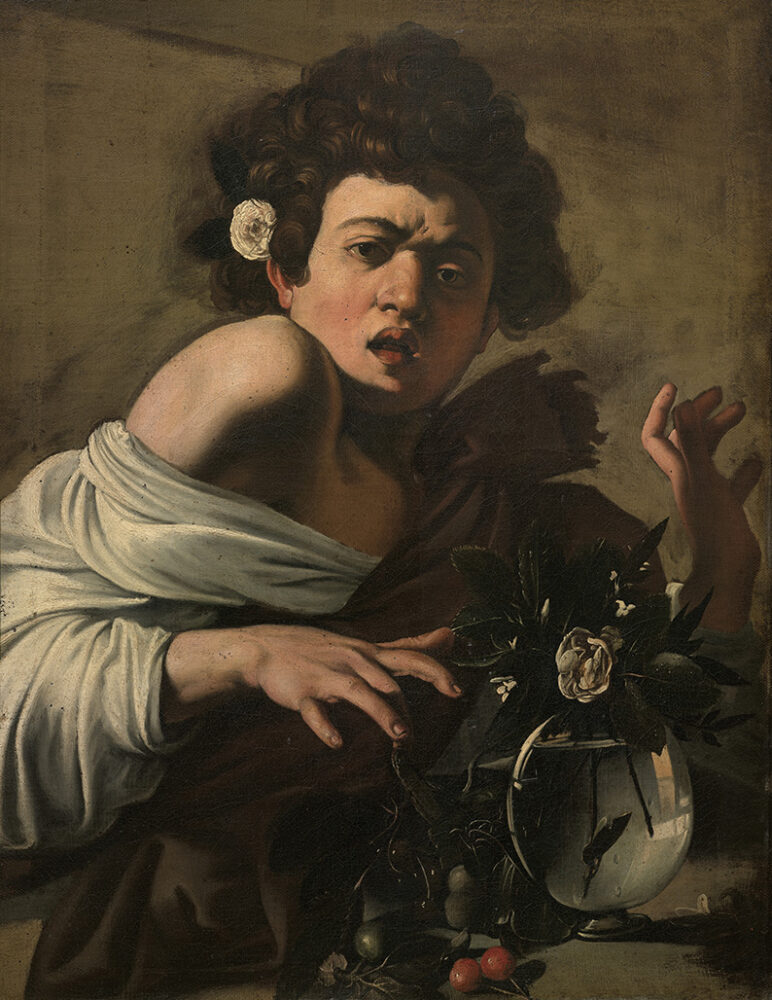
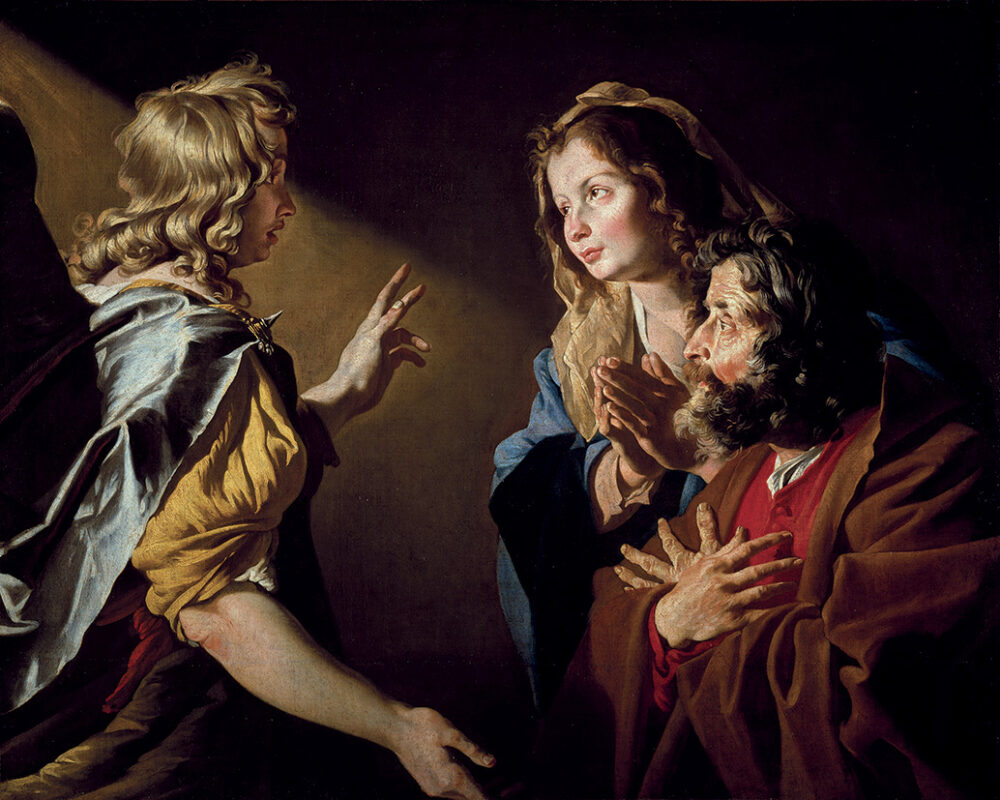
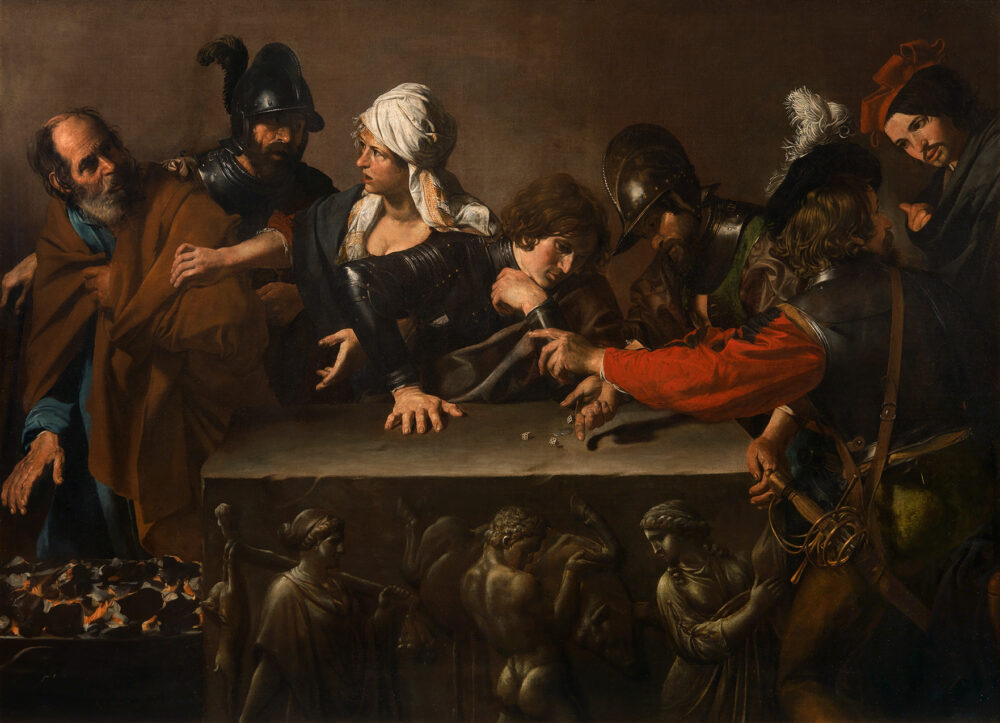

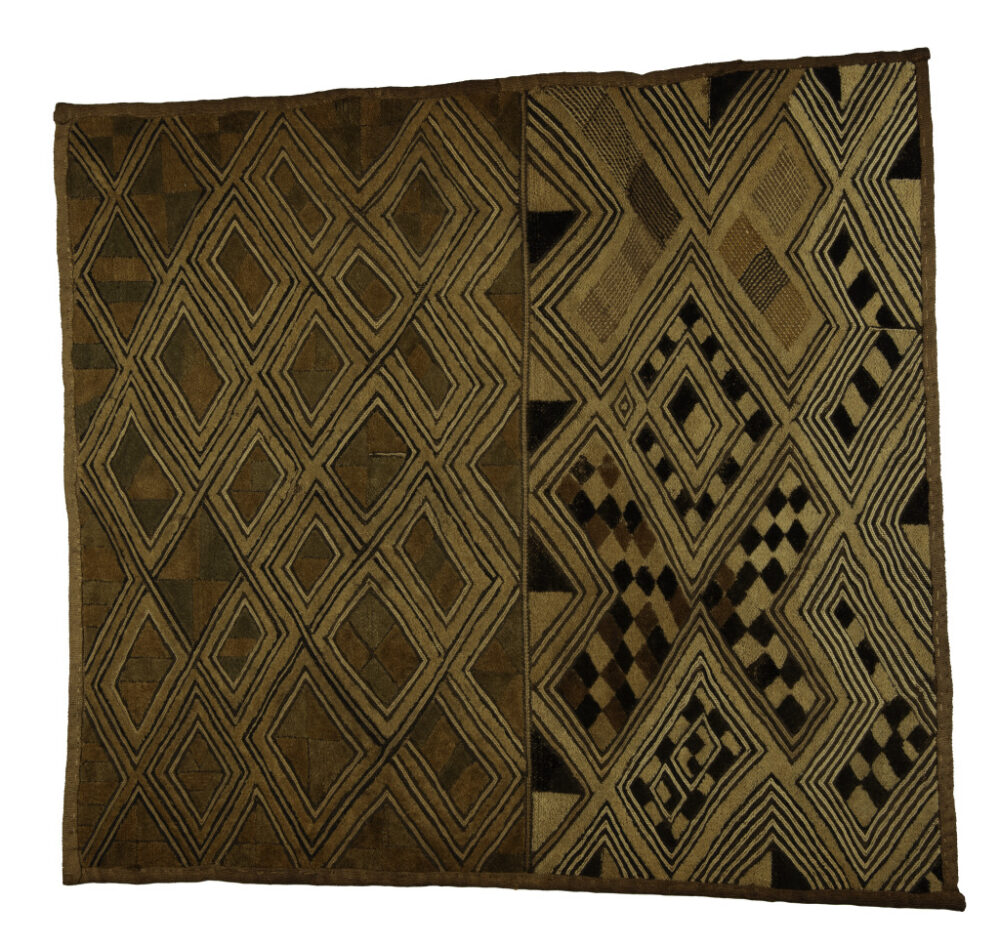
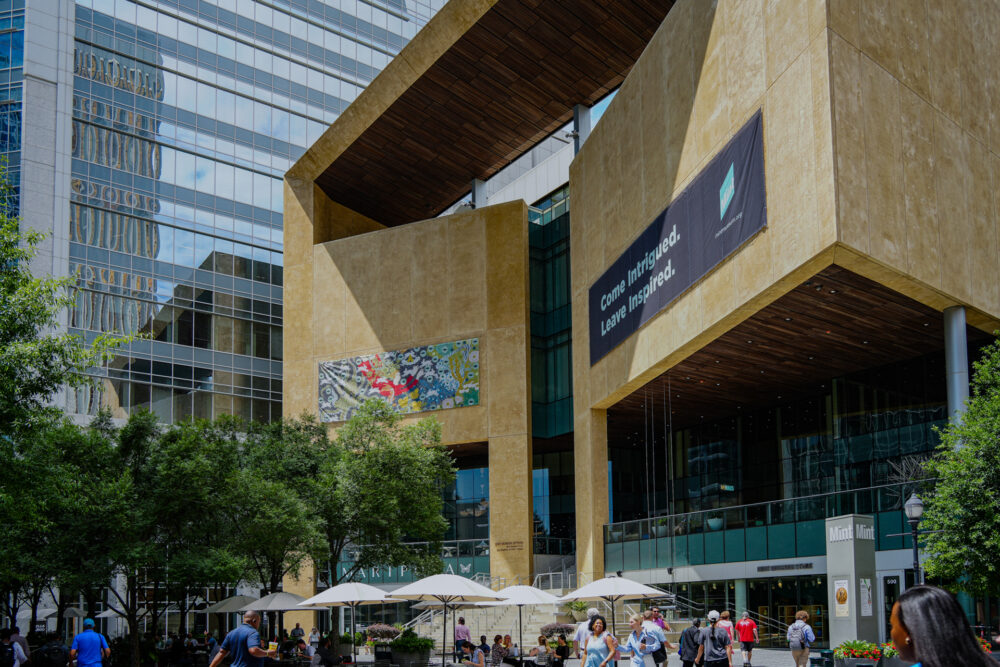
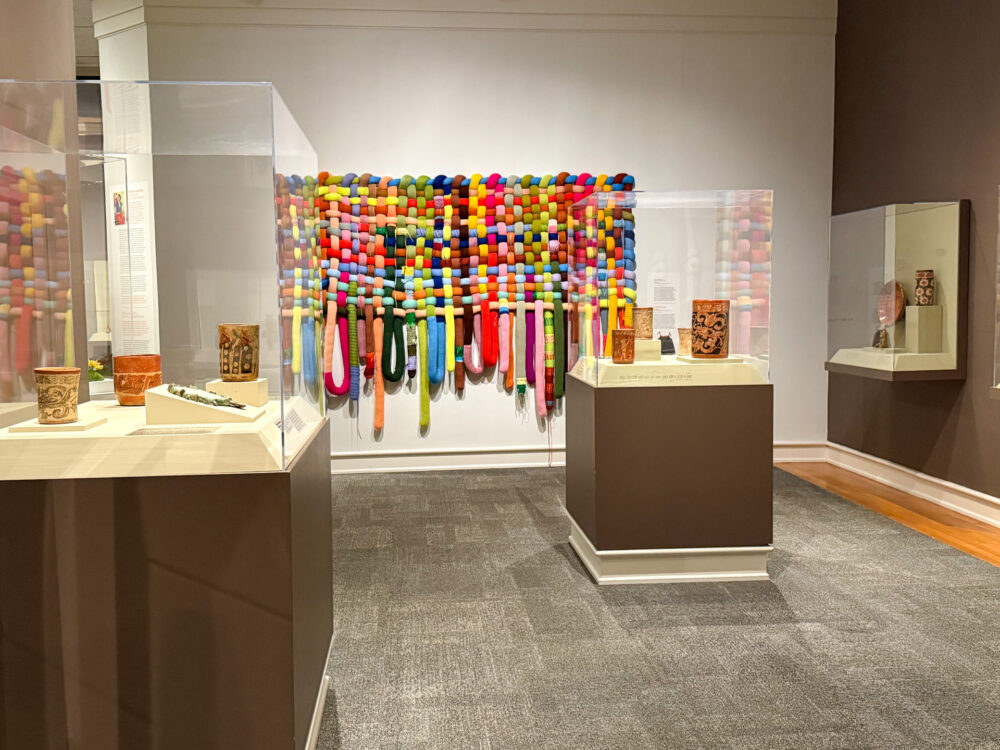
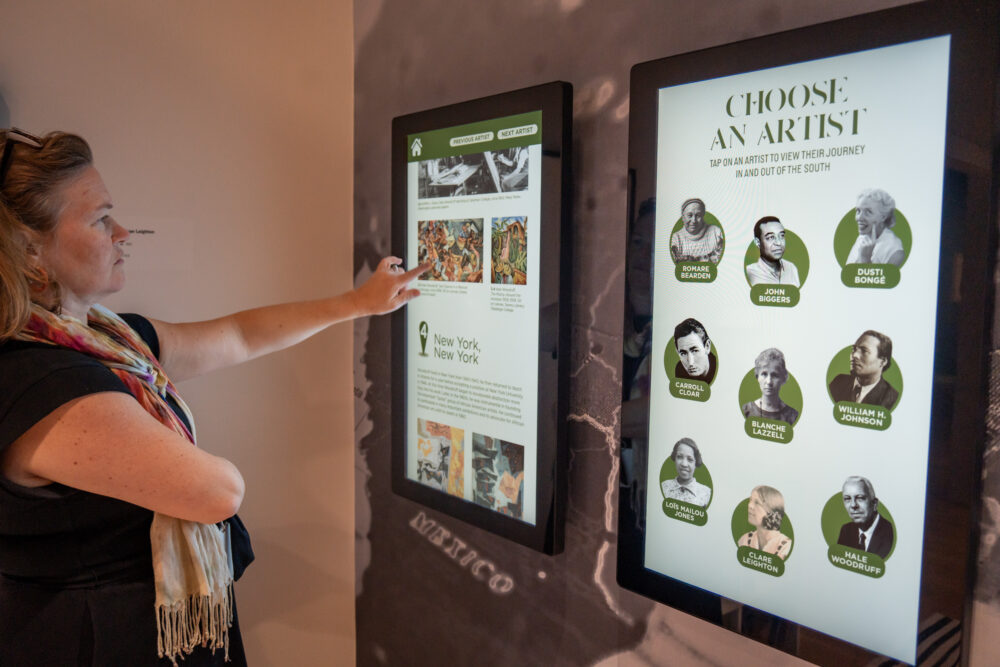
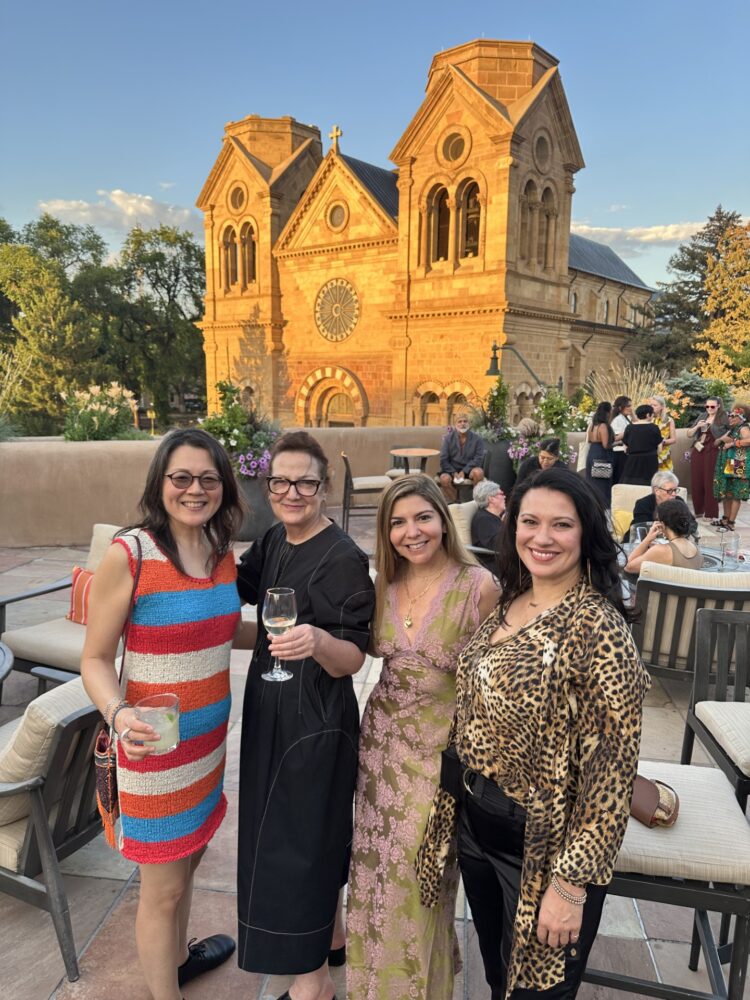

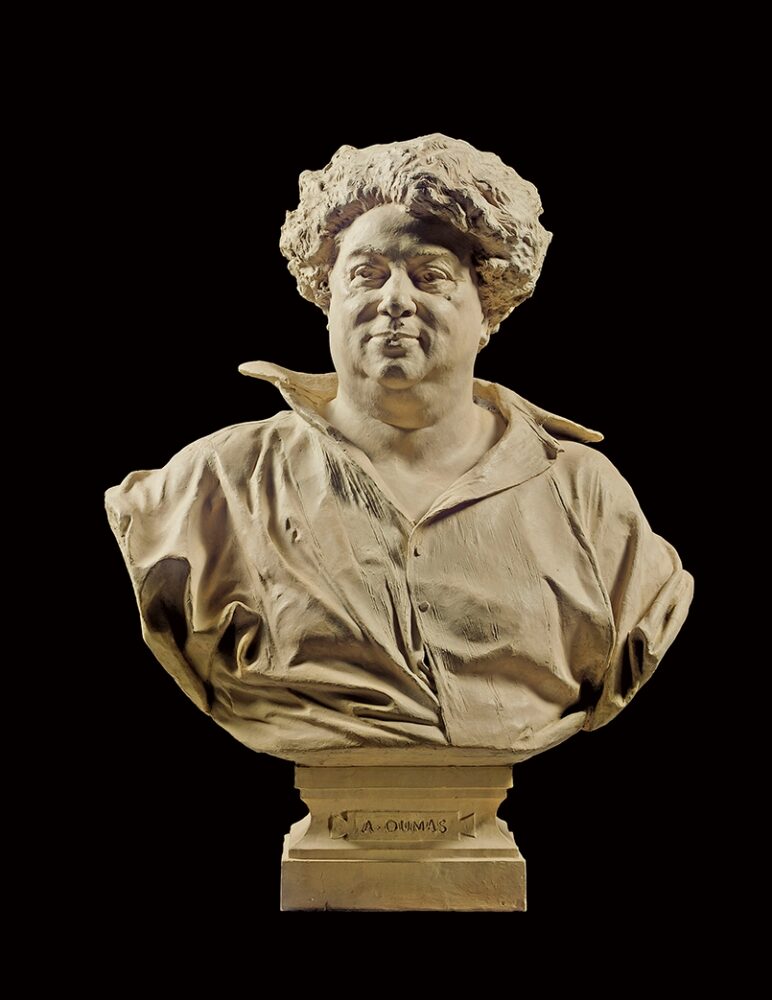
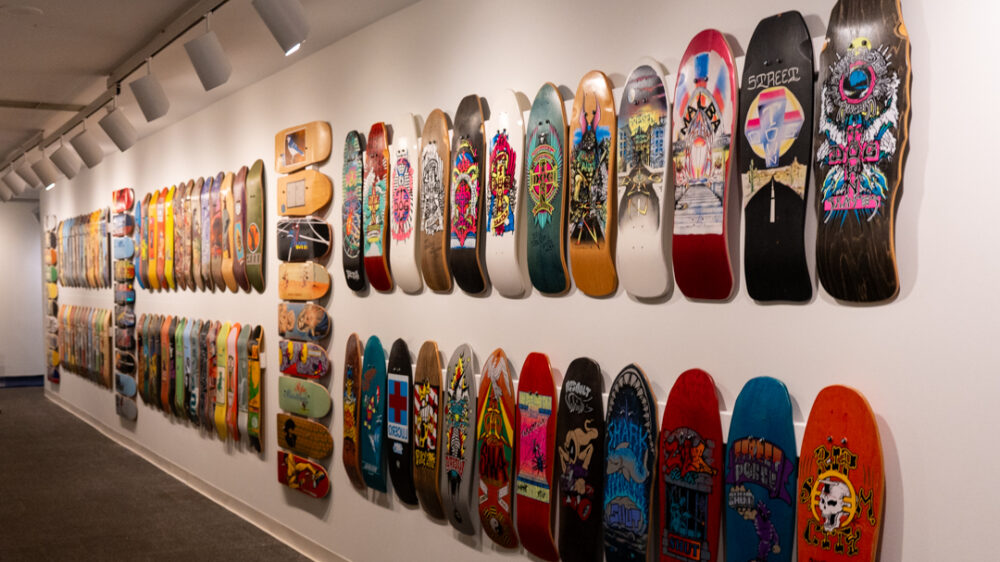
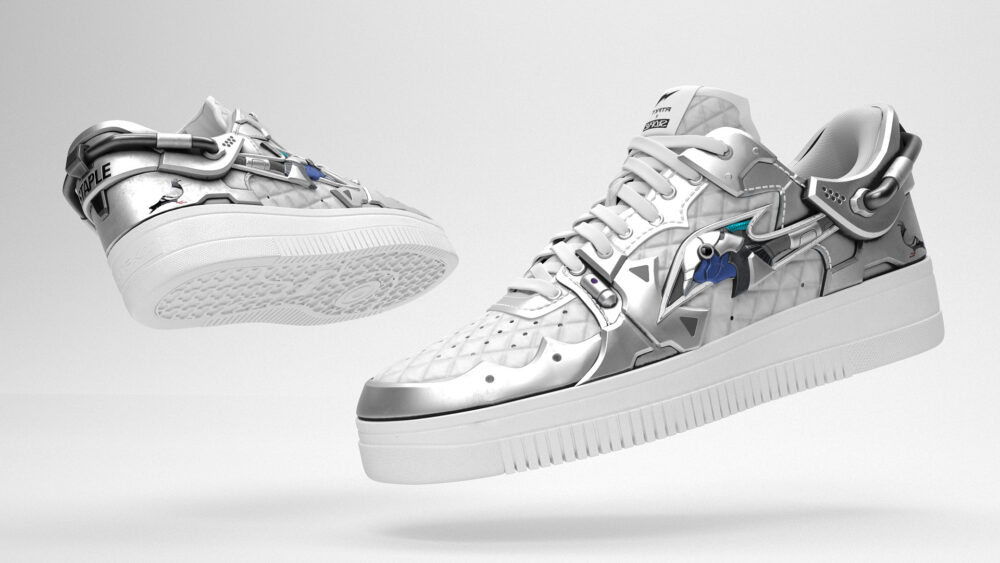
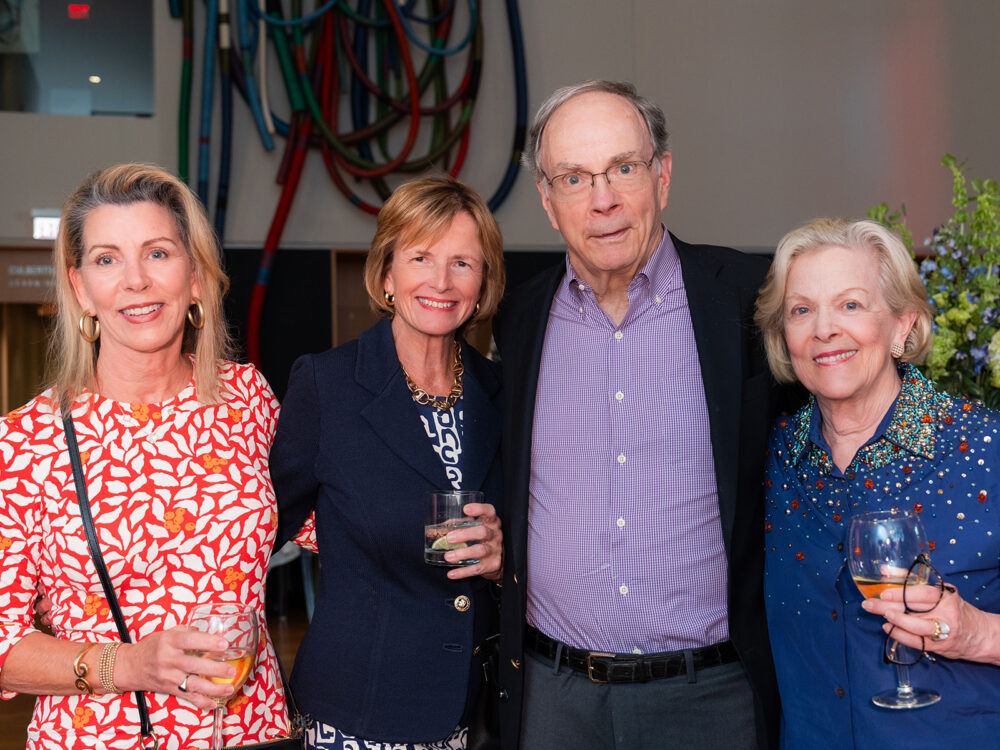
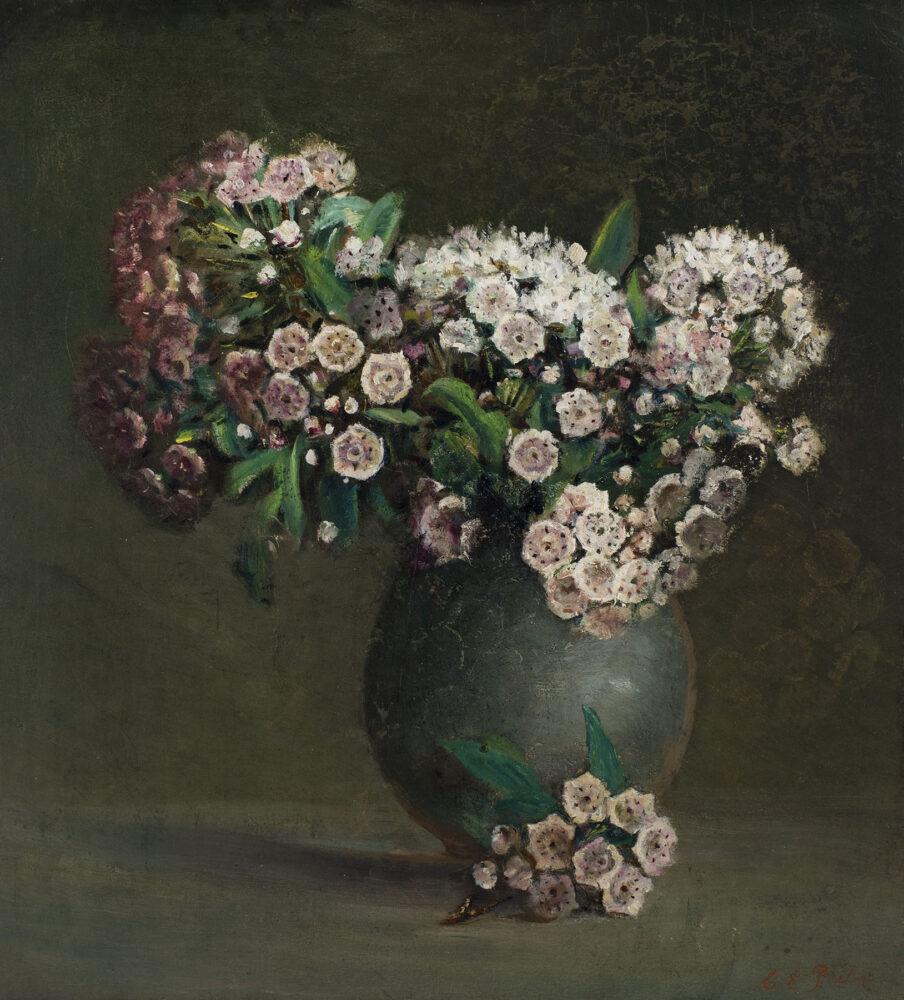
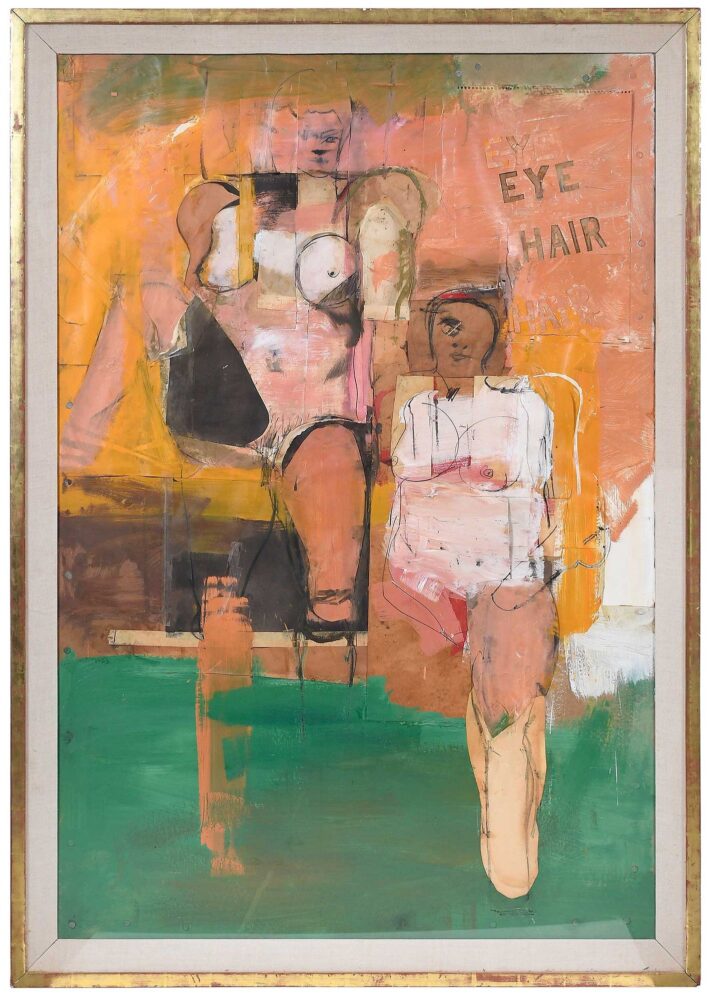
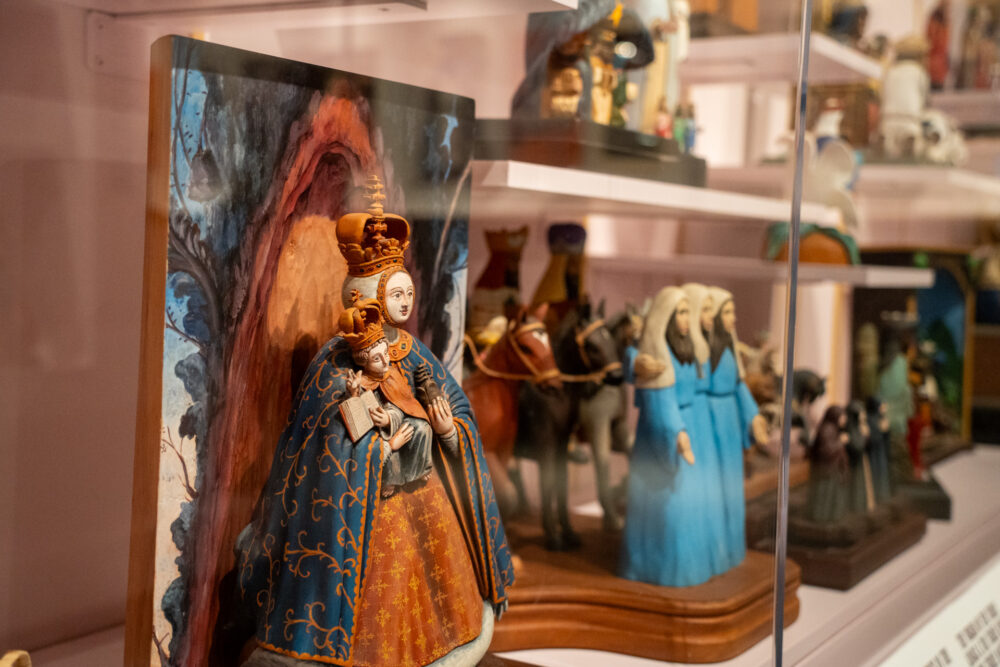
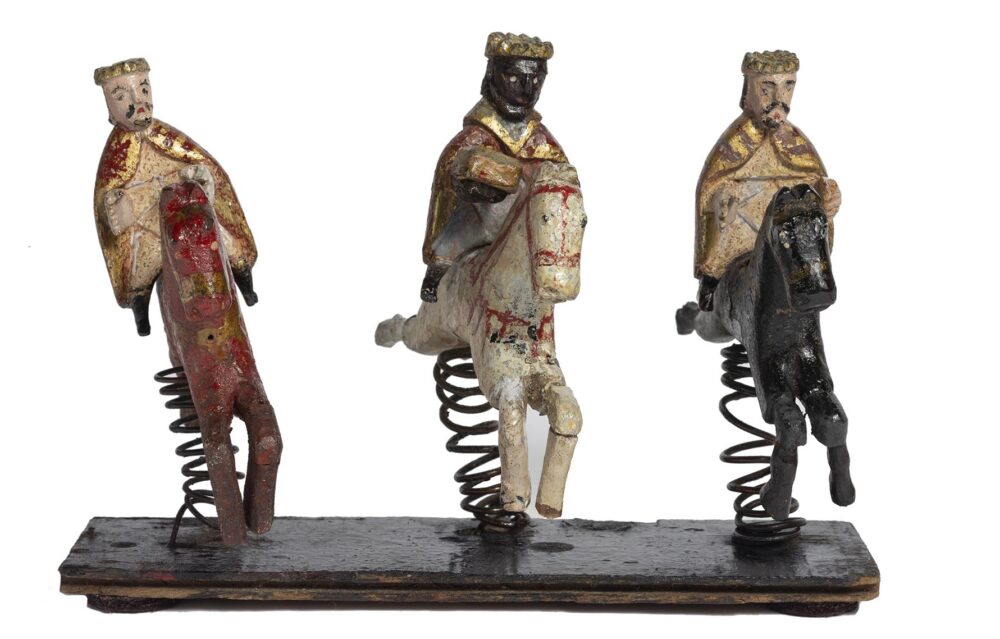
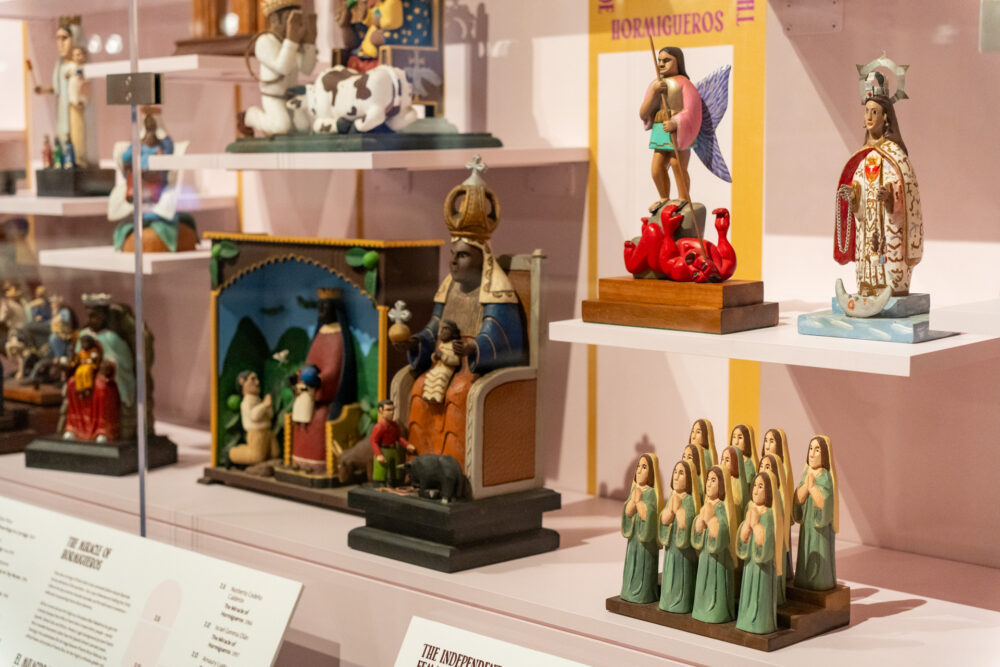

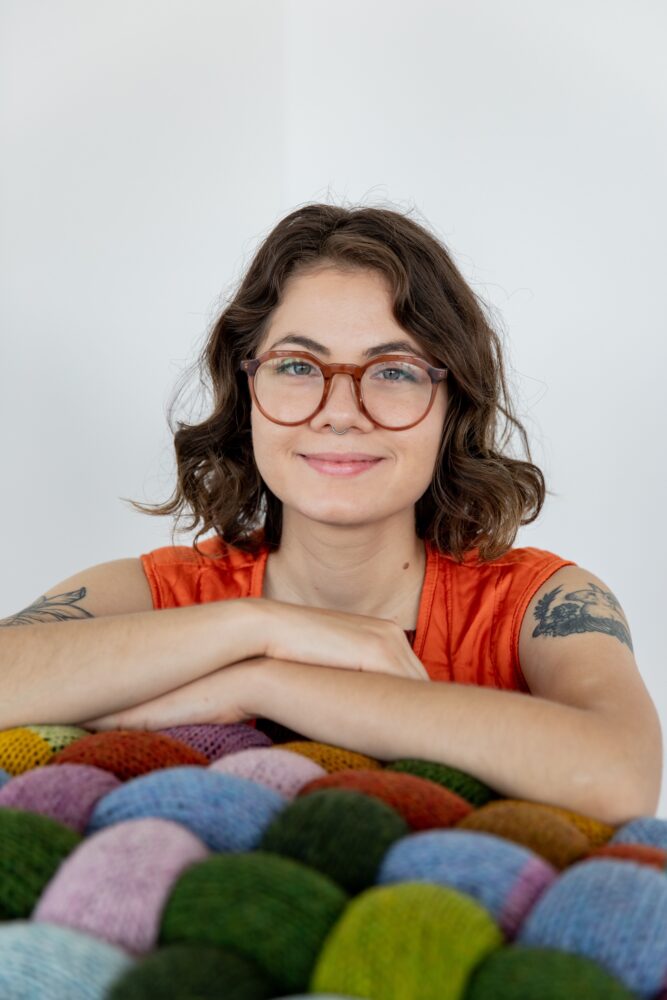
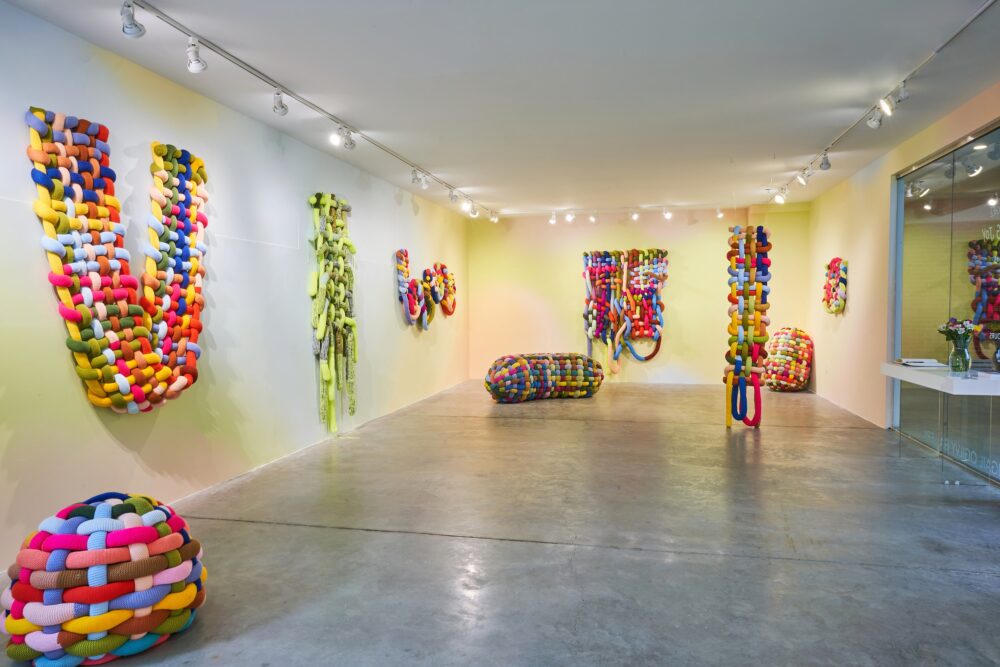
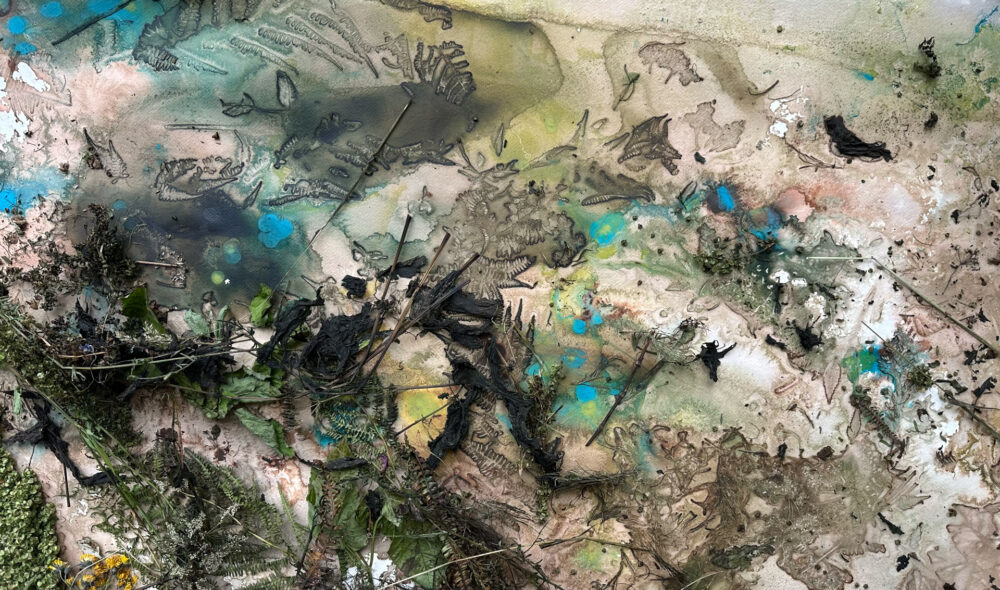
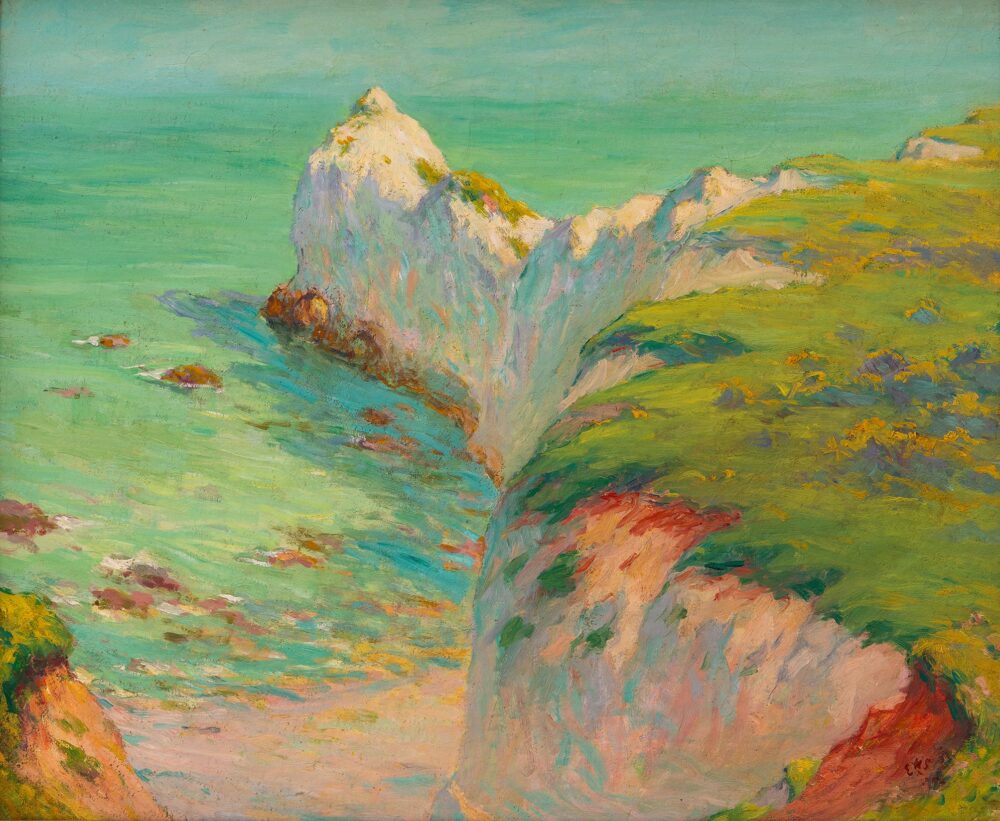
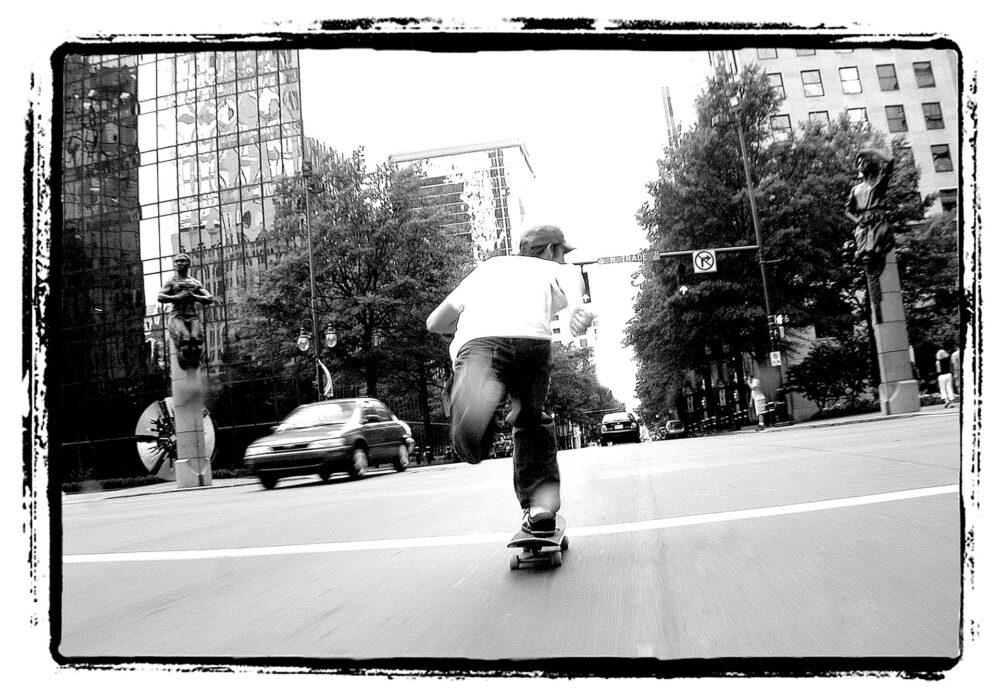
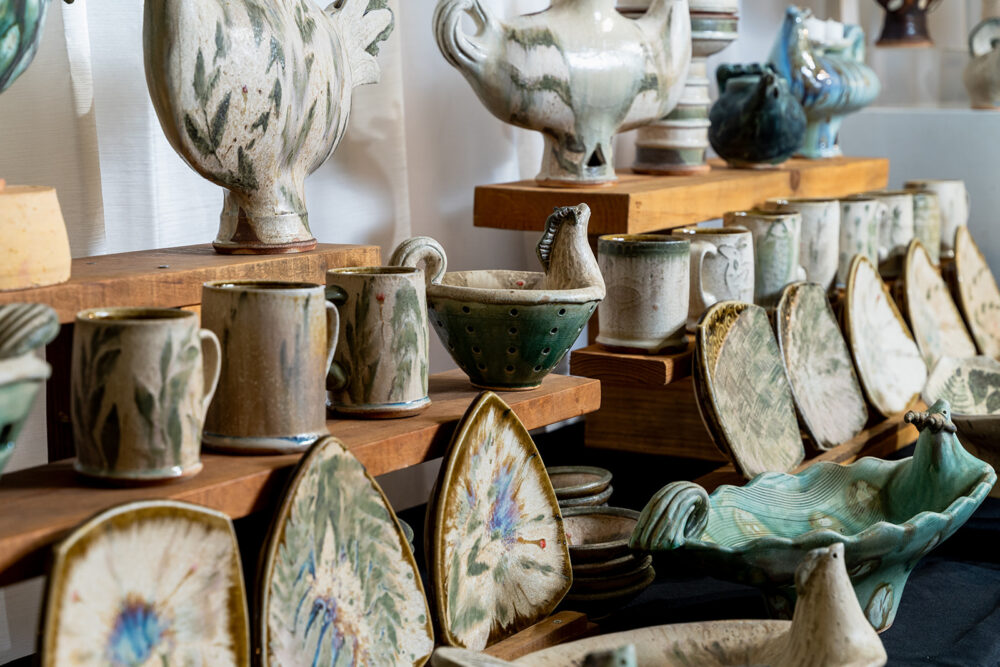
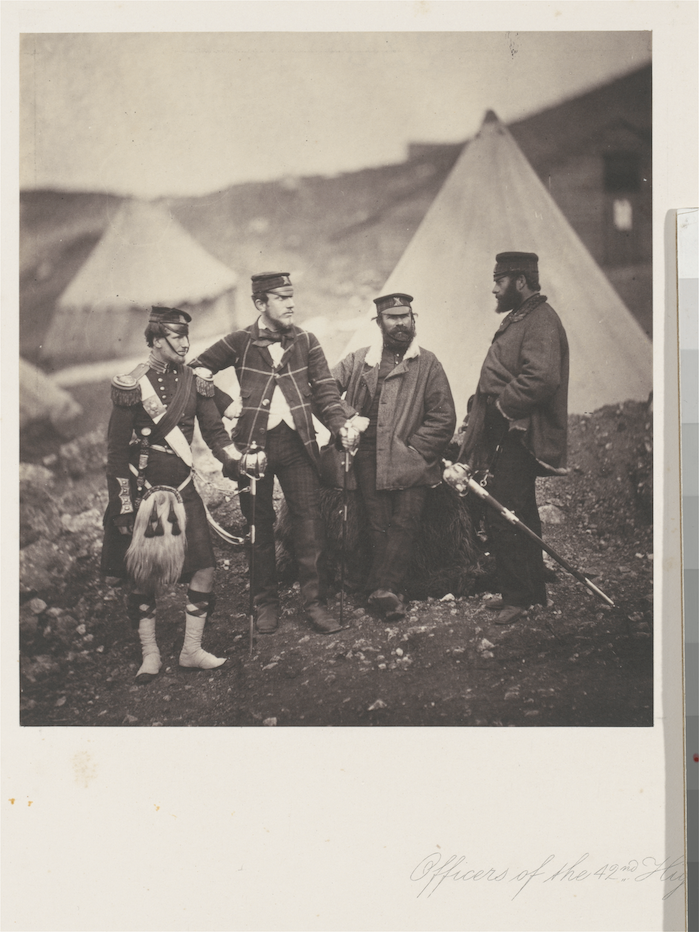
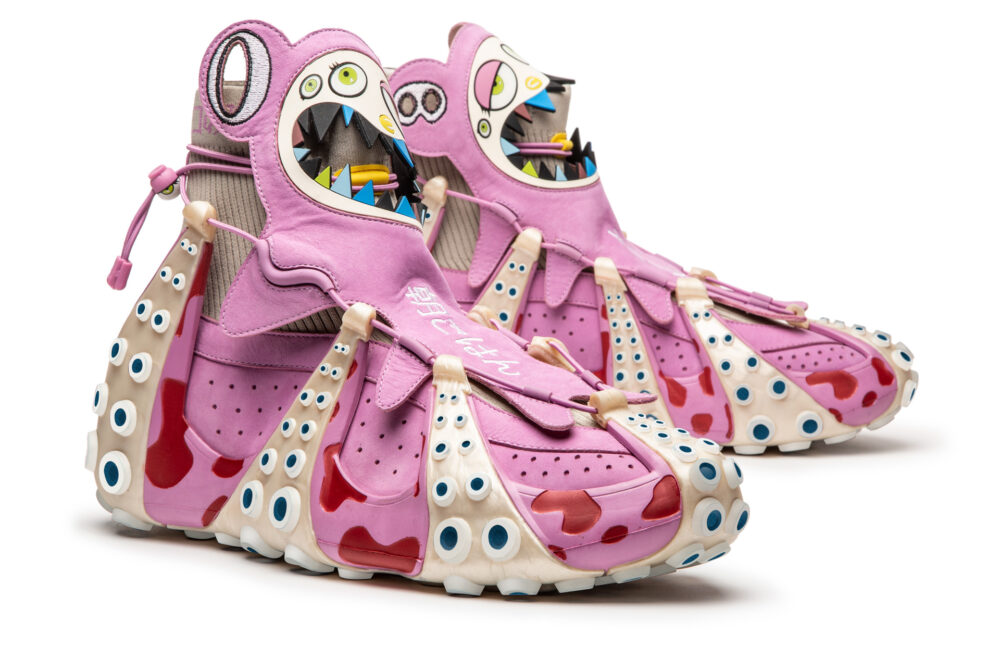
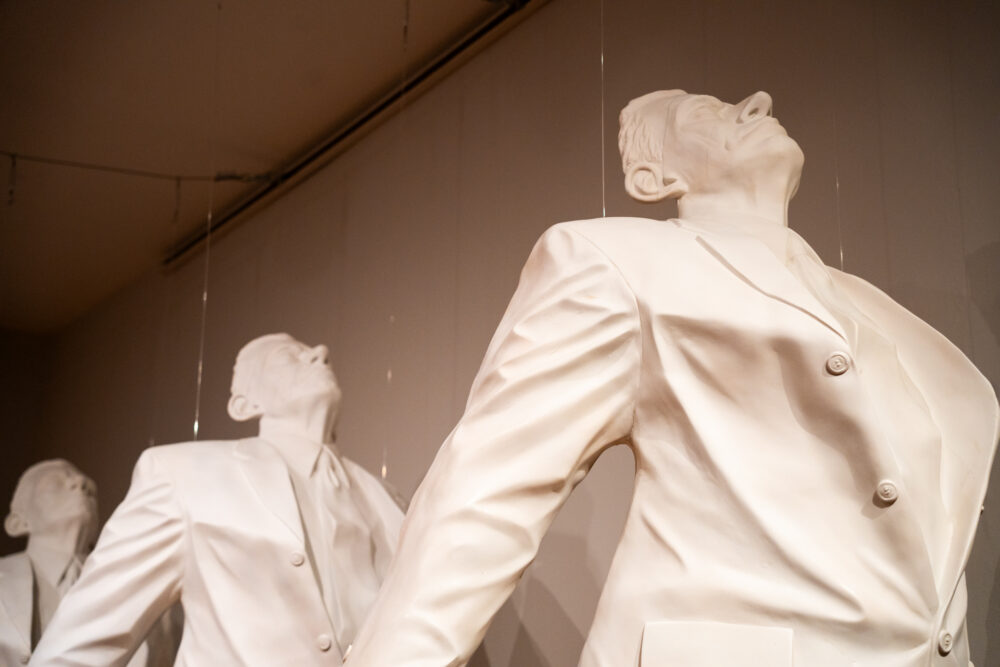
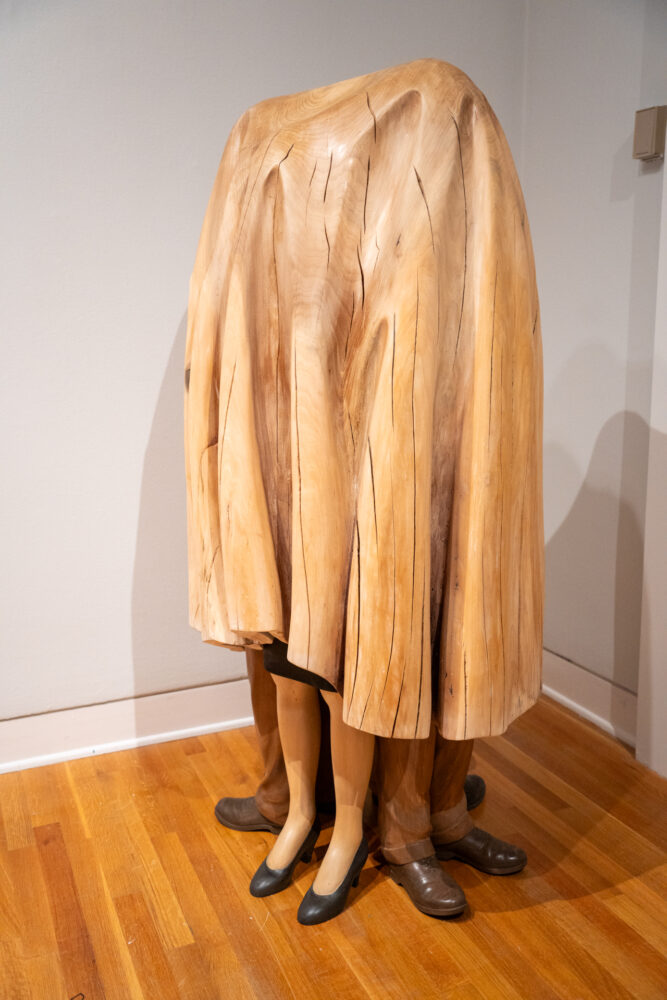
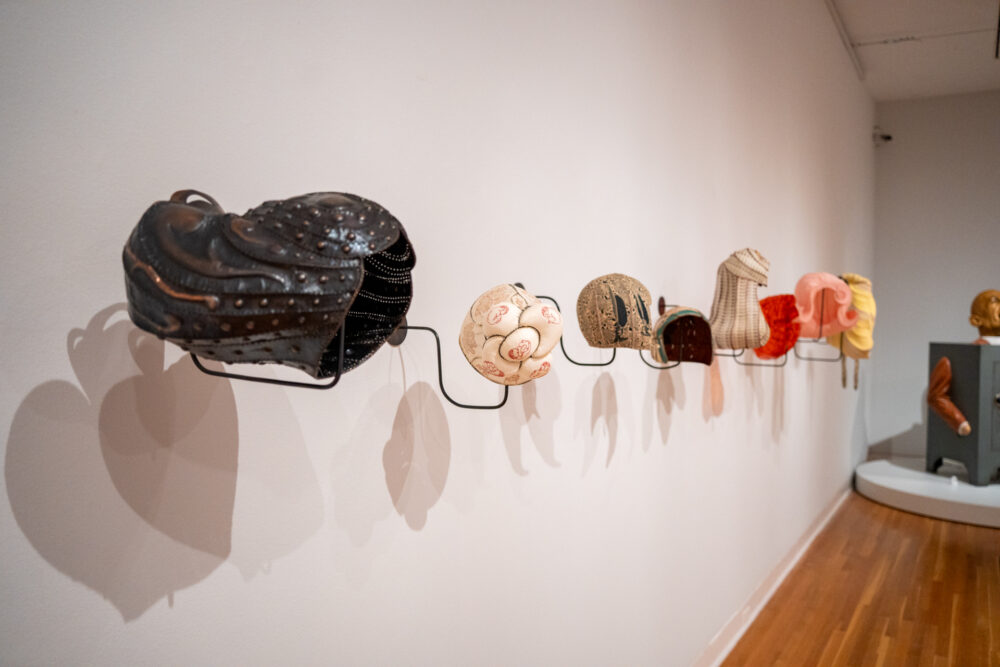
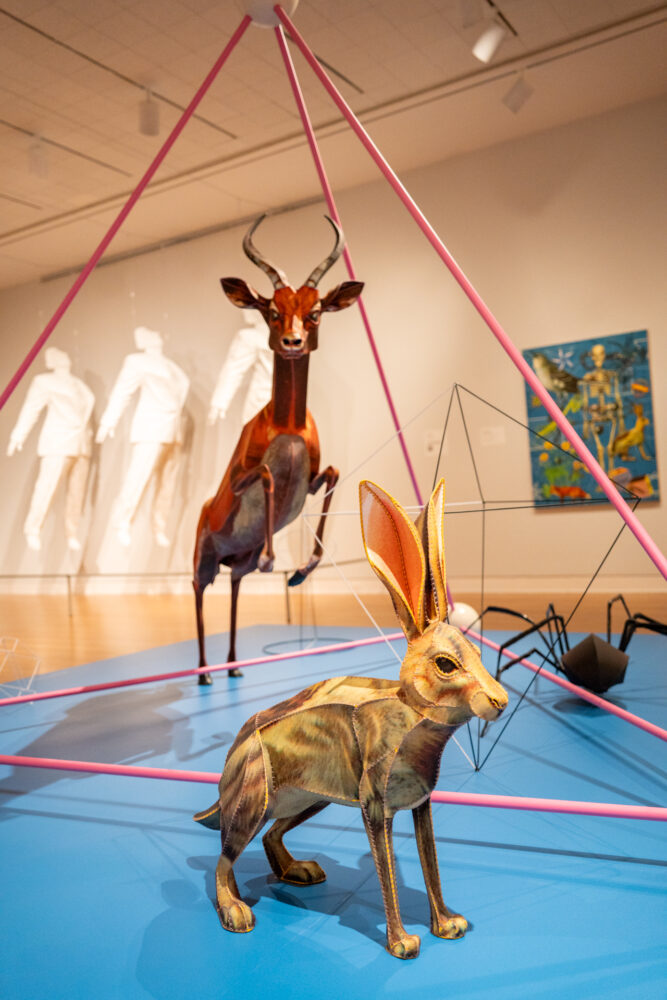
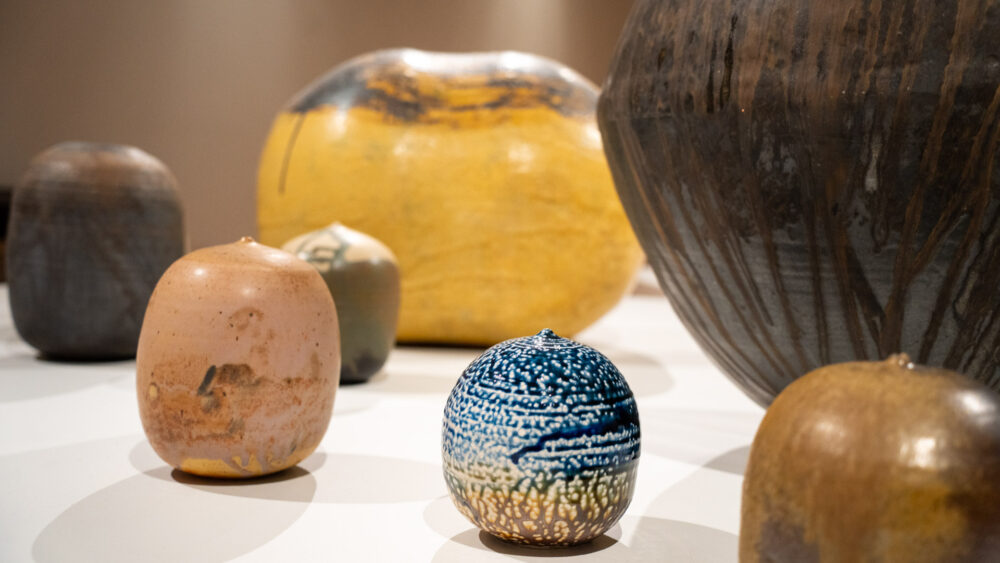
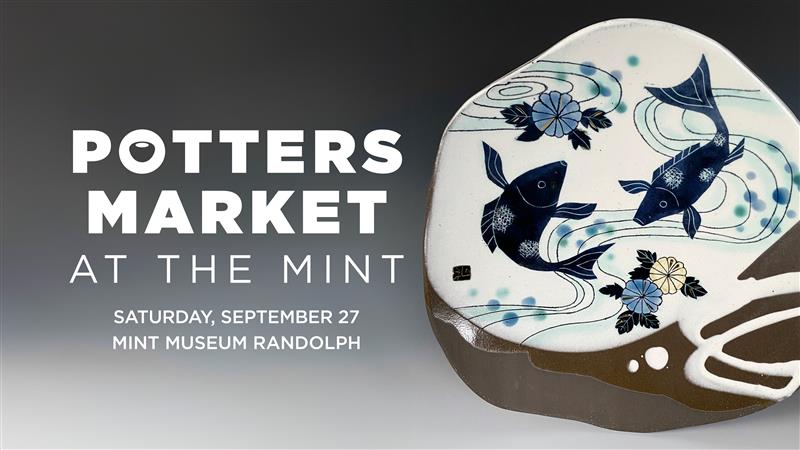
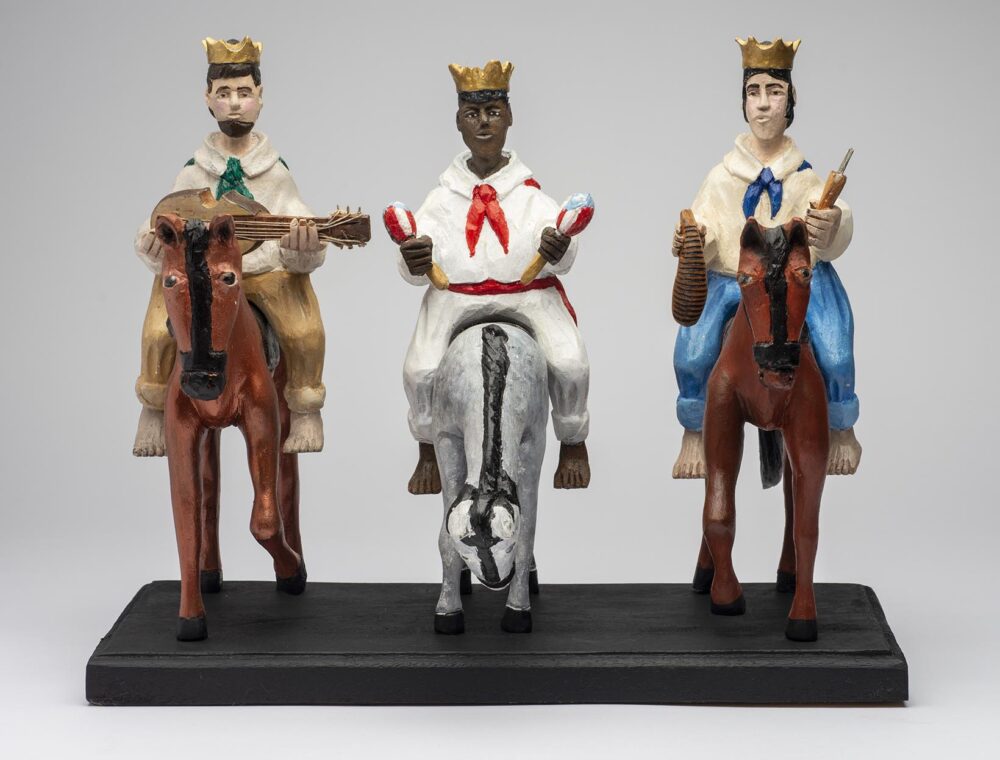
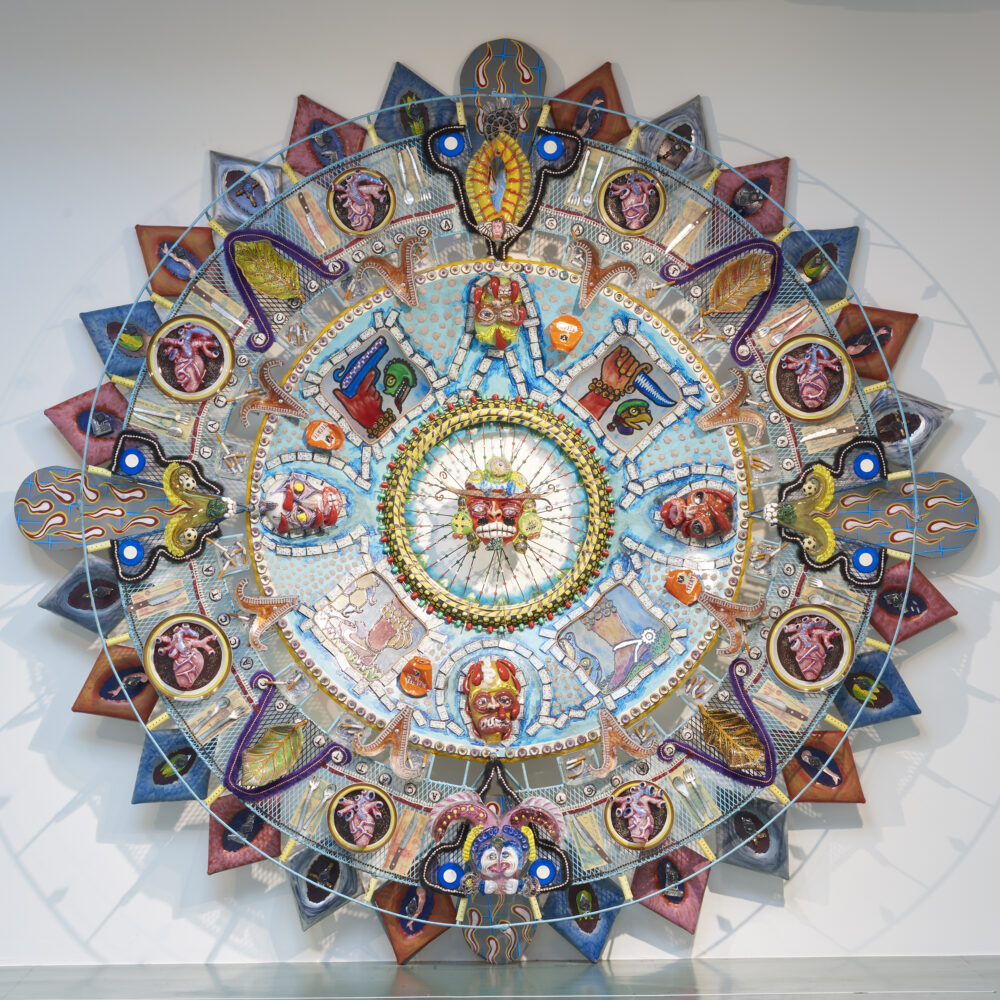
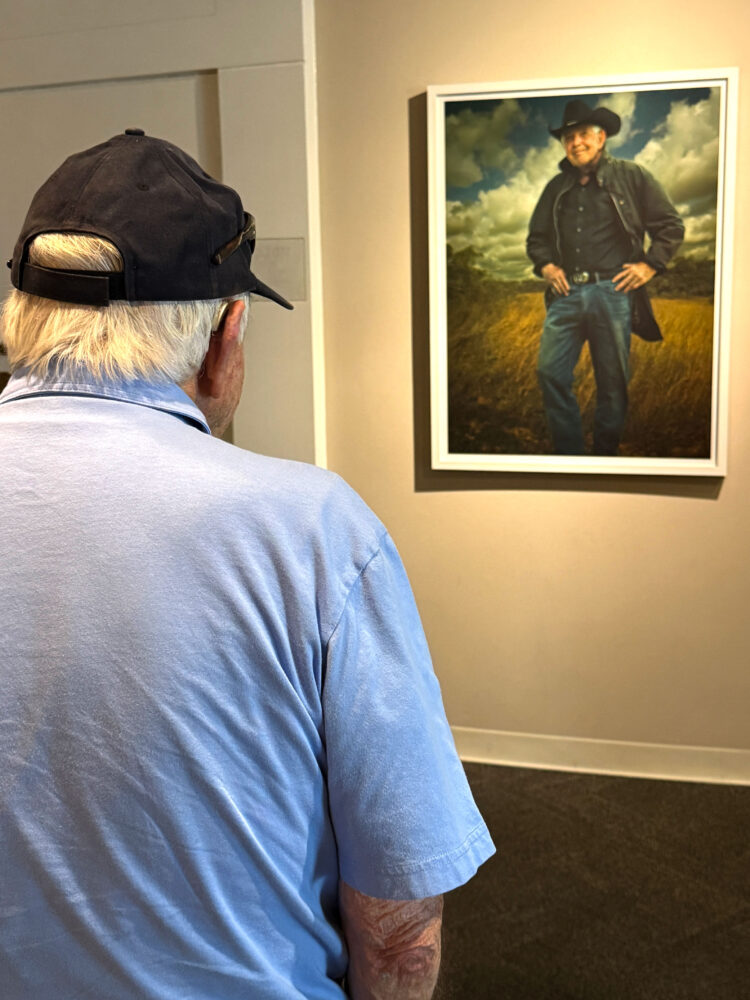
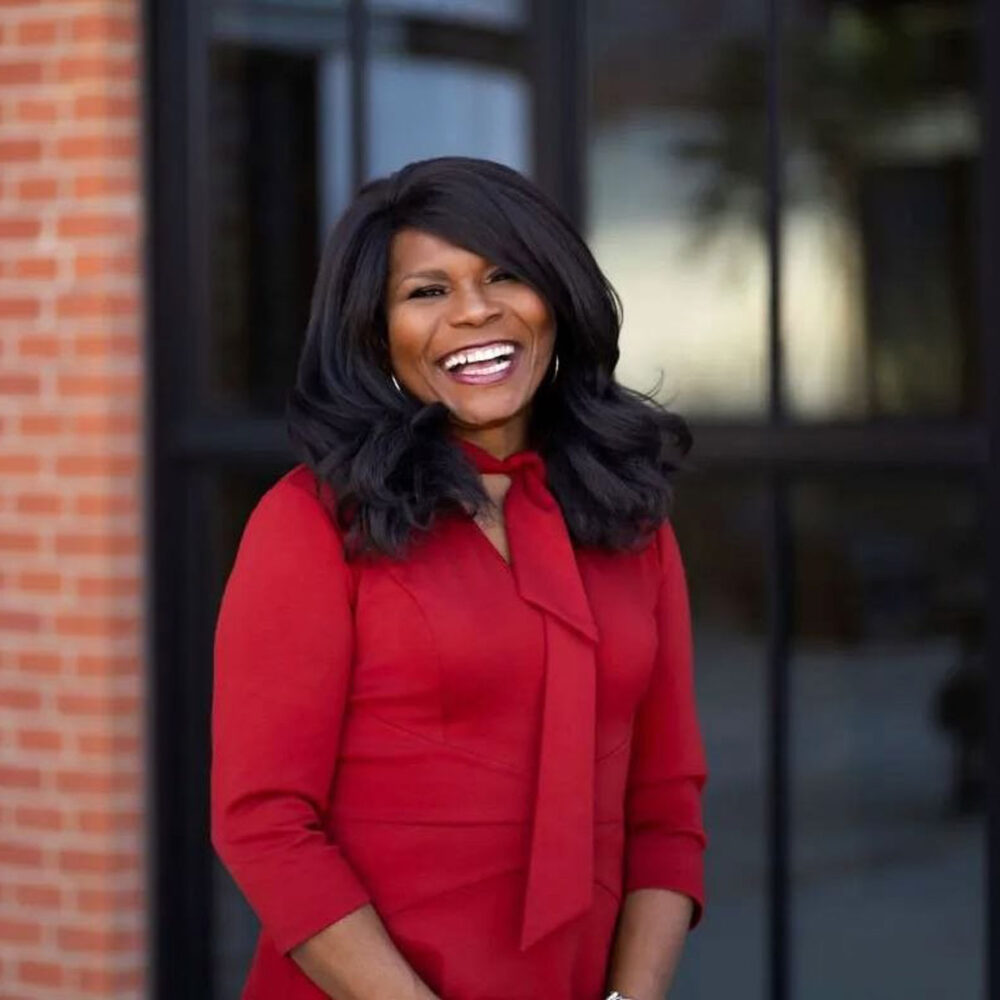
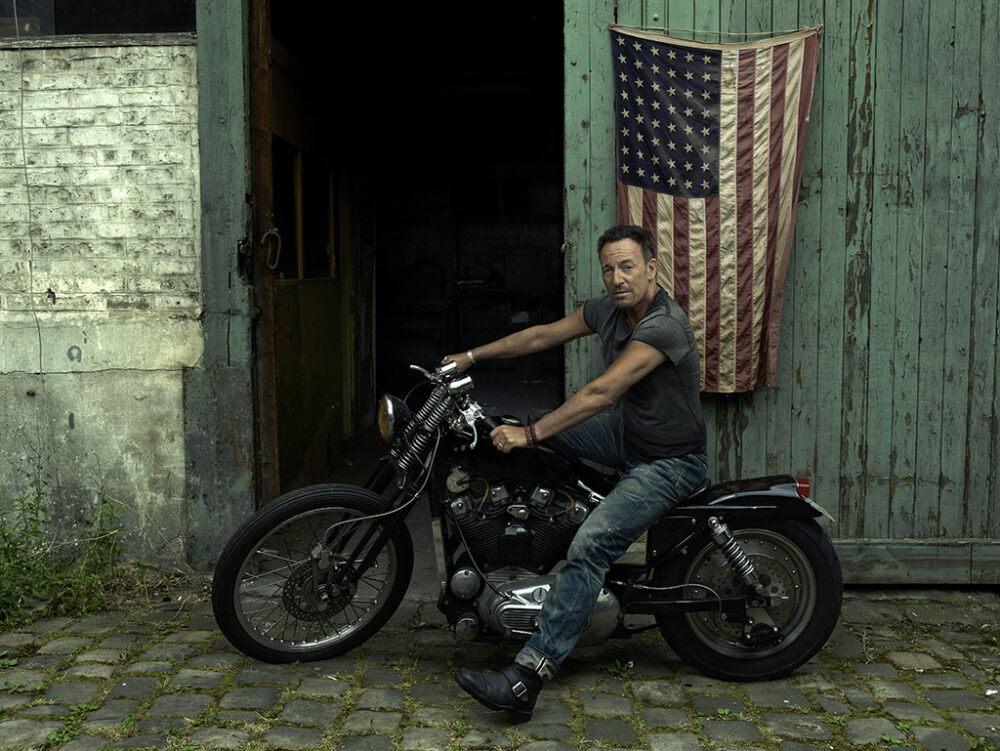
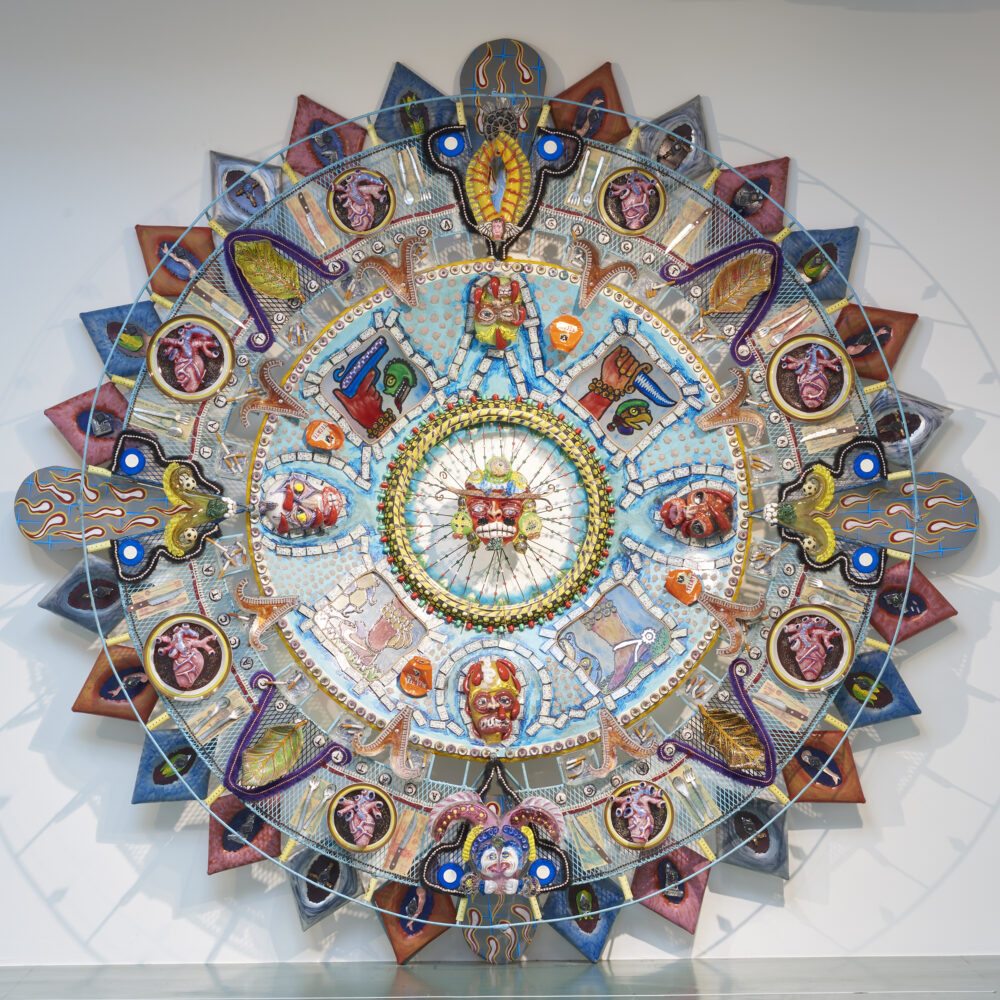
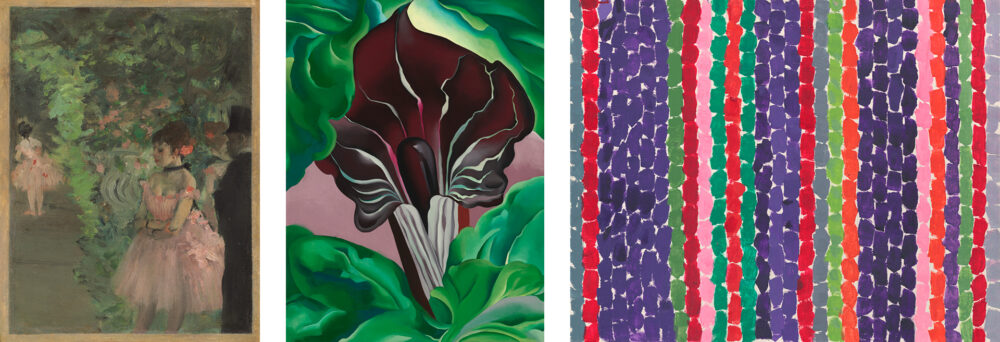
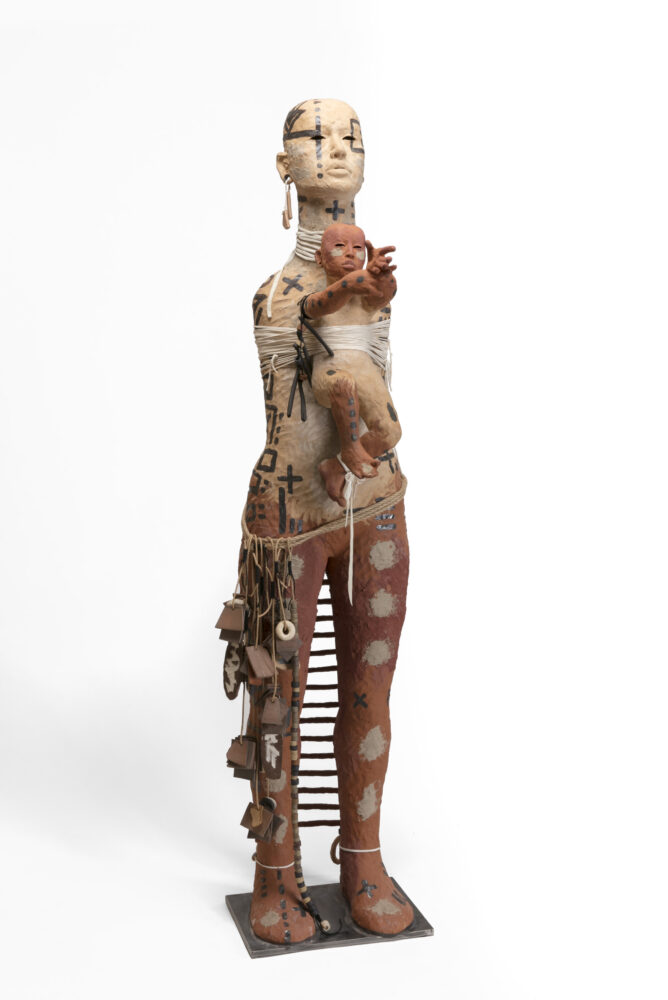
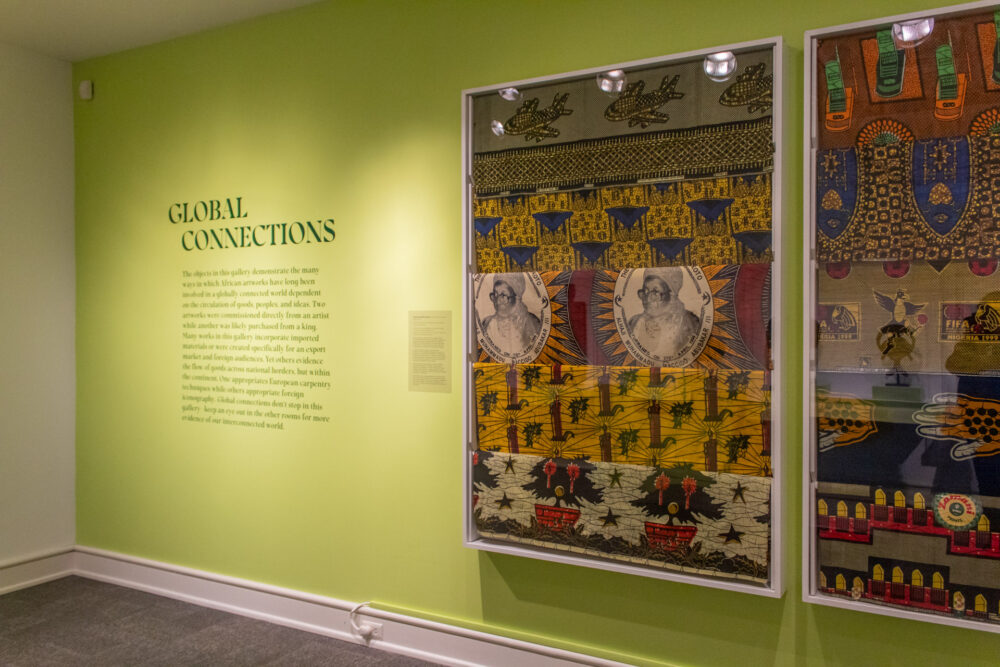
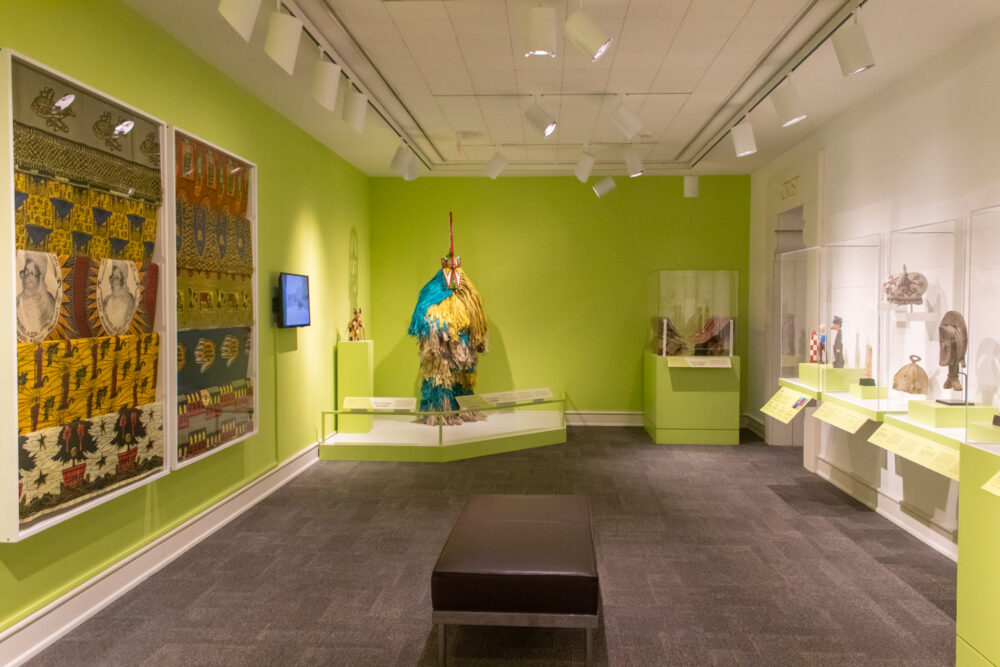
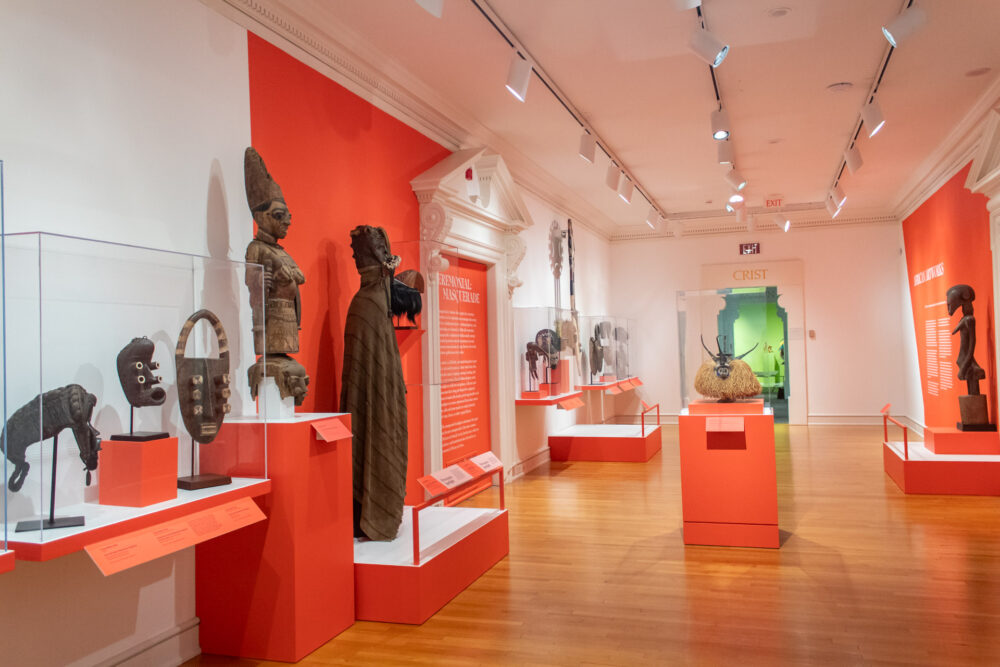
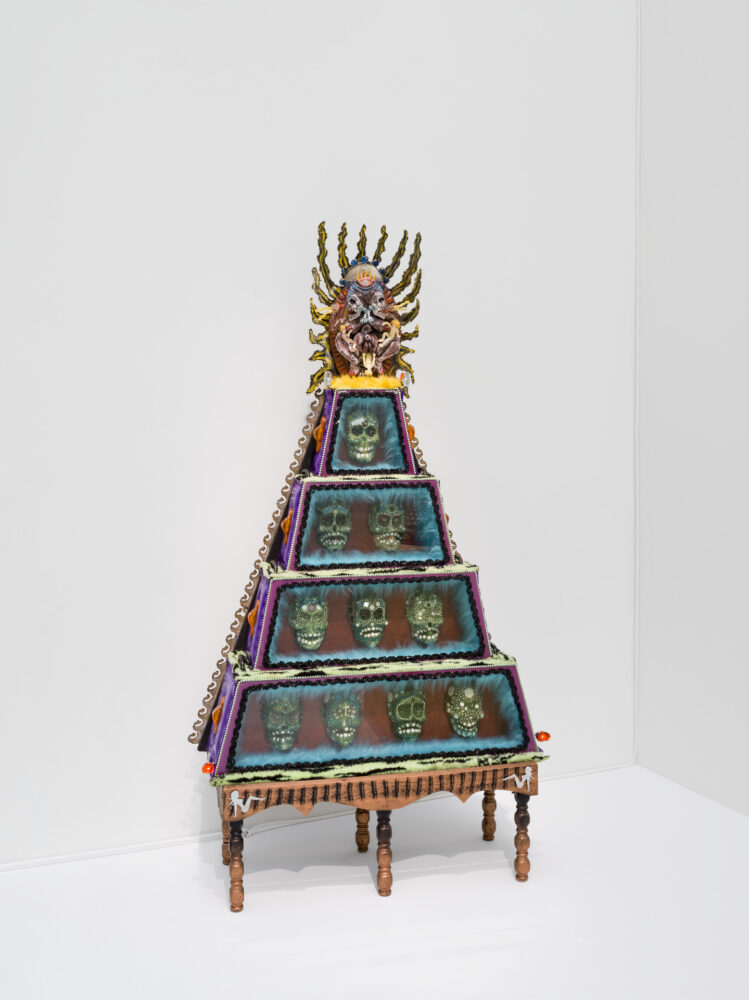
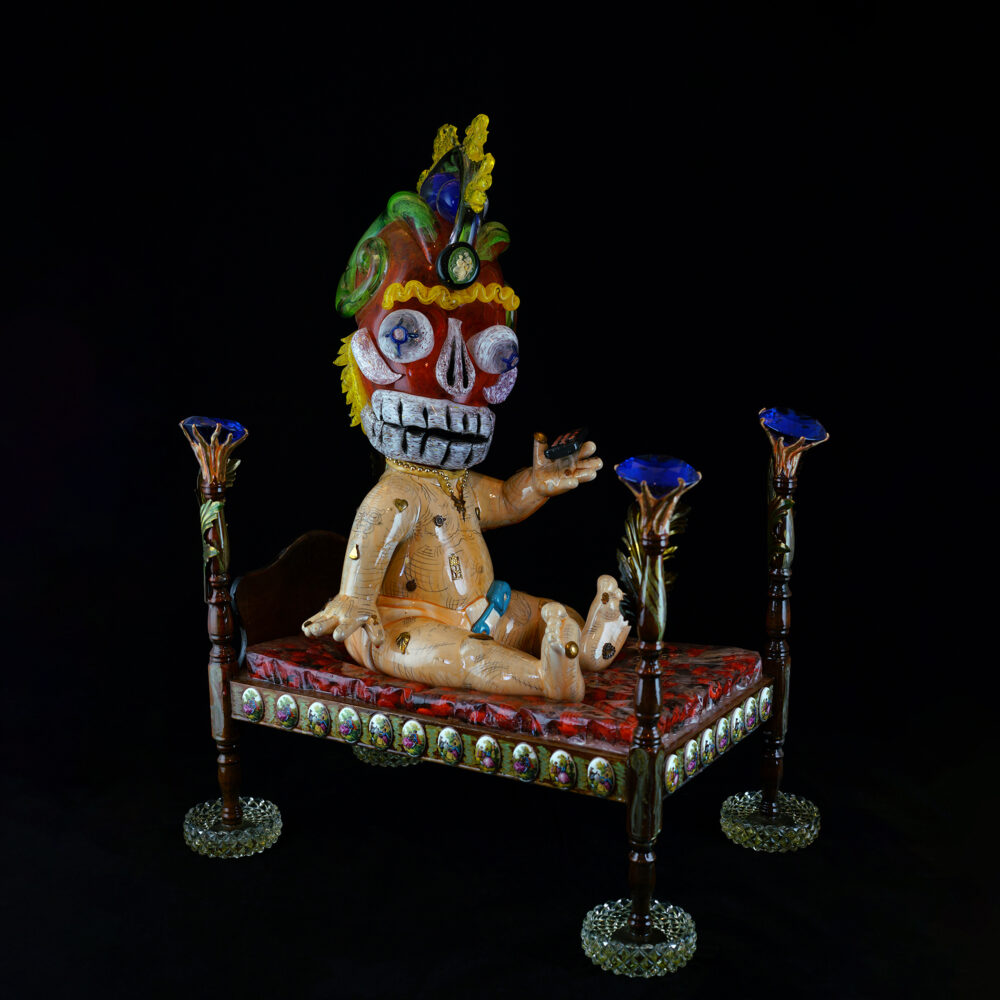
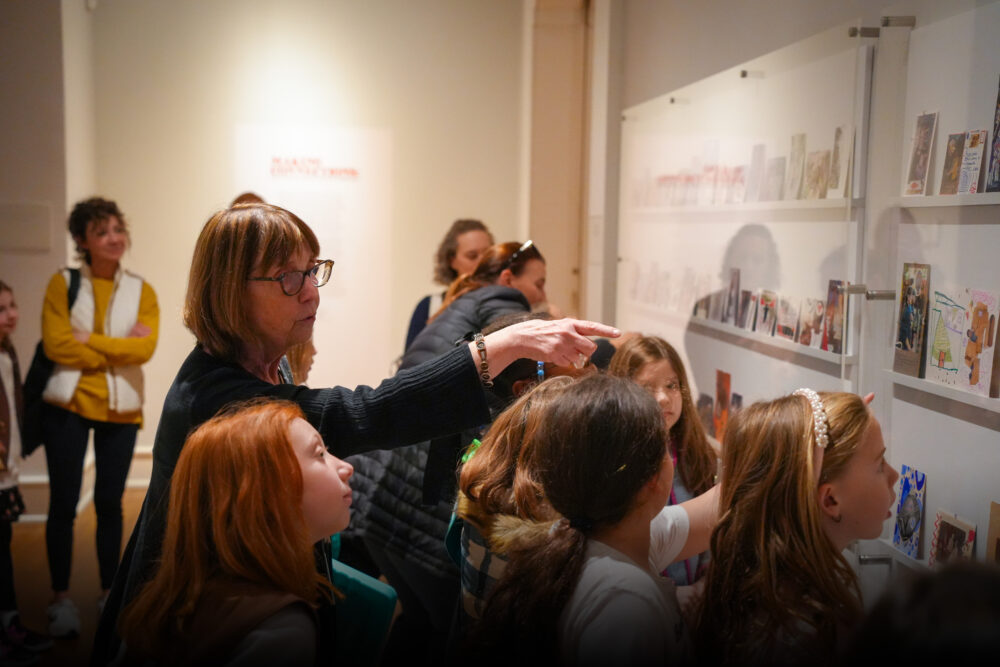
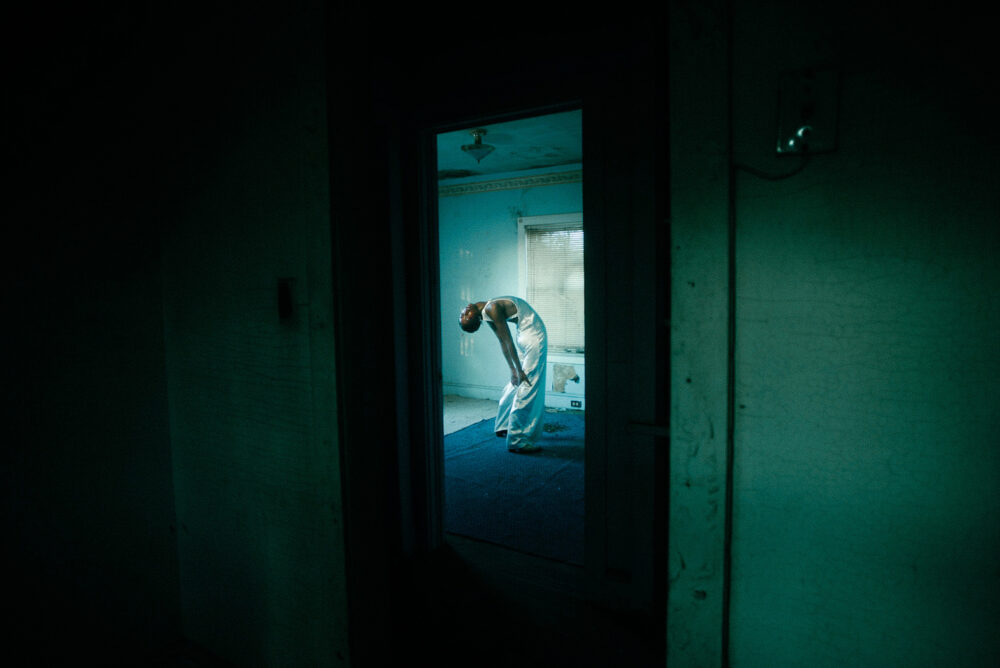
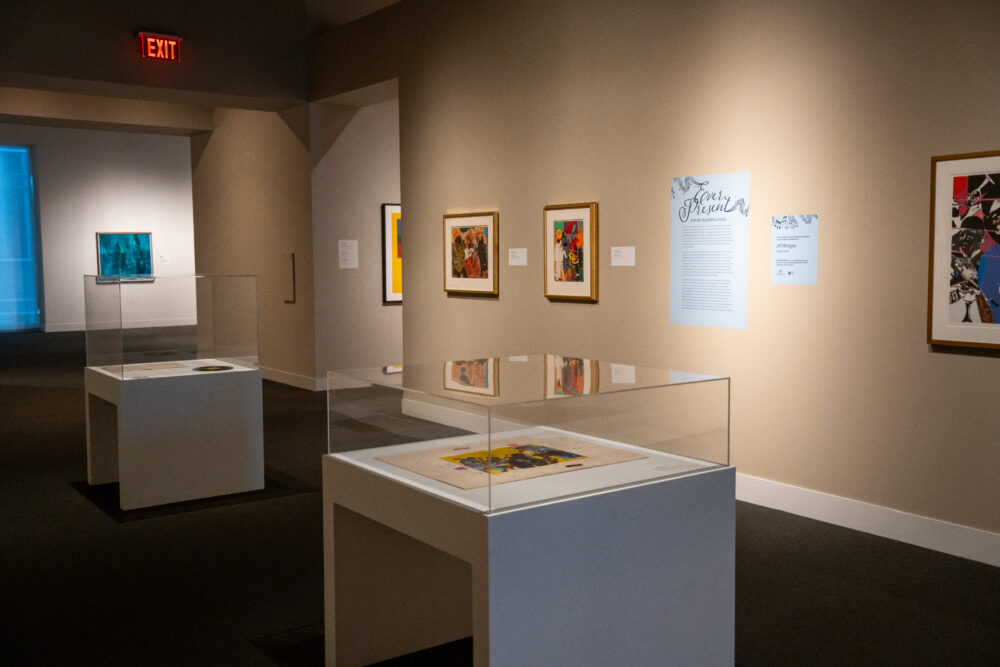
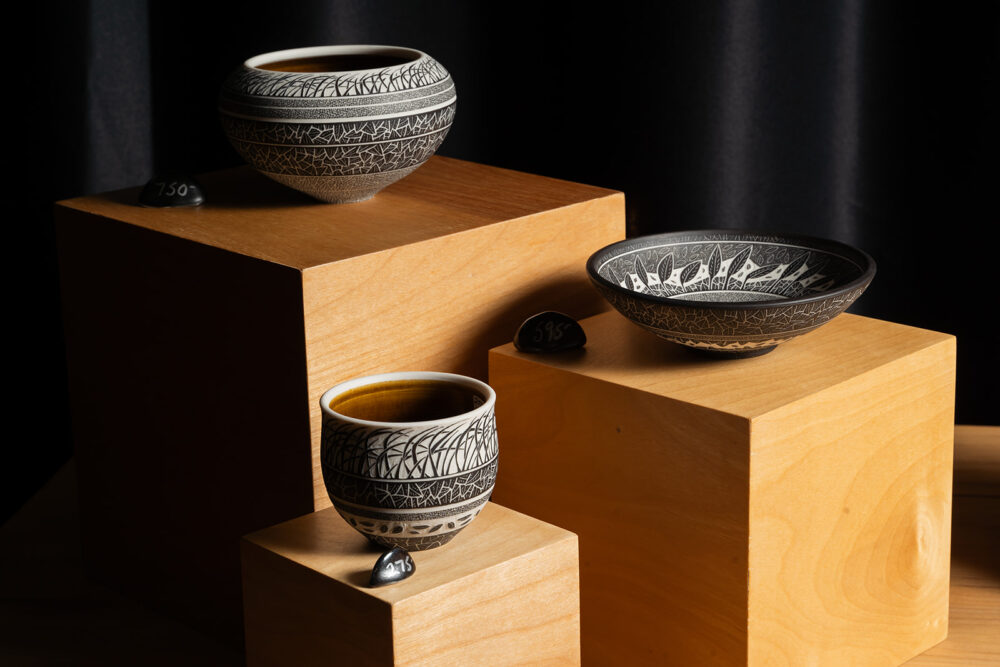
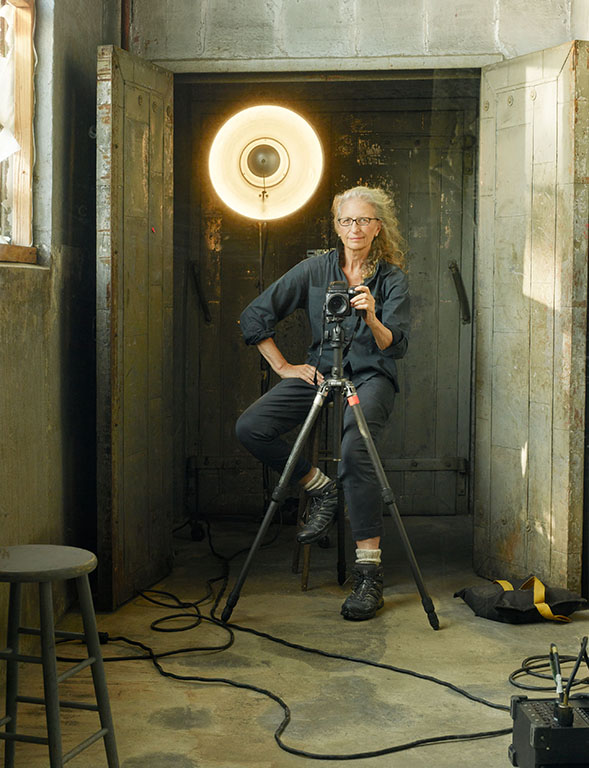


 One strong example is the library’s collection of El Tajín Drawings and Photography by art historian Michael Edwin Kampen-O’Riley, PhD. The collection is comprised of 264 line drawings of low-relief carvings found on the structures of El Tajín, an ancient Mesoamerican site in Veracruz, Mexico. A small selection of these drawings was displayed in the installation El Tajín: Photography and Drawings by Michael Kampen in 2018 at Mint Museum Randolph.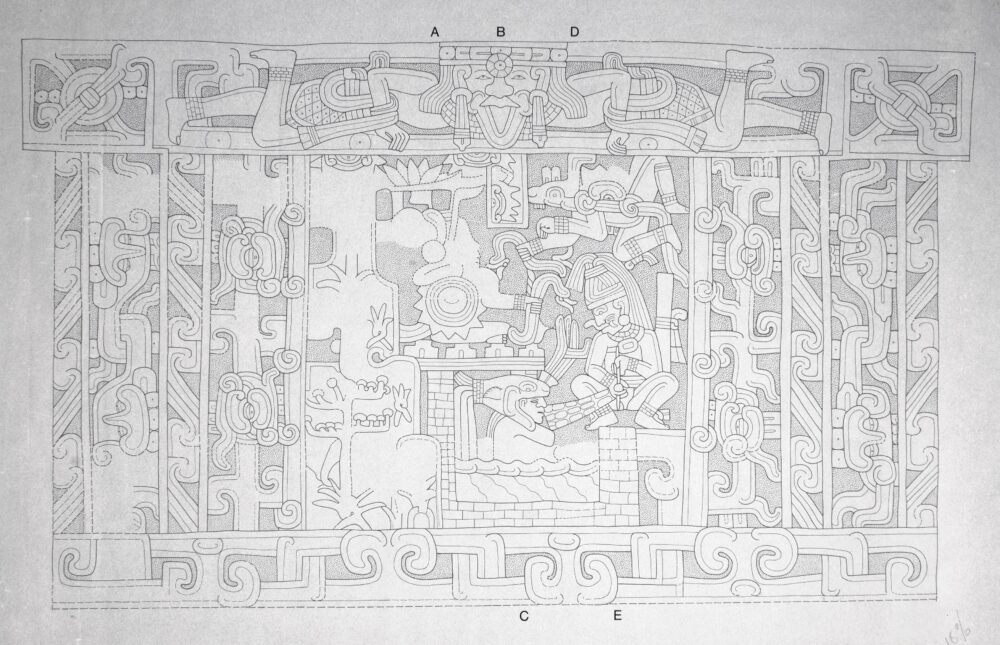
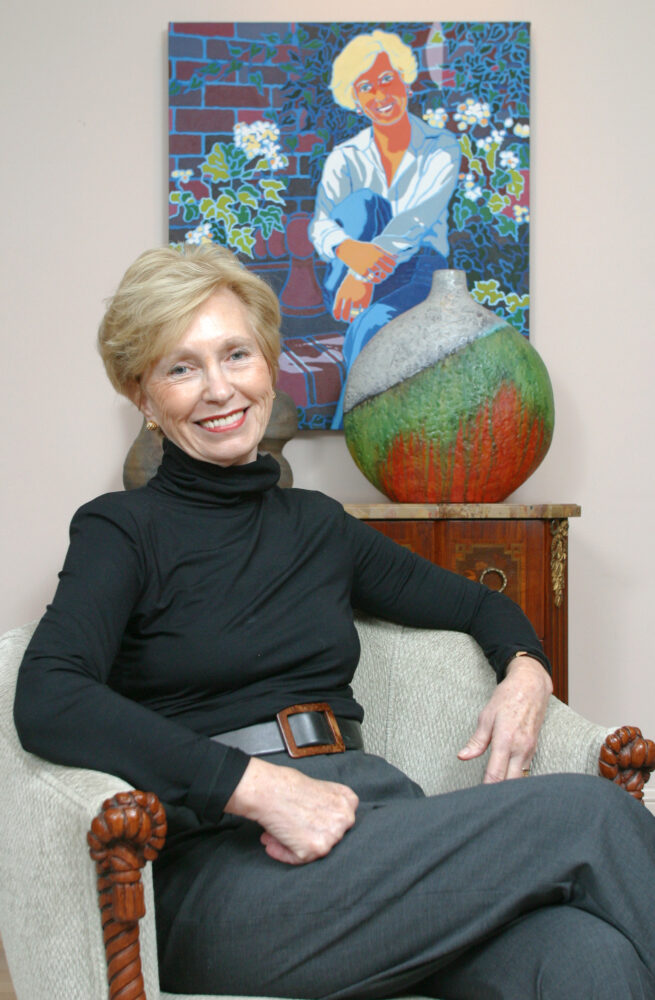
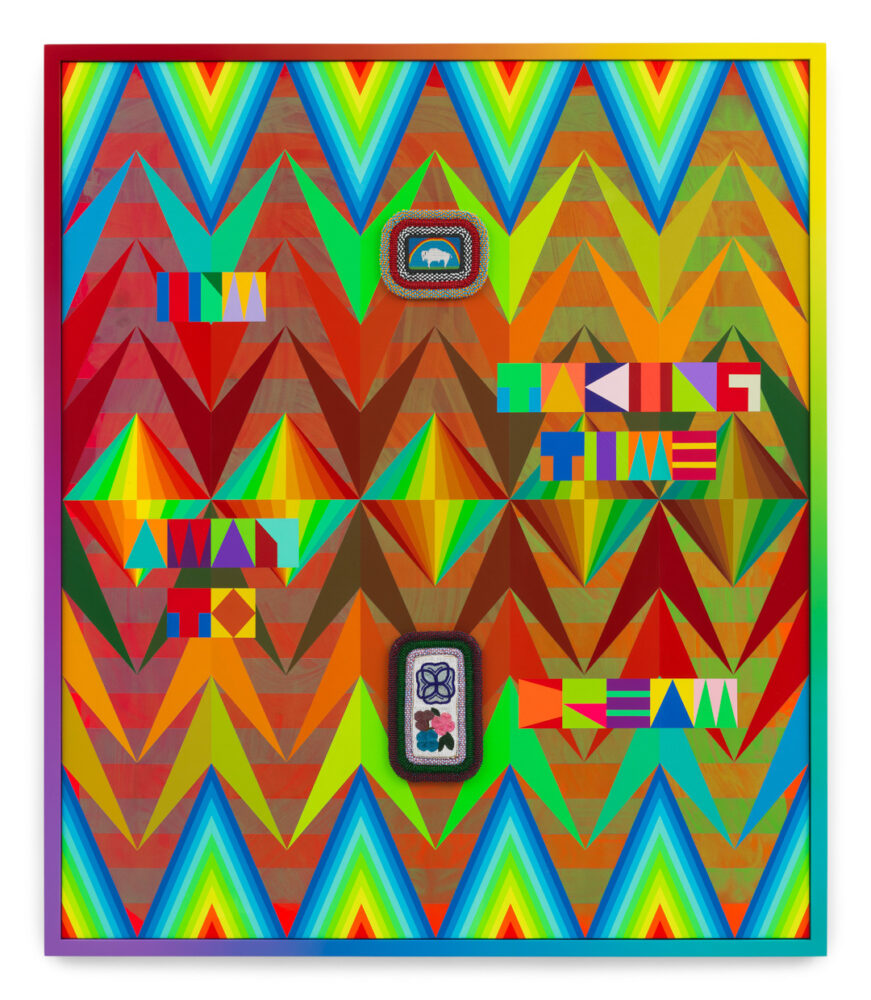
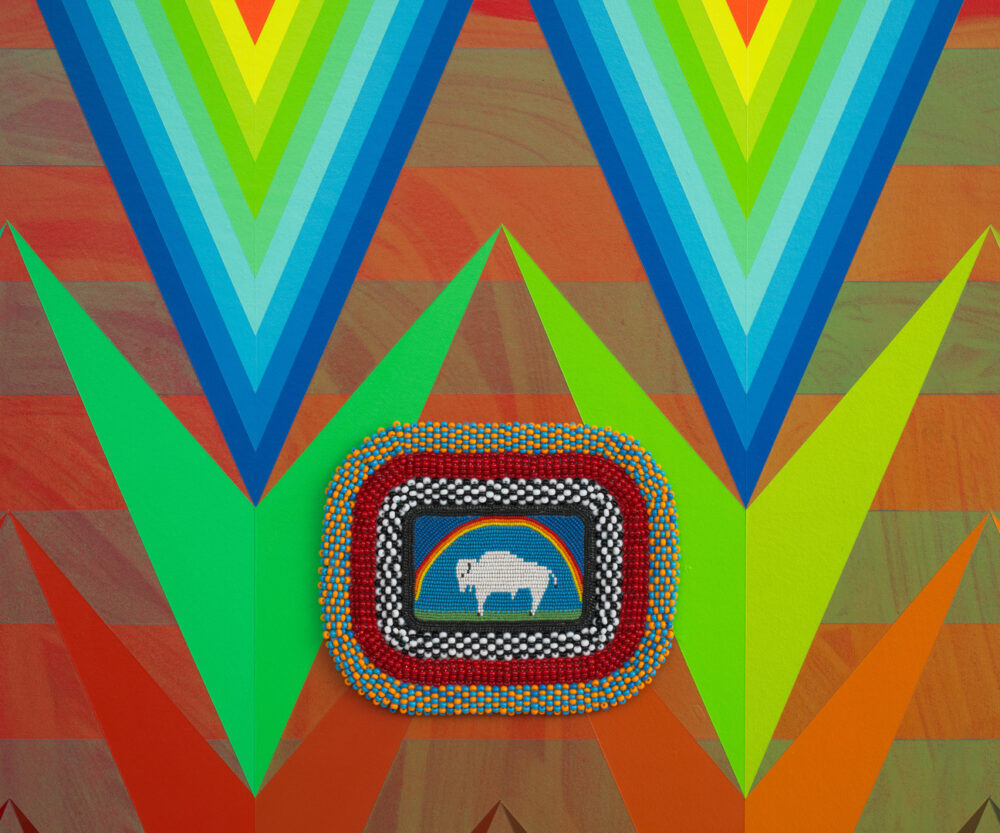

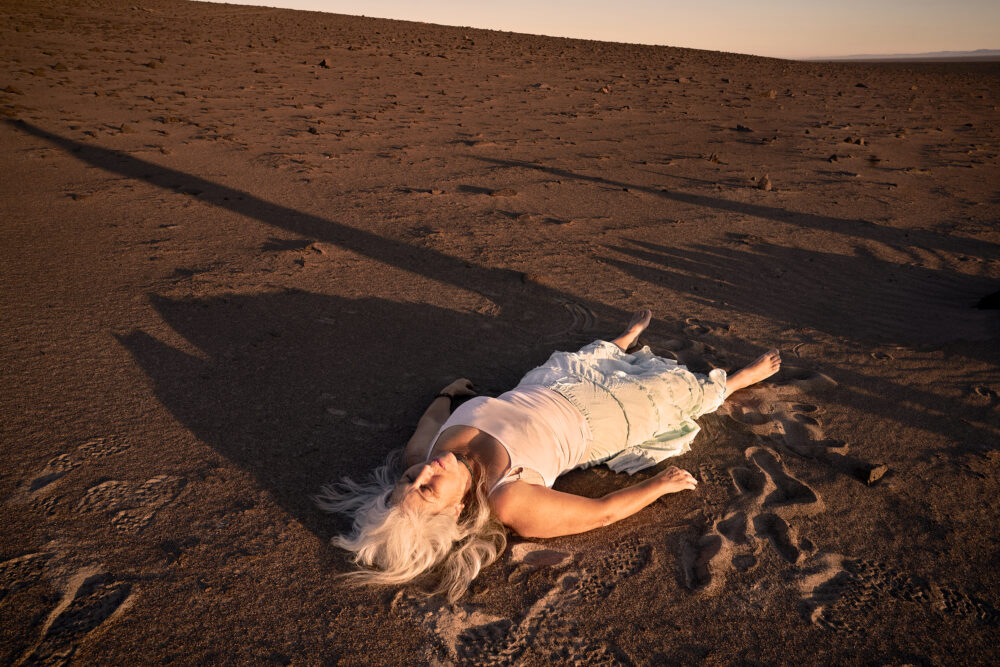
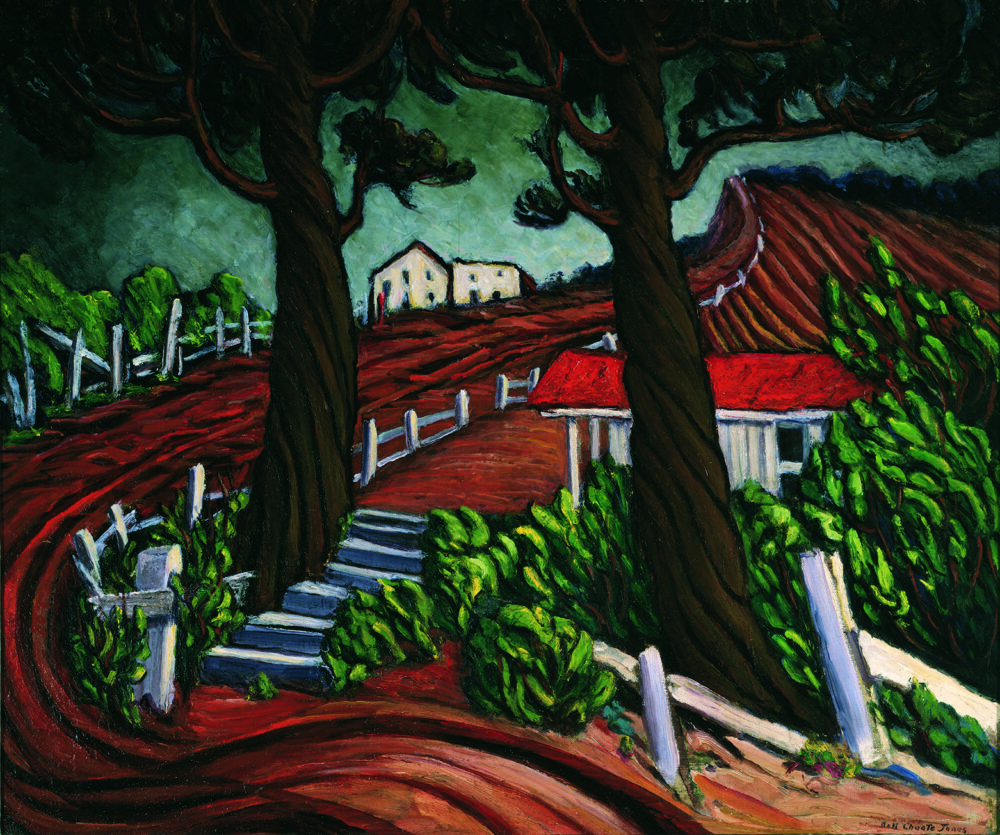
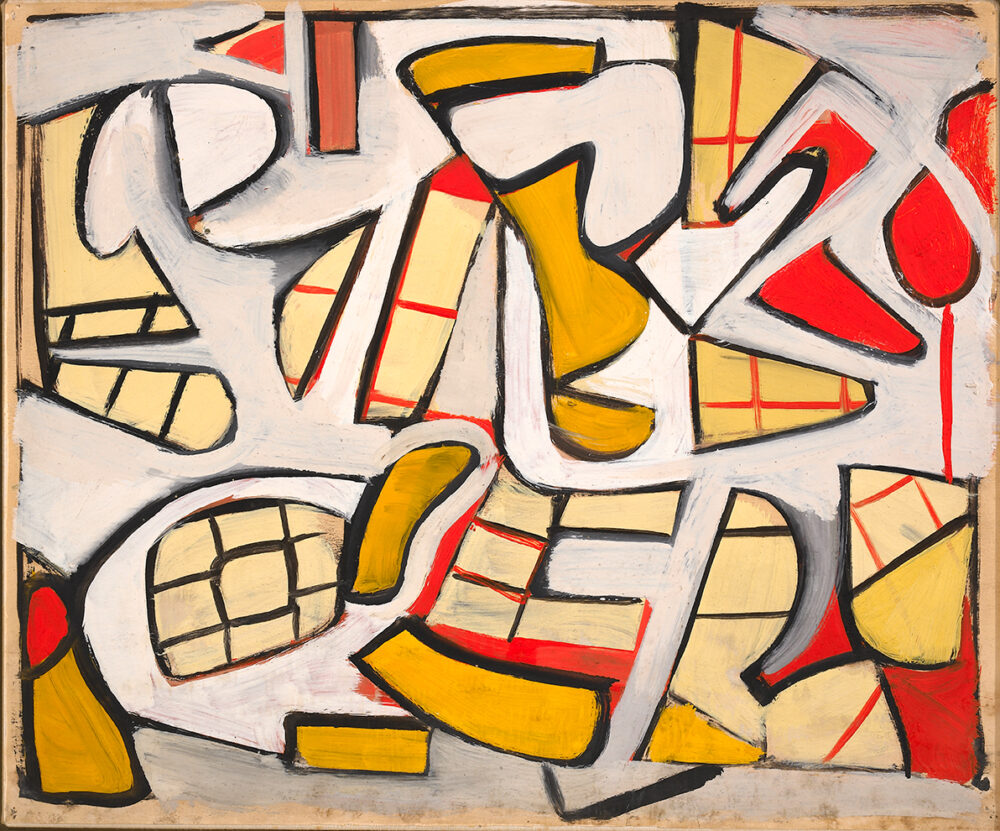
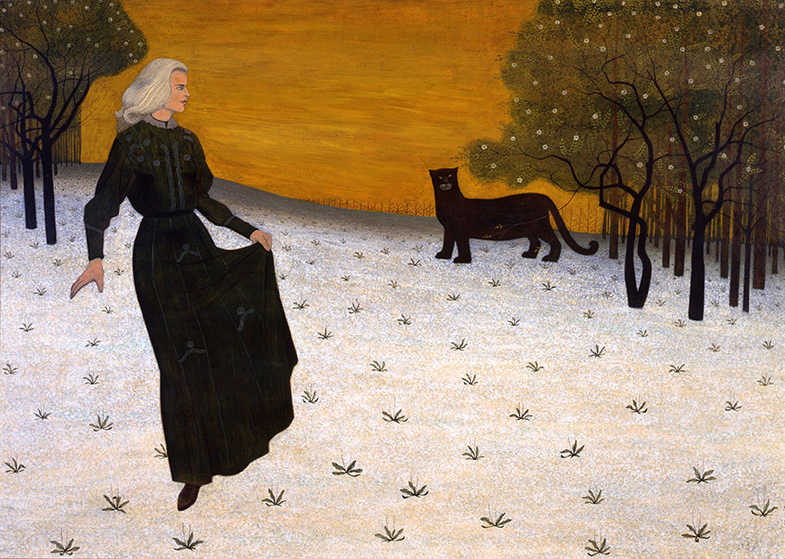
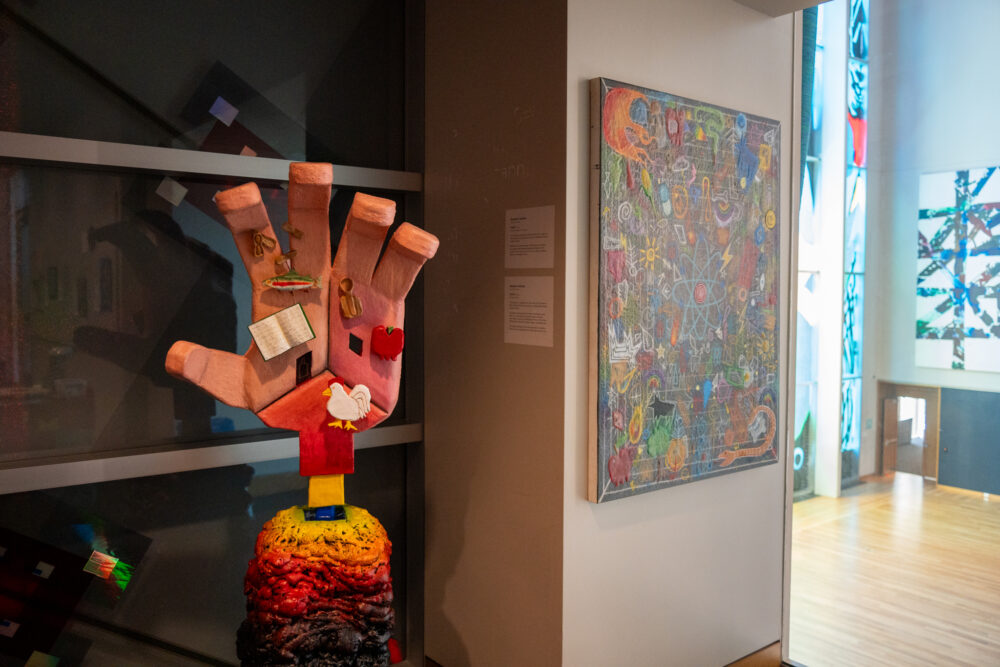
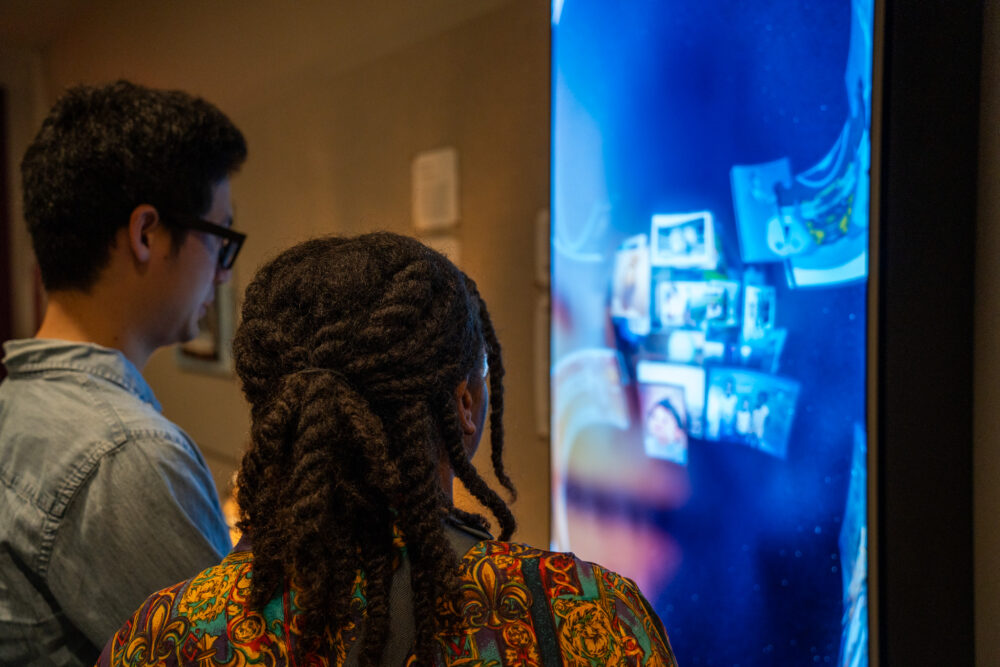
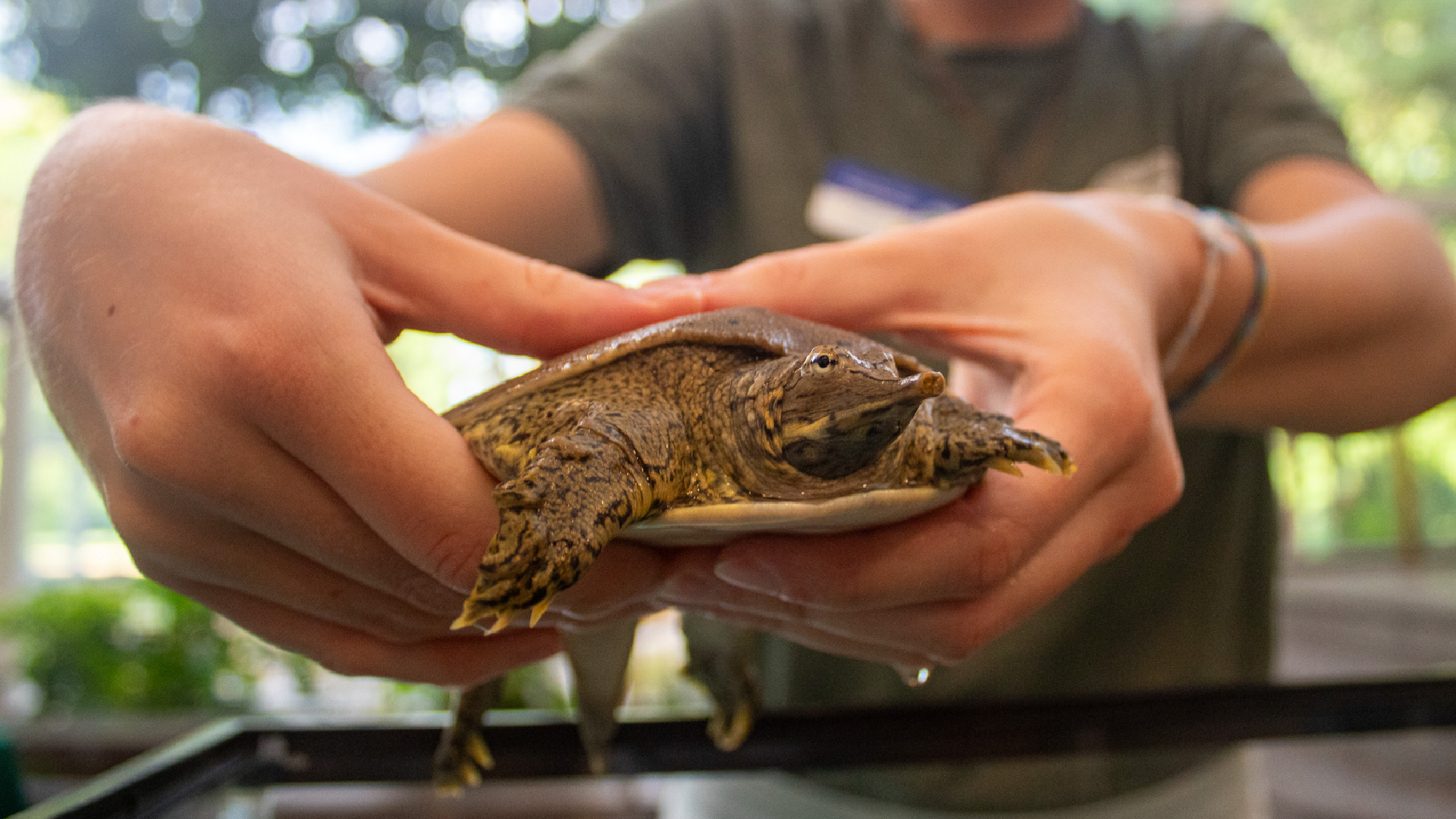
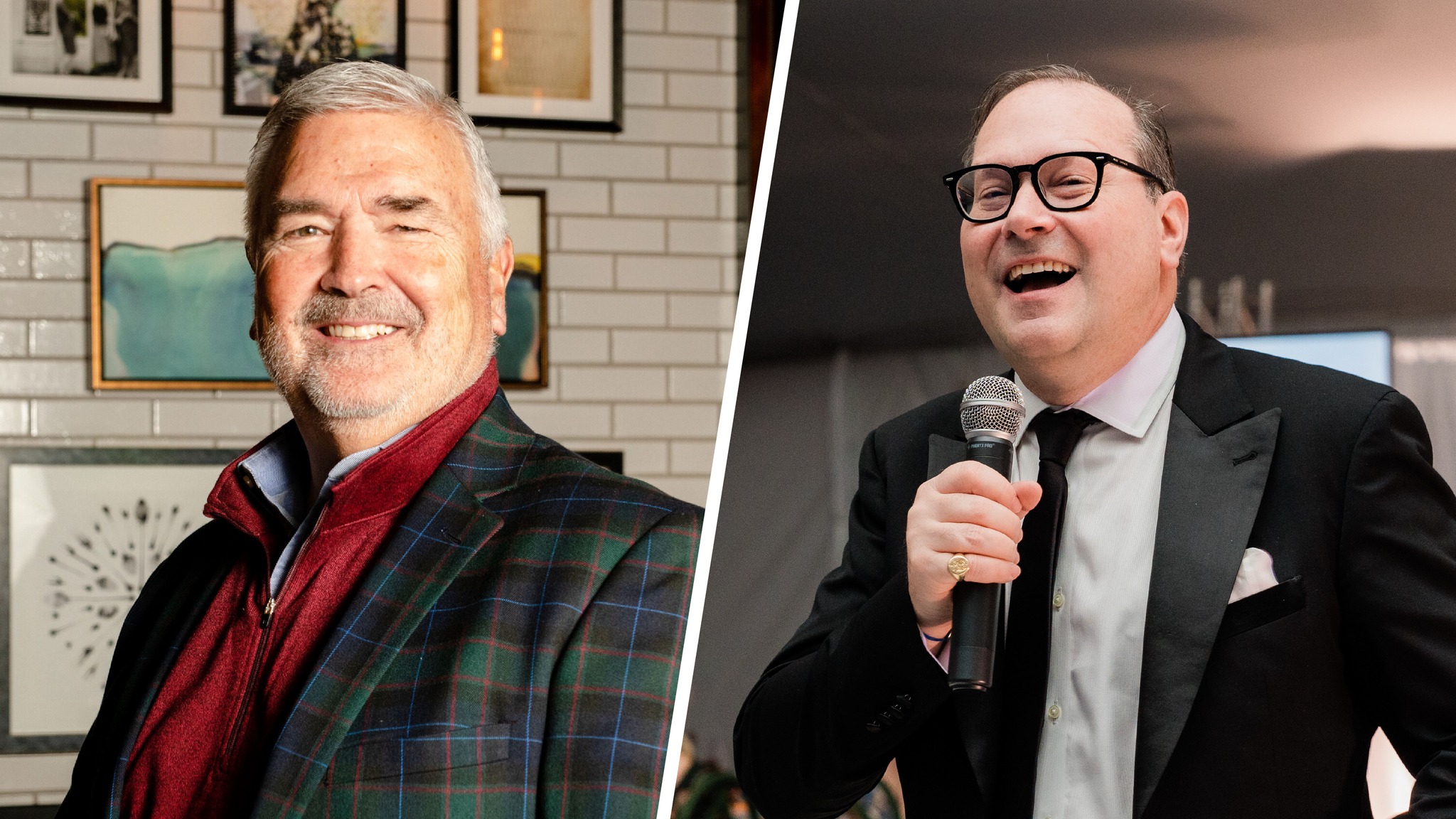
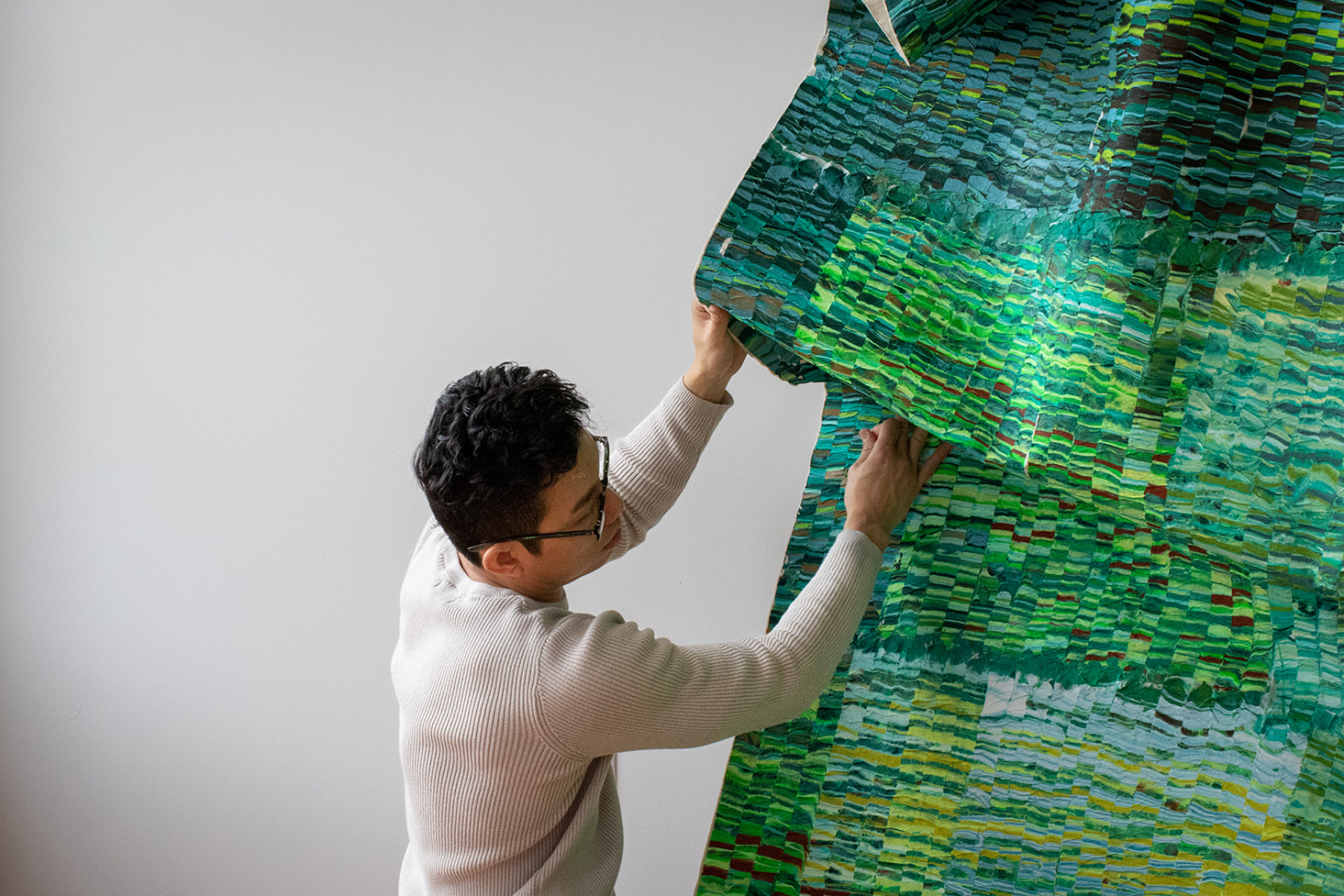
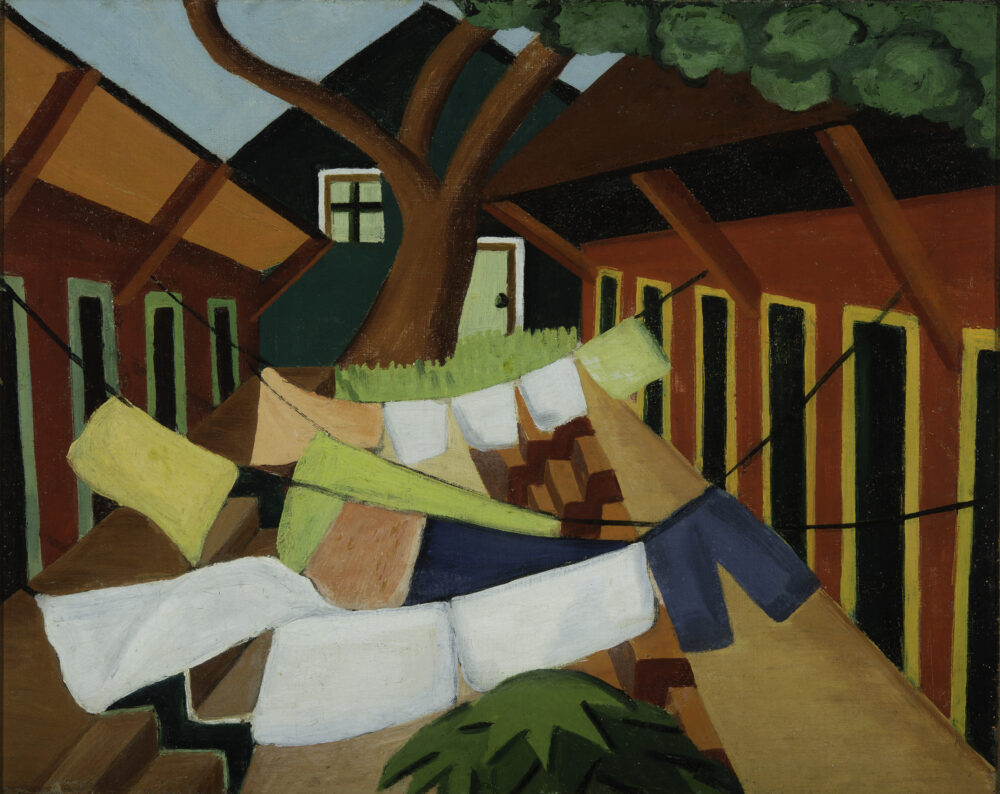
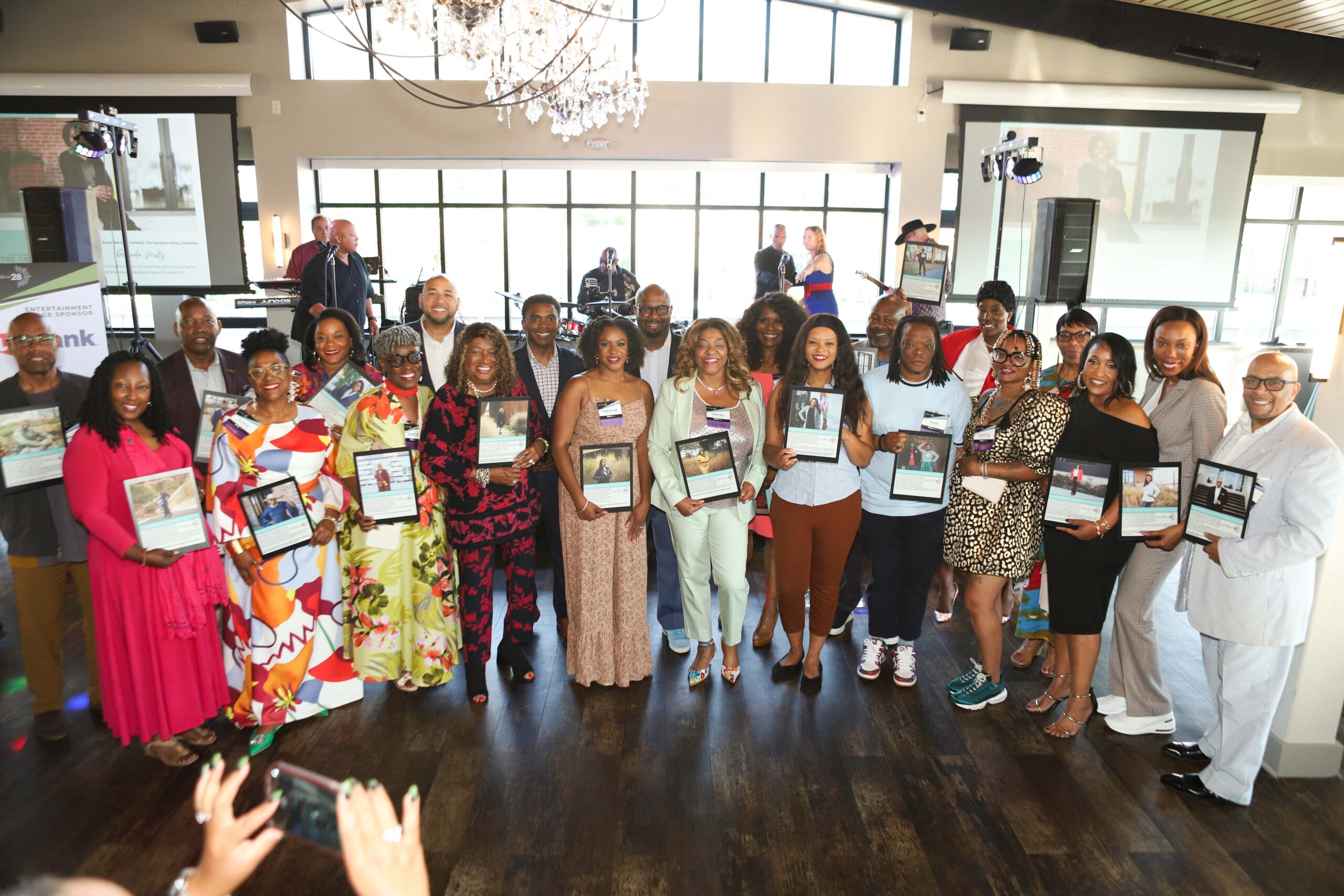
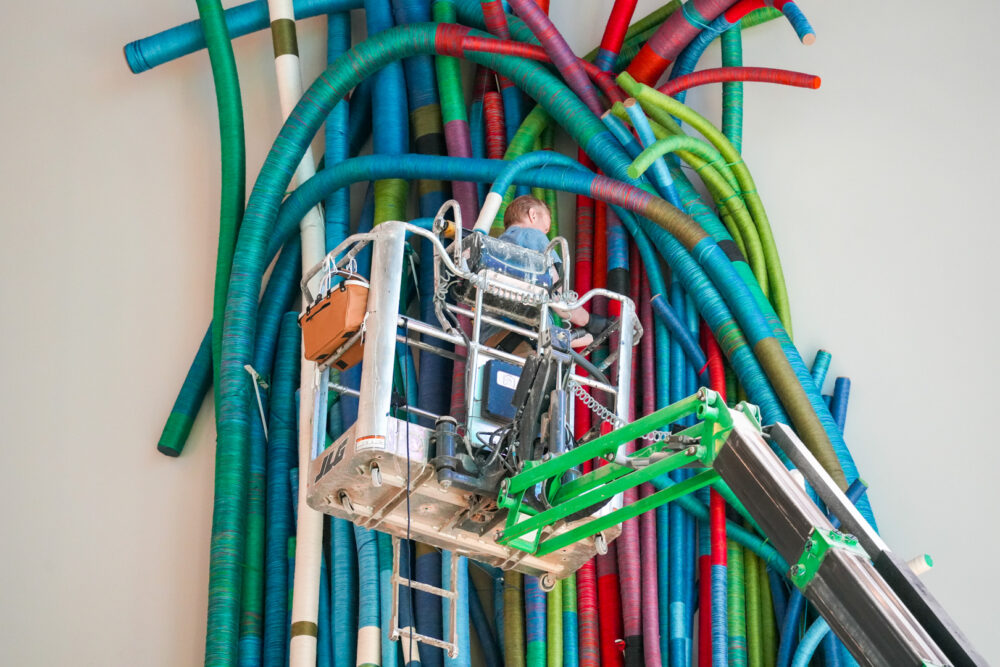
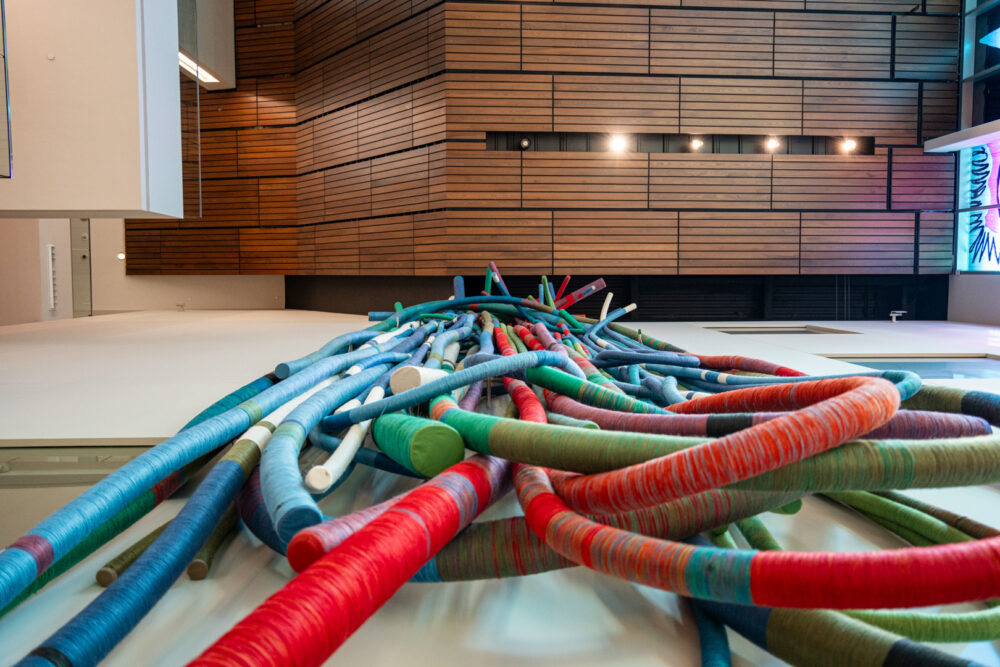


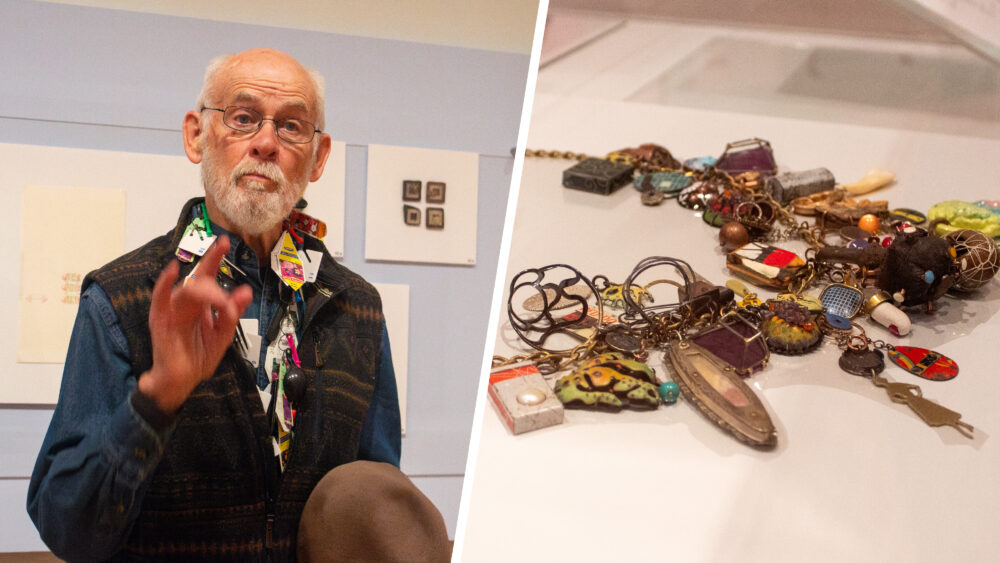
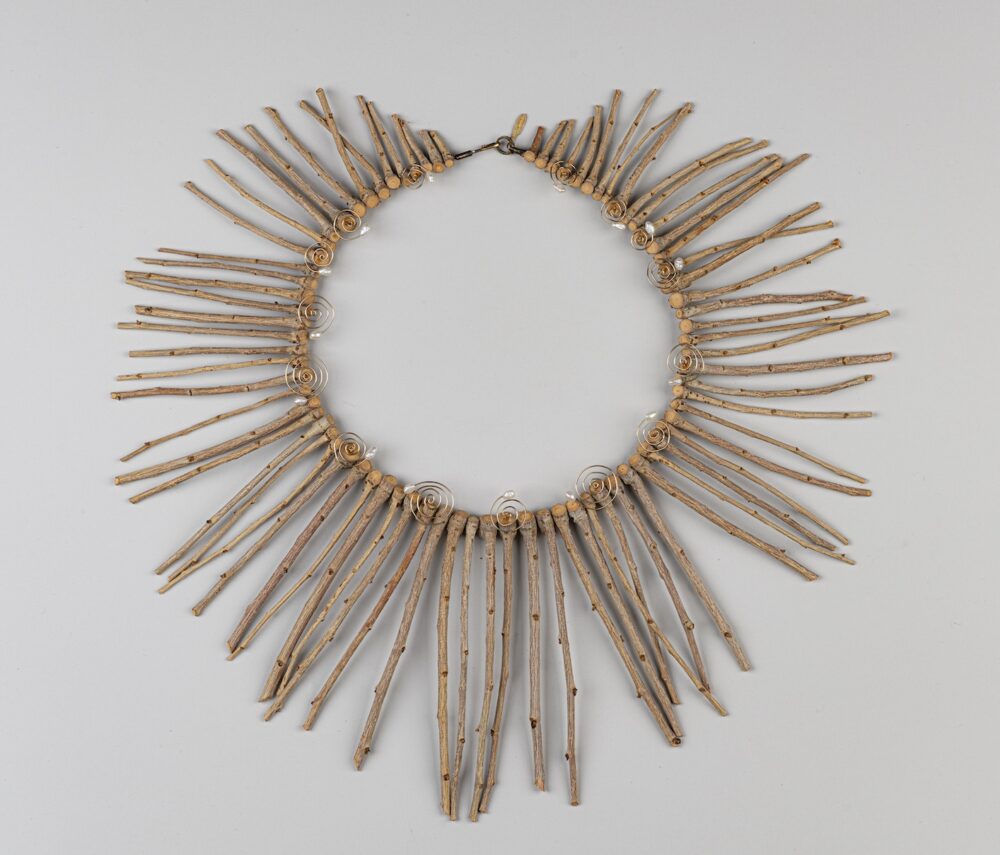
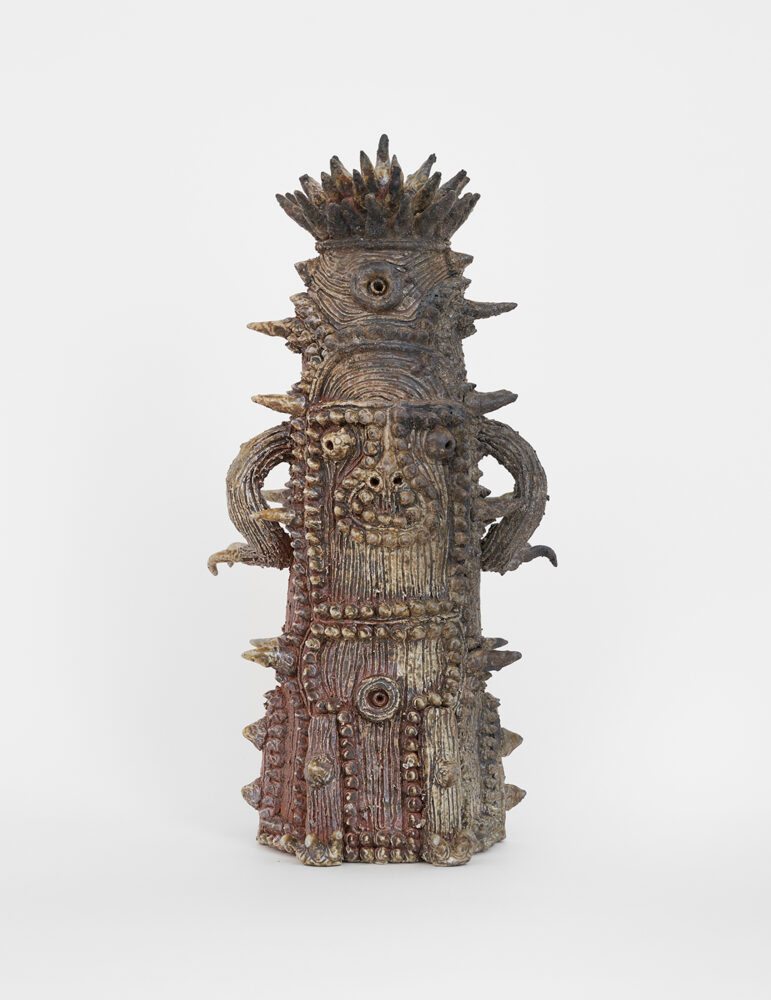
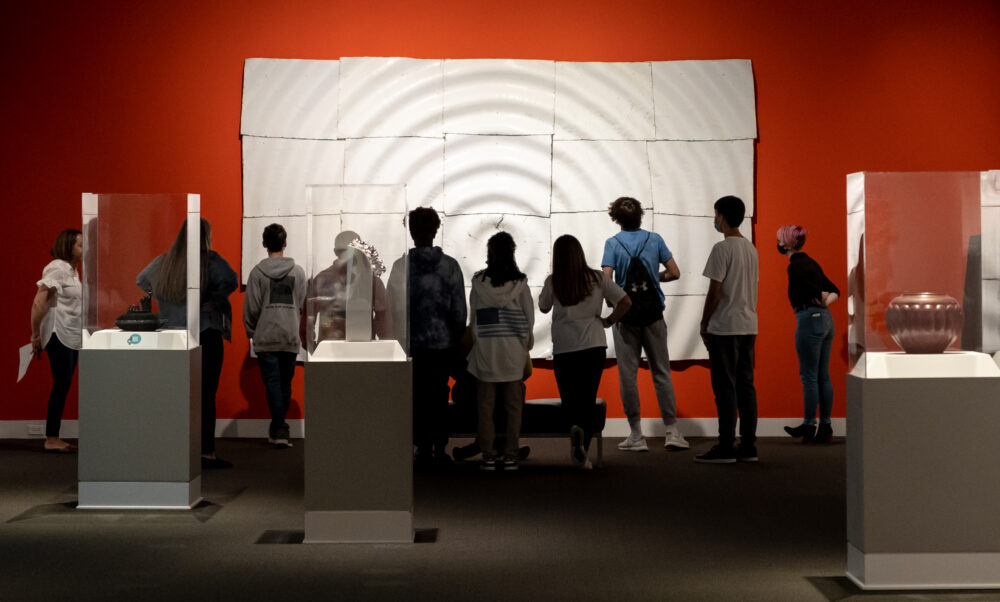
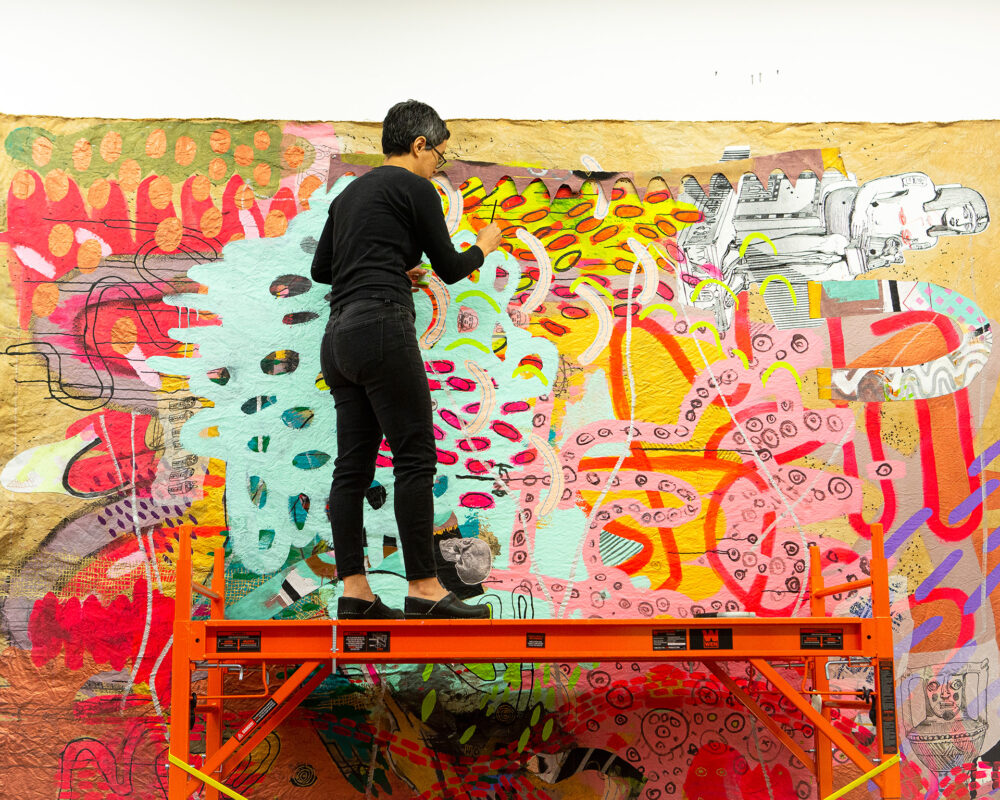
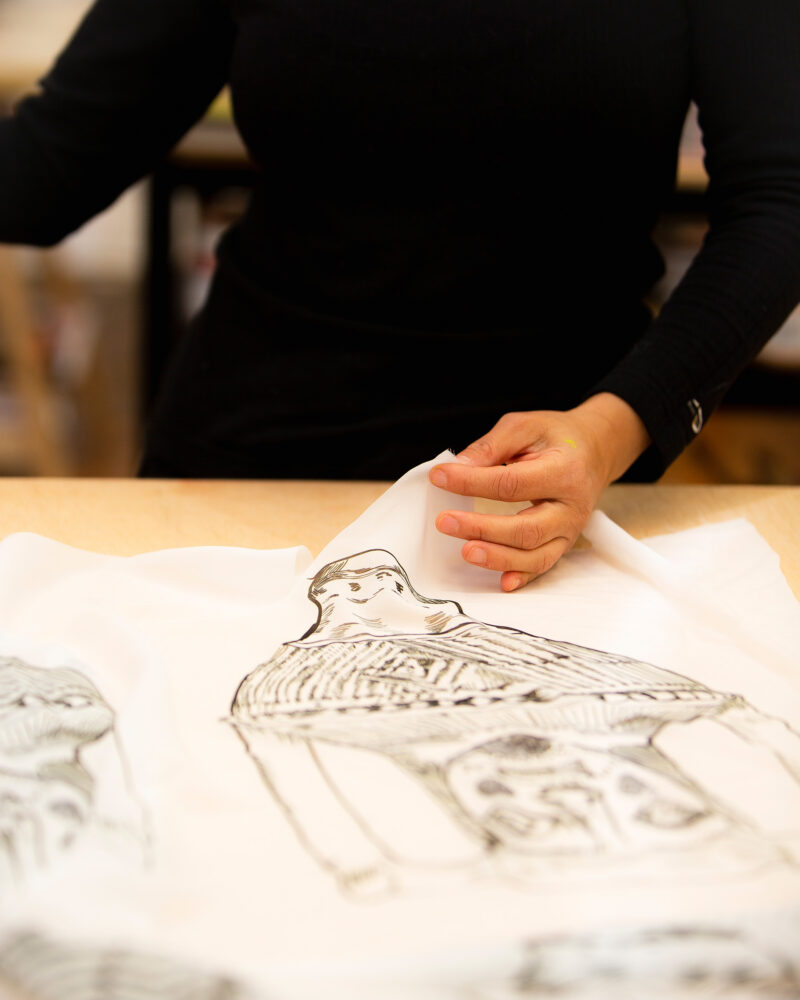 5:45 AM The dogs — a greyhound and a whippet — wake my husband, Tom Boran, and me before our alarm goes off. Tom walks them while I “sleep in” until 6 AM.